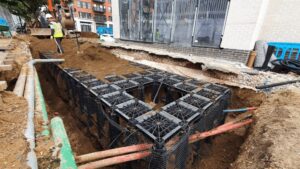
GreenBlue Urban had the opportunity to be a part of an award-winning estate regeneration scheme in Hackney, London, which has won the prestigious New London Architecture Mayor’s Prize and a RIBA National Award. Designed by Karakusevic Carson Architects and completed in 2017, bringing 50% of the 700 planned high quality homes to Hackney residents.
The podcast with Lizzie Le Mare from Tibbalds Planning Consultancy highlights a number of key opportunities and challenges when integrating high-quality landscape to connect existing and regeneration sites.
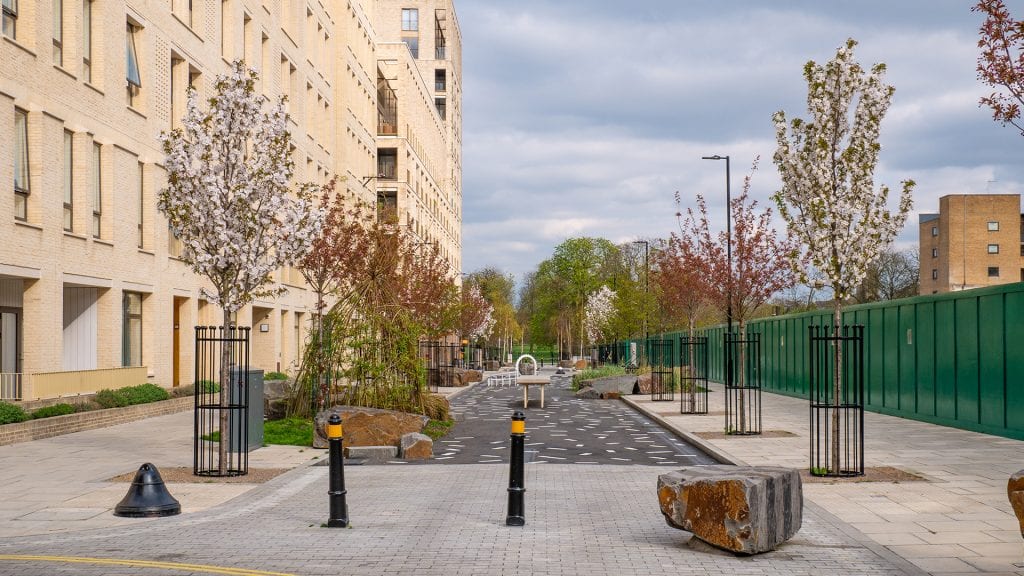
What is the vision for the two phases of the Kings Crescent scheme?
Two core concepts provide the overarching objectives for the development of the site; namely the connection between people and the landscape and the desire to provide properties that are available for social rent. The scheme will deliver 97 council homes for social rent.
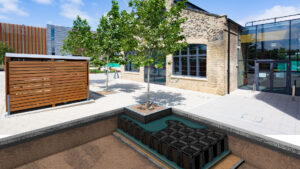
Far too often, we see that there is a direct link between low property prices in an area with little or no access to green space. Muf Landscape Architects have been bold and forward thinking in their approach to landscape on Kings Crescent. Utilising high quality tree planting methodologies they provided increased access to multifunctional green infrastructure for the current and future residents of Kings Crescent. The installation of ‘winter gardens’ on the site means that residents who have historically had no amenity outdoor space to call their own have a new landscape experience.

When approaching regeneration projects, we passionately believe that there has to be a connection between new proposed landscaping and existing green space. It is recognised in the London Plan and in the Natural Infrastructure Taskforce Report that across London we have examples of green specs that are not providing the essential benefits that could be derived from a more effective use of green and blue infrastructure.
Those working on the design of Kings Crescent recognised this issue and during the consultation phase, were able to communicate the need to enhance the existing green spaces for the long-term benefits of those who will experience the site on a daily basis. Discover more in our latest Podcast and Case Study.