It is a great pleasure that GreenBlue Urban have become partners on a second successful EU Interreg program in the 2Seas area – “Cool Towns”. This project will be specifically focused on developing tools and capacity building resources to ensure that towns and cities across the 2Seas area and beyond will be able to design, plan and implement schemes that are more resilient to the ever-increasing threat of heat stress in urbanized areas.
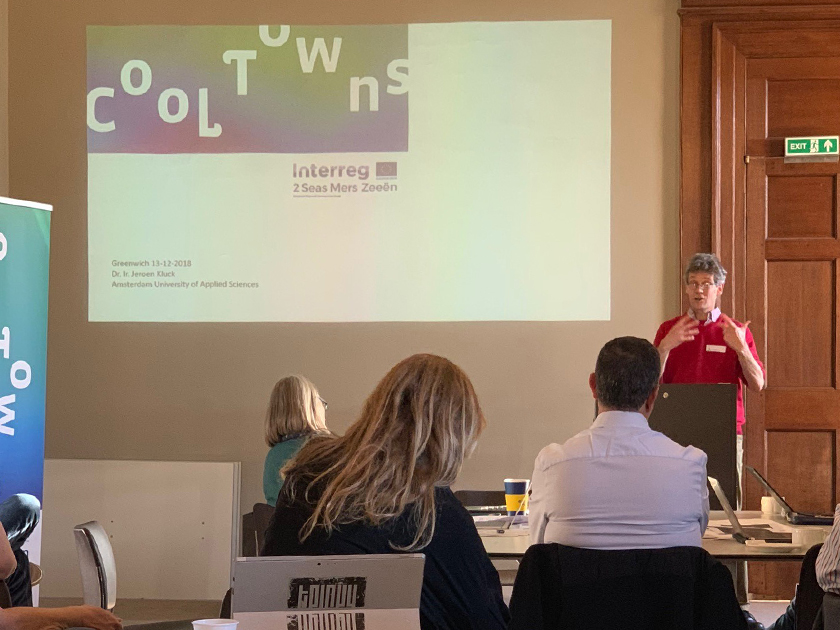
Project partners met at the University of Greenwich to discuss each of the work packages that comprise this new project and there is an exciting journey afoot. New research will be undertaken to measure the impact of GBU tree pit systems and ensure that we can accurately ascertain where we can use our solutions to have the maximum impact on reducing heat stress. Once we can refine and test this data capture methodology on our pilot sites across France, Belgium and Holland we can then look to new product development and modifications to confirm that communities in the UK and globally will benefit from a solution that will optimize the capacity of urban trees to cool the urban environment.
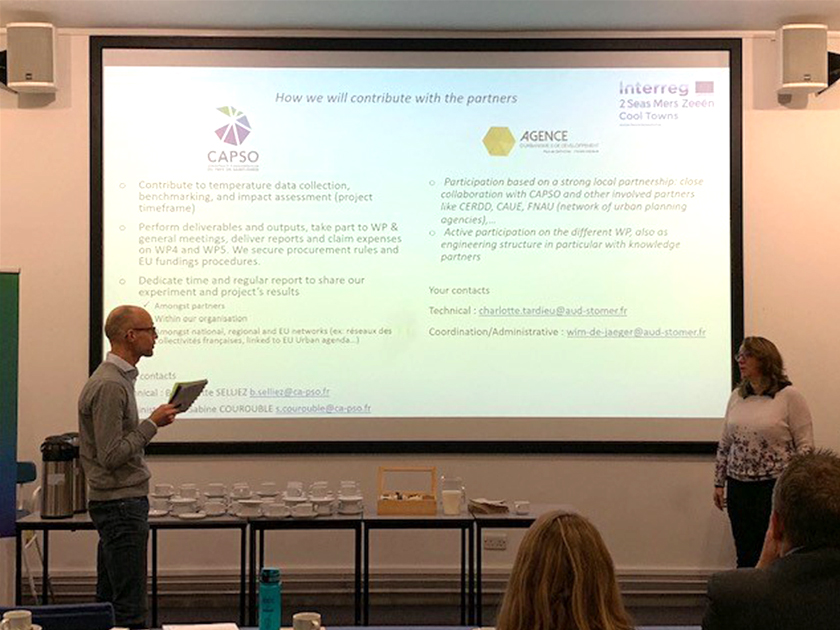
Charlotte from GBU, who manages the Water Resilient Cities project is enthused and excited by the opportunity to break into new territory and explore in greater detail the connections between urban tree pit design and cooling. She will work with both new pilot cities and those who have already provided great support and feedback on the Water Resilient Cities project.
If you would like to be a part of the wider project and contribute to piloting toolkits and sharing expertise, then please do get in touch. One of the core principles of European cooperation is that we can deliver outcomes that will outlive the lifetime of the projects. We all want to know what local authorities, designers and installers need and what would best ensure we deliver the best solutions and policy guides for the UK and other member states.
The project website will be live shortly but, in the meantime, details of the project’s specific objectives and partners involved can be found using the following link: interreg2seas.eu/en/cooltowns