Climate Change is a term that is used every day, but do we fully understand the importance of what this means for us, our families, our communities, and the human race?
Our home, country and planet are rapidly changing and these changes may be irreversible unless we design correctly now. This action must be immediate with designers in studios today being the generation that has been gifted this huge responsibility of saving so many lives by designing for climate change.
Climate change will affect our health, wellbeing, housing, food supply and indeed lives as we know them. Already many vulnerable communities and their cultures living on small islands and developing countries are already feeling the mammoth climate change impact. Conditions such as rising sea levels are forcing communities to leave their homes and relocate. The expected number of ‘climate refugees’ very soon is expected to rise, where climates are too hot to live in or too polluted to breathe or bathe. Climate change does not affect everyone equally at the same time, so many vulnerable countries are experiencing these changes now, therefore what can we expect in the future?
“Improving our air quality can save 150 million lives”. – Antonio Guterres, United Nations General Secretary.
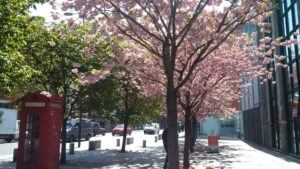
Tree-planting has become the foundation of many environmental campaigns in recent years. The call to plant trees is everywhere, is seen as a simple and effective way to help reduce the impact of carbon emissions and restore natural ecosystems. We must recognise the value of this benefit by providing for our urban tree populations, implementing urban tree planting best practices, and avoiding urban and rural deforestation wherever possible. If trees are to play a part in carbon reduction strategies, a lot needs to happen quickly.
Climate action requires a significant financial investment from government developers and contractors implementing long term designs. We all have a part to play in ensuring our green infrastructure will flourish for years to come and have the greatest impact to decrease the effects of climate change.
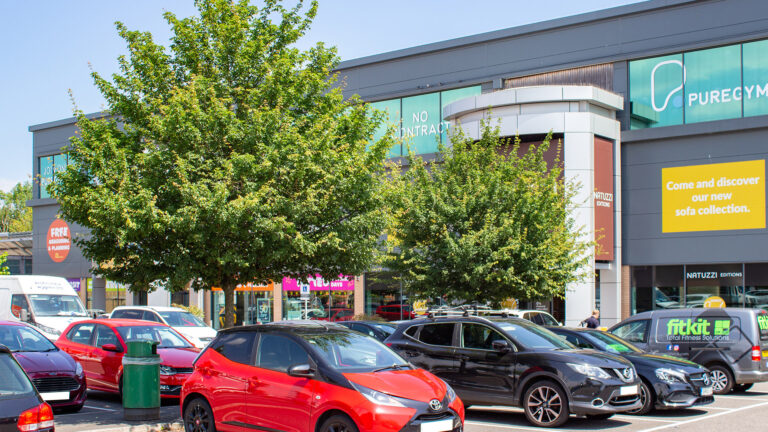
A UK government cash boost of nearly £4 million to plant hundreds of thousands of trees was announced back in December 2020, £2.5 million of which to support schemes in our towns and cities including along rivers to reduce flood risk and help meet the government’s commitment to increase tree planting to 30,000 hectares per year across the UK by 2025.
We can pay for infrastructure costs now, or pay the biggest price in the future
The most important summit on climate change for our generation, COP26 is due to take place in November 2021 in Glasgow. As part of our #Greenourplanet campaign, we will look at the mitigation and adaptation measures being taken to prevent and reduce the impacts being caused globally. Including the commitment to keeping global temperatures well below pre-industrial times, and for all 197 members to set targets to reduce emissions.
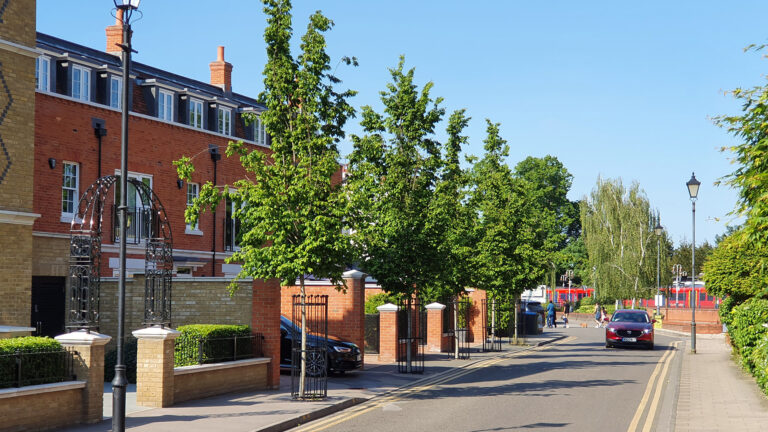
GreenBlue Urban has long concentrated on UK manufactured products: this forethought means that shipping challenges have little effect on the company as well as reducing the carbon footprint of the business. By manufacturing the range of products from 100% recycled materials, GreenBlue Urban are supporting the circular economy – rather than disposing of end of use plastics in landfill or by incineration, our recycled polymer assists trees to grow and sequester the carbon produced by the manufacture of the original material.
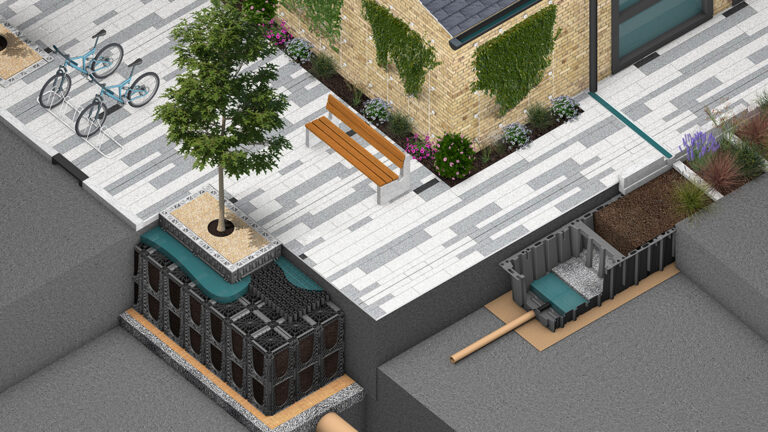
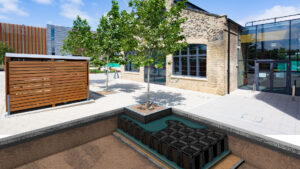
GreenBlue Urban have plenty of resources and design guidance to assist with urban planning, our ArborSystem Configurator is a handy design tool, we offer industry expert webinars and podcasts to ensure trees reach maturity and offer the extent of their benefits.GreenBlue Urban products are a brilliant solution to be considered when designing tree planting for shade, drainage, wind-blocking, air pollution and creating green walls/roofs – discover more in our short video here!