Community engagement plays a crucial role in enabling nature-based solutions to tackle the ongoing implications of climate change and the effects of flooding in our towns and cities.
GBU’s mission is to be the interface between nature and the built environment, by doing so a collaborative approach is possible to enable the successful planning, design, and implementation of blue-green infrastructure solutions to benefit all. Recent revisions to planning policy and the National Planning Policy Framework recognise the role that well-designed SuDS have in managing surface water.
Why SuDS?
Sustainable drainage systems (SuDS) are designed to manage stormwater locally (as close to its source as possible), mimic natural drainage and encourage its infiltration, attenuation, evapotranspiration, and passive treatment. SuDS are designed to both manage the flood and pollution risks resulting from urban runoff and to contribute wherever possible to environmental enhancement and placemaking. The multi-functionality and multiple benefits of SuDS should always be considered.
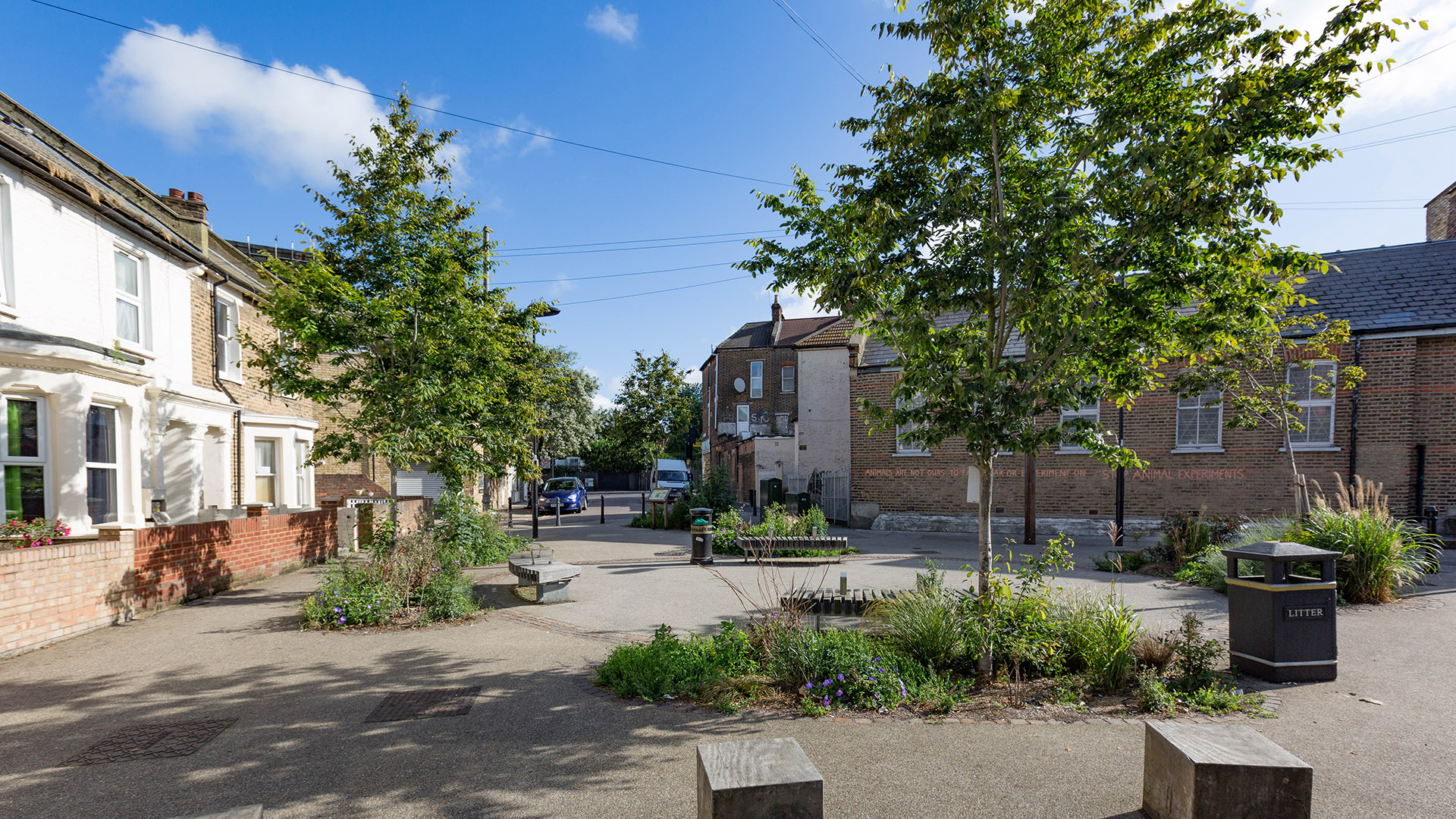
Consultation can inform change for the better to include social behaviour and cohesion, as detailed led by LB Hammersmith & Fulham & The Project Centre at Kenmont Gardens in Hammersmith to include children from the nearby school.
SuDS Techniques
- Tree Pits
- Rain Gardens
- Green (Blue) Roofs
- Permeable Paving
- Swales, Basins, Ponds & Wetlands
- Filter drains and strips
Addressing the multiple benefits of SuDS
SuDS can help to free up capacity in already established drainage networks, and the provision of SuDS can often be a prerequisite of planning permission.
How can we raise awareness of SuDS?
Drainage systems should be considered at the earliest stages of site selection. The successful design will incorporate local policy and will be developed by the local planning authority, often with engineers, highways, and specialist landscape architects, all taking into consideration any local flood risk strategy guidance.
Early engagement (pre-application) with stakeholders is always recommended, including the local community. Proposals of multifunctional spaces should include all communal spaces; verges, gardens, landscaped areas, play and car parks. Plans should highlight the benefits of nature-based solutions and the cost benefits versus engineered storage alternatives.
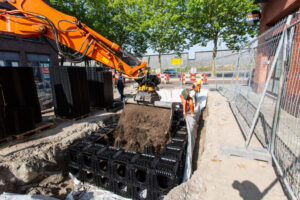
Successful schemes listen and develop plans based on collaborative feedback from their users, a perfect example of this is one of our most successful case studies at North Street, Keighley in West Yorkshire. Design consultations with the Local Town Council included DDA groups and even footage from local pub users, whereby it was decided the railings would be included in the final design!
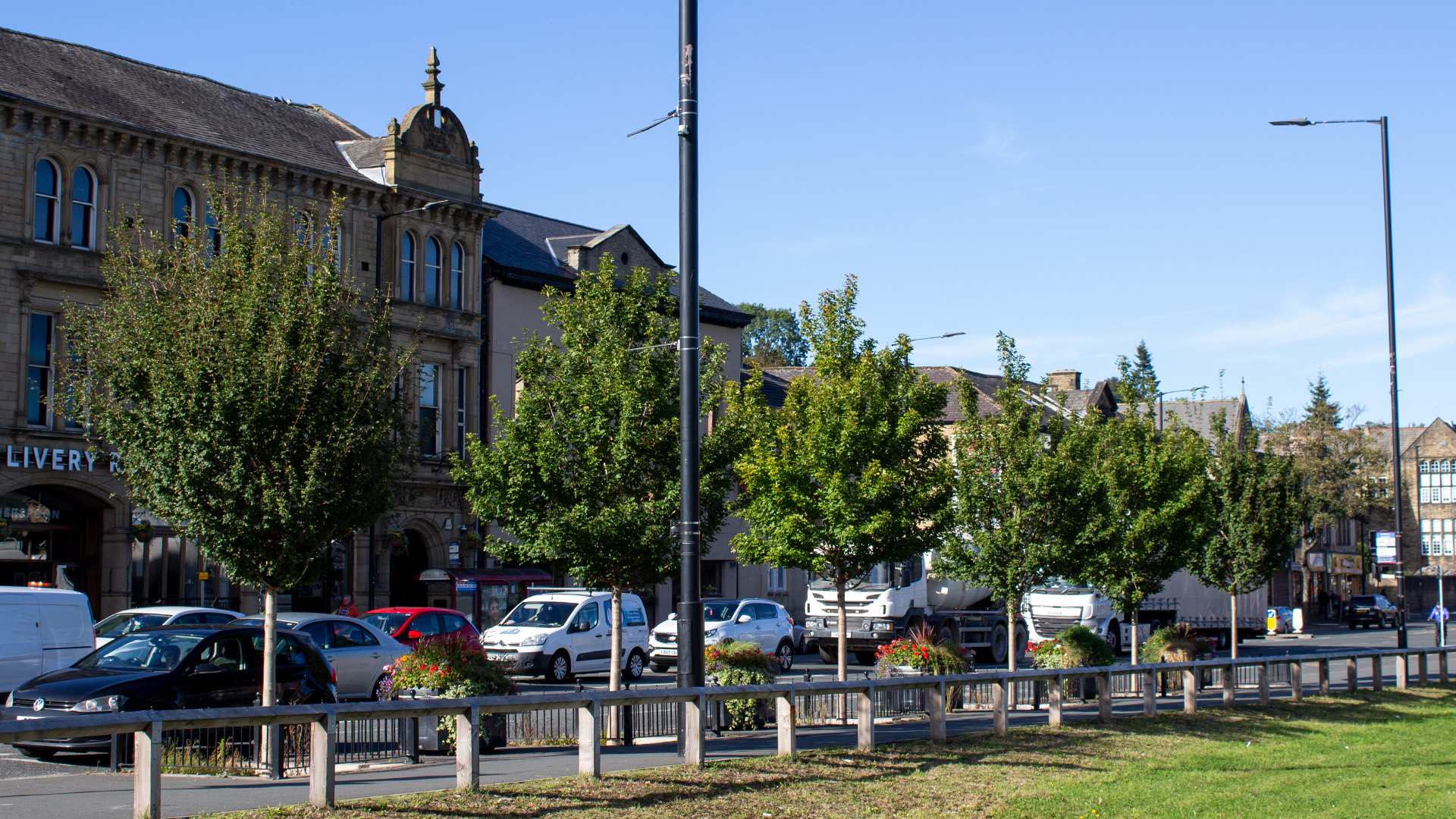
The final design of the ArborFlow tree pits has been a resounding success with Bradford Metropolitan Council highly praised for their continued efforts relating to stormwater management.
Calculations: The SuDs tree pits were designed to accept highway water runoff resulting from the creation of an additional 356sq.m of new carriageway coping with a rainfall intensity assumed to be 50mm/hr; peak runoff rate was determined to be 4.95 l/s.
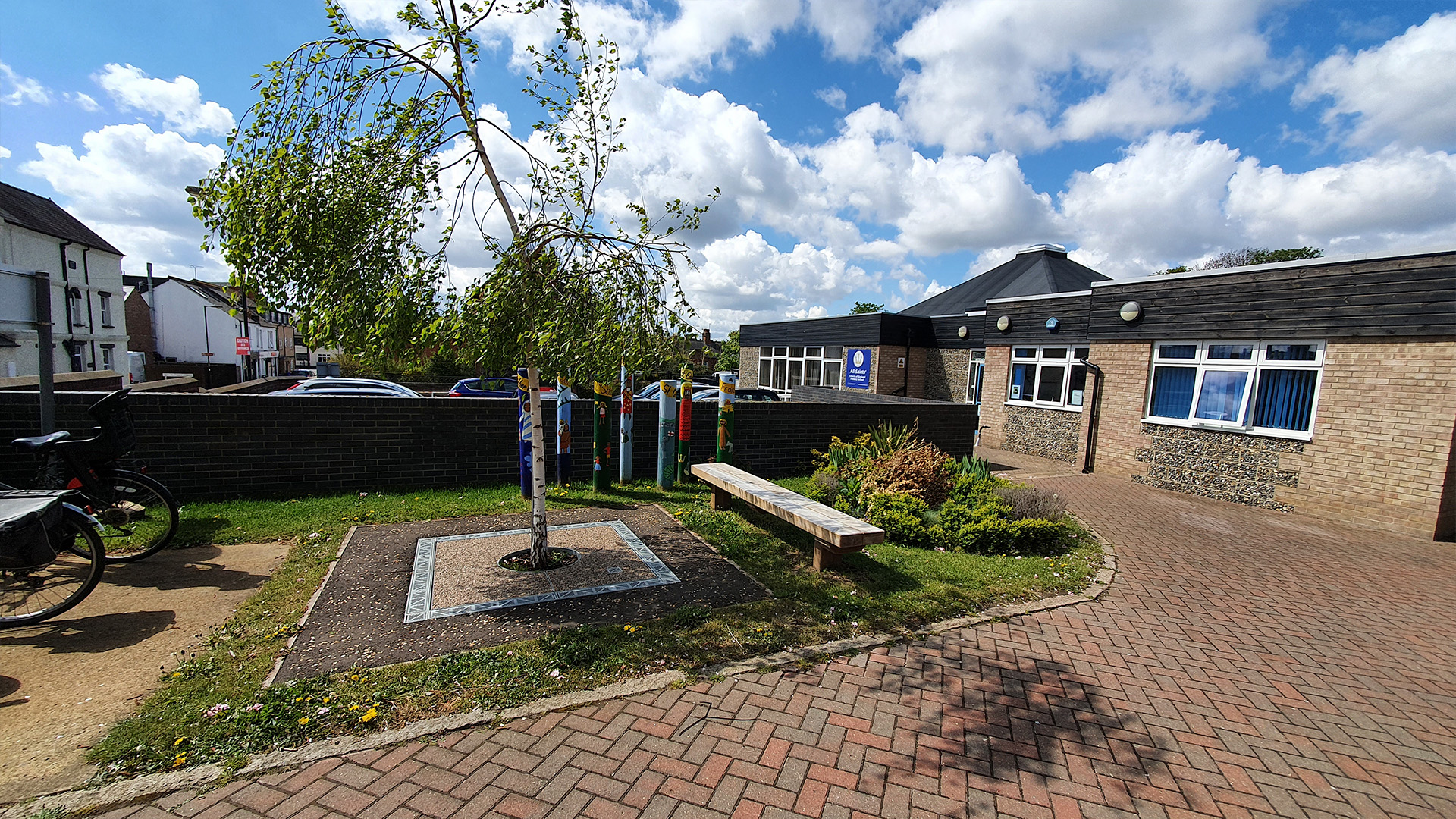
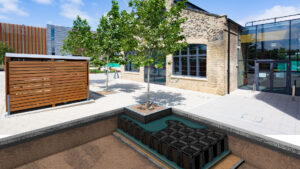
SuDS can be embedded into the curriculum to provide an educational resource and an engaging landscaped area for play. A perfect example of this is All Saints School in Newmarket where Anglian Water collaborated with Atkins, West Suffolk Council and Newmarket Town Council—to engage with residents, students and teachers to educate on the effects of climate change. The final design incorporated fun and practical SuDS solutions to cope with a 30-year return storm event and divert water from the foul sewer. Be it Tree pits, rain gardens, green walls or blue roofs this is yet another example of cross-disciplinary collaboration that will enable multifunctional benefits that will be enjoyed by all for many years to come!