In our rapidly urbanising world, the challenges of managing stormwater runoff and mitigating flood risks in cities are becoming more pressing than ever. Sustainable Urban Drainage Systems (SUDS) offer a promising solution, but their effectiveness hinges not just on technical prowess, but on something much more powerful – community engagement.
If BGI is considered an effective bridge between disciplines, it can be used to facilitate a level of socio-cultural and ecological means of access to knowledge and techniques that might otherwise be missed. (Mell, 2021@ Scot et al. 2021)
When we talk about community engagement in the context of SUDS, we’re not just talking about informing residents of upcoming construction projects. We’re talking about involving them as active participants in the entire process – from conception to implementation and beyond.
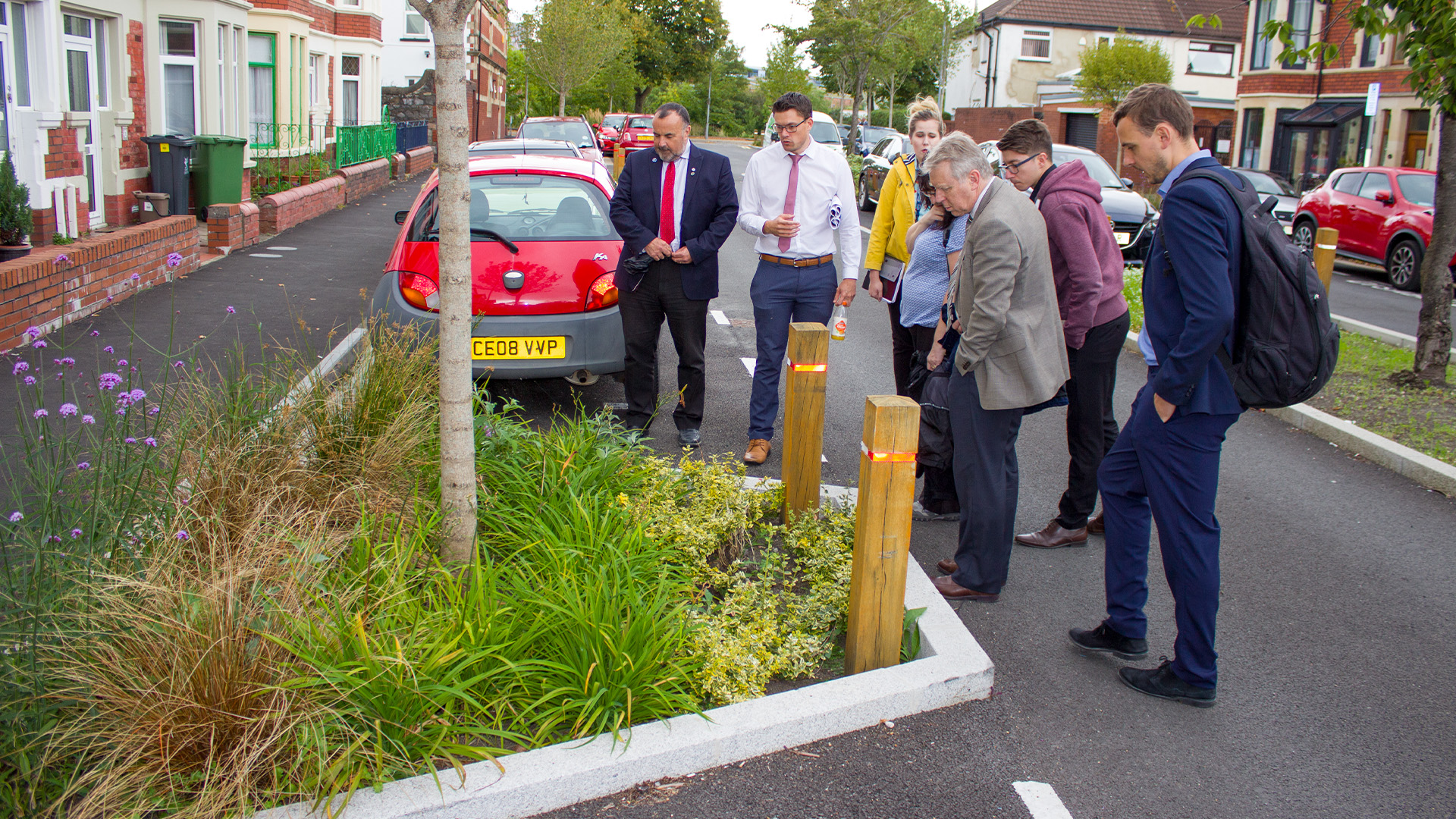 Greener Grangetown
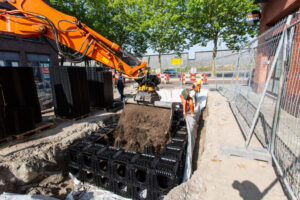
Greener Grangetown – Community engagement provided an opportunity for residents to input towards the design of their streets. The engagement has continued throughout construction with weekly drop-in sessions, planting events and social media updates. The scheme is delivering a major improvement to the cycle network in Cardiff through collaborative design with cycle groups including Sustrans. A new 555-metre Bicycle Priority Street will be one of the first in the UK.
Imagine a city where every raindrop is seen not just as a nuisance to be managed but as a potential resource. That’s the vision that community engagement in SUDS can help us achieve. Here’s how:
Tapping into Local Wisdom: Communities are centres of invaluable local knowledge. They know where the water tends to pool after a heavy downpour, which areas are prone to flooding, and where the drainage systems are lacking. By engaging with residents, planners can tap into this wealth of information and ensure that SUDS are tailored to suit the specific needs of each neighbourhood.
Building Stakeholder Buy-in: SUDS projects are more likely to succeed when residents feel like they have a stake in the outcome. By involving them in the decision-making process, listening to their concerns, and incorporating their feedback, planners can build trust and garner support for SUDS initiatives. After all, people are much more likely to get behind a project when they feel like their voices have been heard.
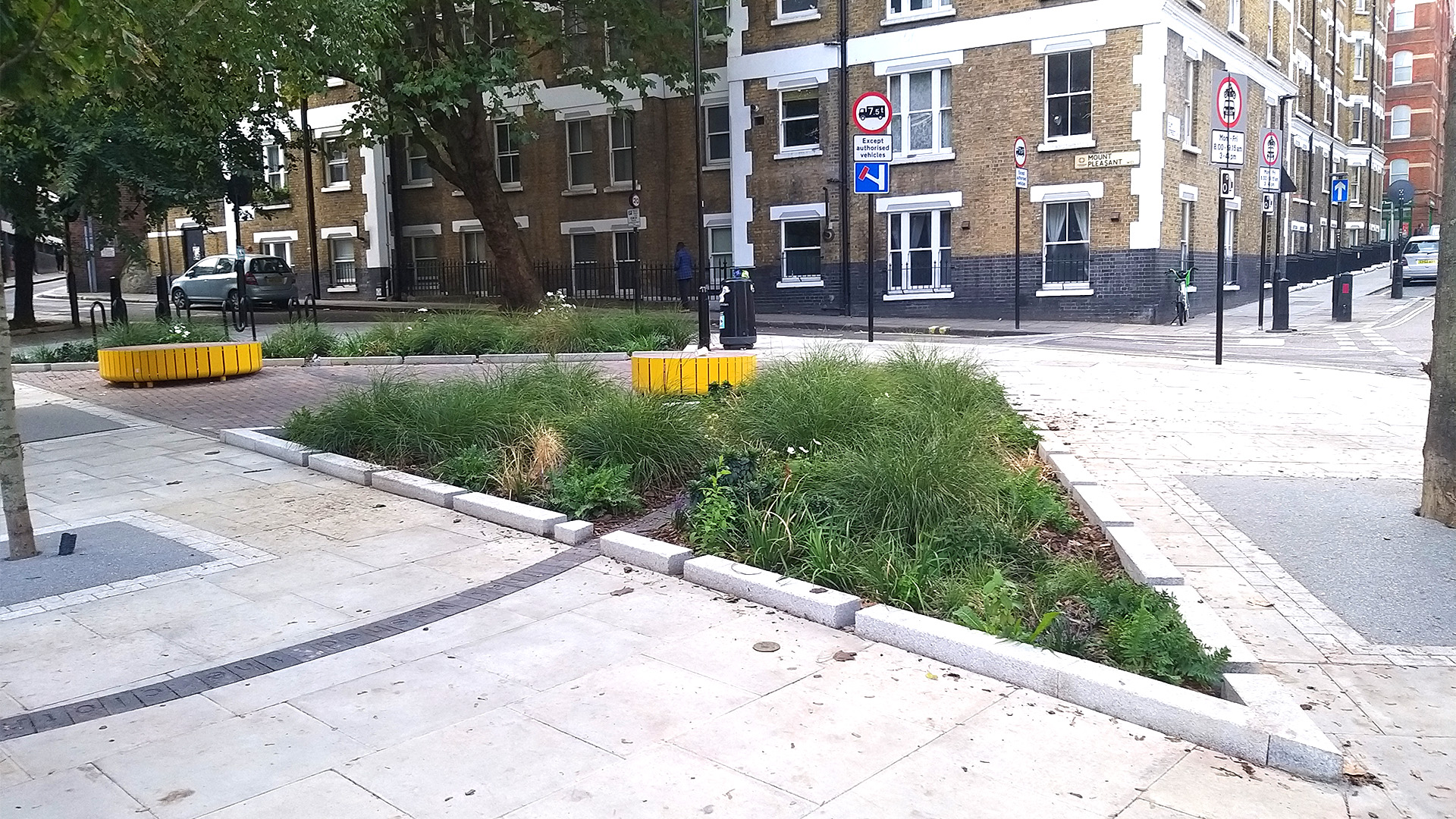 Fleet Valley Pocket Park
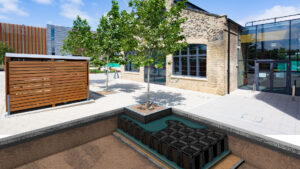
Fleet Valley Pocket Park – Camden Council carried out detailed public engagement within the area in 2019. Working with the Mount Pleasant Neighbourhood Forum, they identified a set of priorities for the new design. These included providing a green and biodiverse space, incidental play, a place to relax, a robust landscape, and references to the River Fleet
Cultivating a Culture of Responsibility: When communities are actively involved in the planning and maintenance of SUDS, they develop a sense of ownership over these systems. This can lead to better monitoring, more proactive maintenance, and a greater commitment to preserving the integrity of the infrastructure. In other words, community engagement doesn’t just create SUDS – it creates stewards of the environment.
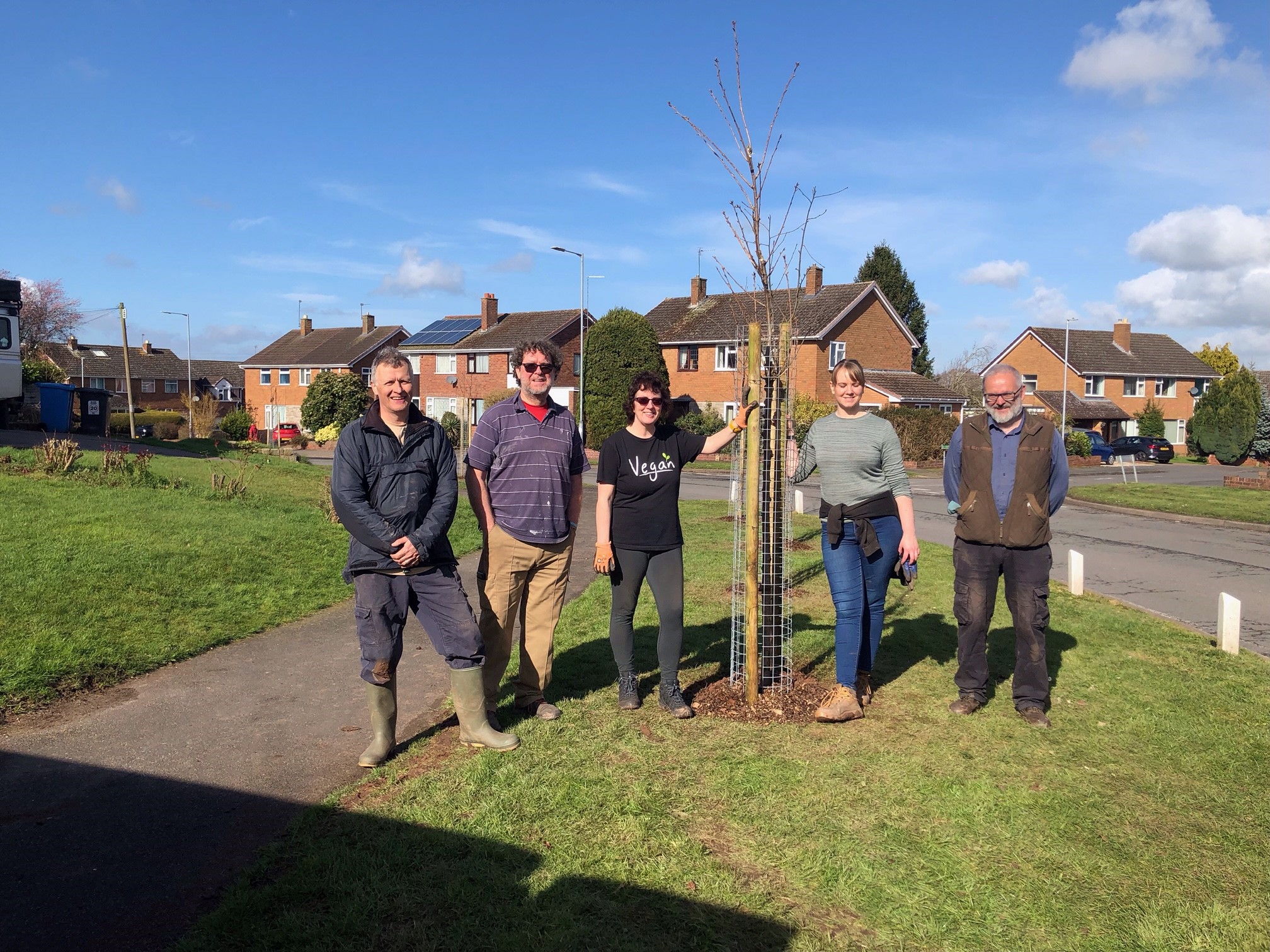 Friends of Bilbrook
Fostering Innovation: Some of the most creative and innovative ideas come from unexpected places. By engaging with communities, planners can tap into the collective ingenuity of residents and uncover solutions that they might not have thought of on their own. Whether it’s a rain garden in a vacant lot or a permeable pavement in a parking lot, the possibilities are endless when we invite everyone to the table.
Building Social Cohesion: Finally, community engagement in SUDS isn’t just about managing stormwater – it’s about building stronger, more resilient communities. By coming together around a shared goal, residents forge bonds with one another and create networks of support that can weather any storm – literal or metaphorical.
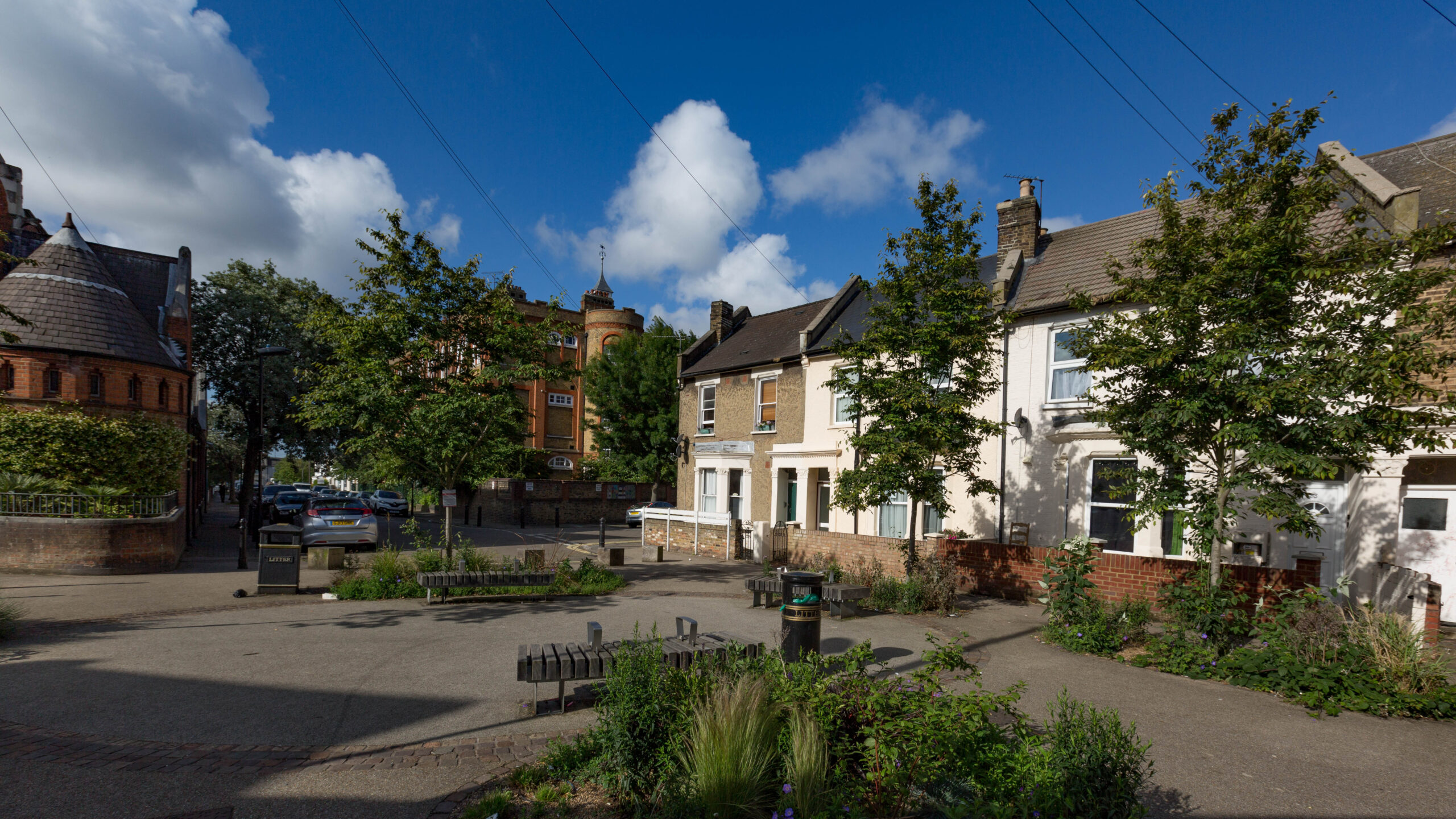
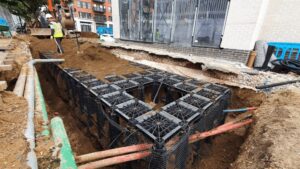
Kenmont Gardens – The community were involved throughout the project, with concept designs sent out for public consultation in September 2014, from which a positive response was received and a preferred option was selected. In addition to this, a consistent dialogue was maintained with the College Park Residents Association (CoPRA) and Kenmont Primary School.
In conclusion, community engagement isn’t just a nice-to-have when it comes to SUDS – it’s essential. By involving residents as active participants in the planning, implementation, and maintenance of these systems, we can create cities that are not only more sustainable but also more vibrant, resilient, and inclusive. So let’s roll up our sleeves, join hands, and start flowing together towards a brighter, more sustainable future.