Whilst working with Local Authorities across the United Kingdom, GreenBlue Urban have watched the renaissance of the garden cities and garden village concepts with fascination. Originally planned in the early part of the twentieth century, places like Welwyn and Letchworth were designed as healthier, happier, more liveable places, to enable people to live, work and play in well designed, planned communities with green space at their heart. So, with space at a premium and with an emphasis on denser development, how can this be achieved? Three years since the first announcements were made by central government a new wave of garden villages and towns were to be delivered across the UK, how can we ensure that we build upon the legacy of the original proponent of the garden city, Ebenezer Howard?

The TCPA and the Landscape Institute have both made contributions to this debate and their guidance notes on designing and delivering these new communities highlight the broad array of challenges and opportunities related to both the formation of policy, the maintenance and the delivery of green infrastructure on these sites.
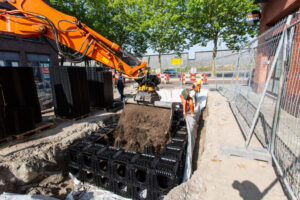
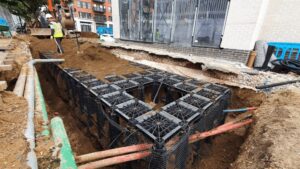
Local Authorities must be emphatic that their standards and expectations for these unique spaces will be high and that green infrastructure and sustainable urban drainage should become second nature to those developers and sub contractors who are chosen to deliver these schemes. Communities need to be engaged to outline their aspirations for these places. When I visited Lancaster for local consultations, it was clear that green infrastructure and a desire to protect the natural environment were at the heart of existing residential vision for the design of the garden village near their homes.
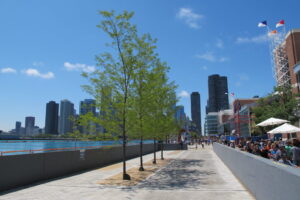
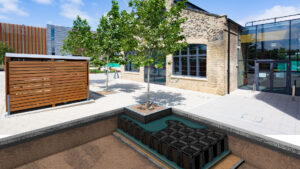
Green infrastructure, when designed in at the outset, will deliver the permeability, resilience and biodiversity that planners should, and must, expect to be part of the whole masterplan concept for garden villages and larger garden towns and cities. The streetscape in these garden towns should reflect the whole philosophy of integrating nature into a sustainable, built environment, fit for the twenty first century.

It has been exciting and invigorating to see how local authorities have responded to local needs, engaged local communities and explored innovative funding models to deliver their respective visions for new garden villages and towns. One example is that of the Culm development that will be delivered in mid Devon. This scheme would have the capacity to provide 5,000 new homes including a national park integrated into the masterplan supported by the National Trust. Speaking with one of the Mid Devon councillors involved in the consultation process and visioning for the project it became clear that green infrastructure lay at the heart of the council’s desire to create a garden village. One that would serve as a vibrant market town, where urban street trees would add character, create a sense of place and provide the critical surface water management functions necessary.
The Ebbsfleet Garden city project is also characterised by ambitious green infrastructure and SUDs/LID designs that will enable residents of every dwelling to be in easy walking distance of multifunctional green and blue landscapes. Seven city parks will characterise the new development, enabling future residents to have their own haven in the garden of England.
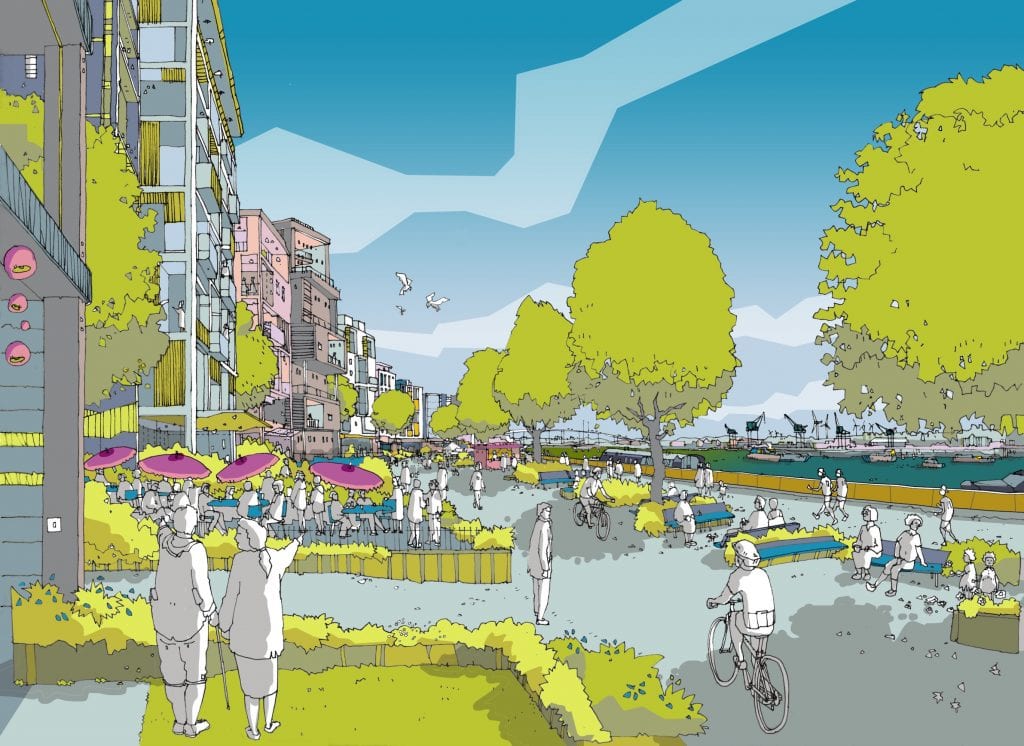
Similarly, Aylesbury Vale District Council have enshrined green infrastructure in their planning of the garden village to be delivered in their locality, including a linear park . They state in their local plan that: “Strategic green infrastructure assets should be identified, retained and enhanced, including improving connectivity through the development of green corridors. Local open spaces should be protected and where possible connected to strategic green infrastructure networks”. Aylesbury has linkages which should be enhanced to connect the surrounding countryside, to the Chilterns and surrounding rural areas.
The direct recognition of how GI represents the lifeblood of these new and ambitious developments is not without challenges. Getting not only the design but the policy right to ensure that developers truly deliver these places of the future will be a test of resilience and character for all council officers.