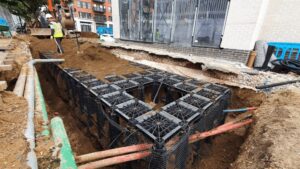
It’s all too easy when designing an urban space, to begin with, what we have at or above ground level, superimpose our new vision over this and sell the idea to the client on this basis. However, we at GreenBlue Urban believe that good design starts below ground.
In our experience, the best results come where below-ground constraints and opportunities are considered first; ground-penetrating radar surveys, utility mapping and historical knowledge often can guide initial designs without costly changes needing to be made later in the project.
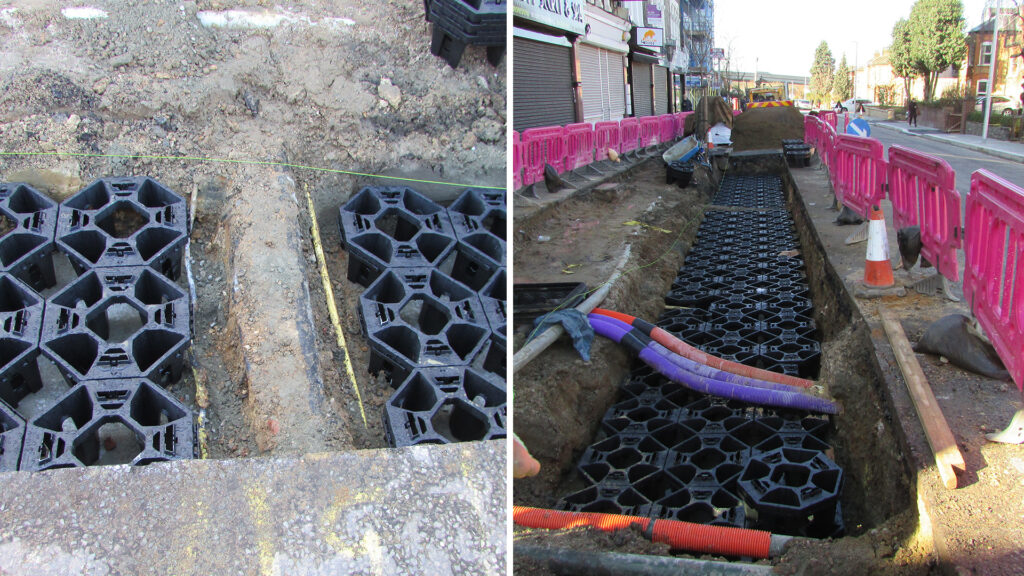
When below ground conditions are being considered, this is the time to think laterally – what was here before? What is the sub-soil like? Can we infiltrate stormwater into the ground naturally? Are there below ground structures such as tunnels, wells, boreholes etc? As we then begin to understand the underlying ground conditions, we can then be creative and imaginative as to how to use the space available.
There will sometimes be constraints that cannot be altered, and thus must be designed around – but this is not a deal-breaker if we design these in on early draft designs. Some utility easements can be restrictive, and leave little room for manoeuvre, but in our experience, discussion with the utility companies can be fruitful, with compromises usually being arrived at. Many of the utility companies are not only seeking to protect their below-ground assets and have access to them but are very aware of bad publicity brought about by the removal of trees when maintenance to the utility is required.
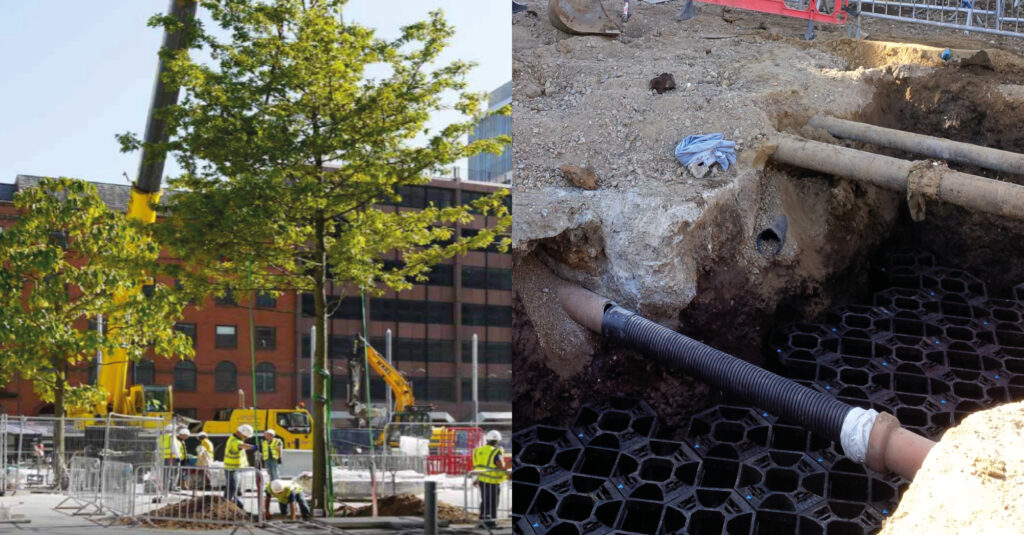
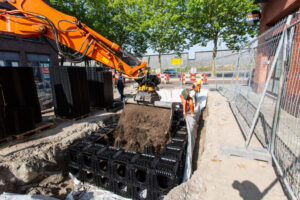
Many urban sites are made up of ground with a wide assortment of materials. This can create some challenges with contaminated or problematic muck away, and with potentially unstable ground build up; therefore it is sensible to minimise spoil removal from the site. GreenBlue Urban strongly support the reuse of below-ground spoil where at all possible: many soils can be remediated and reused for tree establishment.
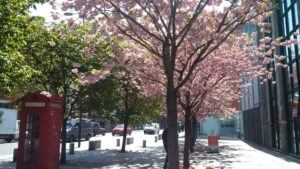
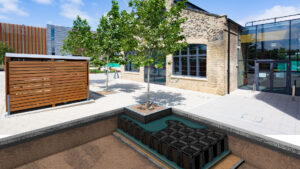
Planting urban trees can be highly effective in helping deal with many of our urban “ills”. Air pollution mitigation, noise pollution attenuation, oxygen production, bio-diversity, heat island effect mitigation and stormwater management are all urban tree benefits, many of which cannot be replicated by other means. But …. If they are to be successful, long term urban assets, planning for their below-ground needs is absolutely critical. Primarily this is adequate uncompacted healthy quality soil for optimum rooting, gaseous exchange, underground guying and water to create the best environment for tree establishment. Above ground, protection may be necessary to help look after the tree until it gets big enough to cope with urban risks. If the below-ground soil volumes cannot be achieved, either choose a smaller species of a tree requiring less soil (and ultimately growing to a smaller size) or plant somewhere else. Discover more by downloading the TDAG Tree Species selection guide.
If we are to hand over a green and pleasant land to our future generations, we must proactively plan for it today. Casual planting without planning will lead to compromised green infrastructure and long-term liabilities, and perhaps more sadly, missed opportunities for holistically designed spaces to maximise the needed benefits. As our climate changes, so must our design philosophies.
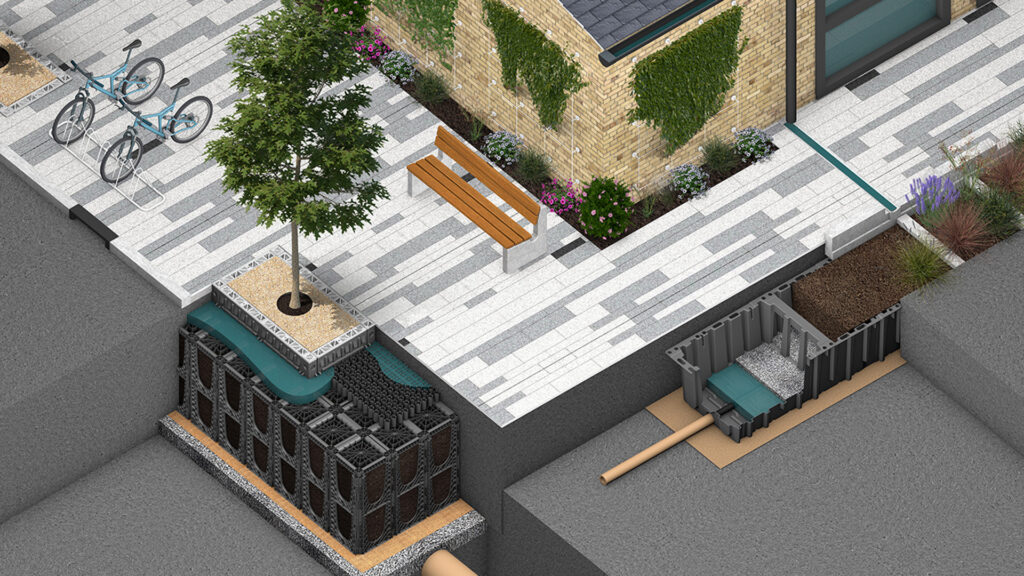
GreenBlue Urban have the design tools and the expertise to help, as well as products that are manufactured in the UK from 100% recycled material with short lead times and re-assurance that you are contributing to your company’s carbon footprint and the circular economy.
Let us start by designing the below-ground elements of a scheme first, and working around constraints – creating the true green recovery.