It is heartwarming and exciting to know that the NHS has become involved with the design and implementation of healthy new towns across the United Kingdom. The case studies / pilot sites chosen from a diverse number of regions are illustrative of the breadth and range of opportunities for intervention to create more sustainable, resilient and healthy communities of the future. Britain faces no less than a crisis when it comes to obesity, increases in the number of people developing type 2 diabetes. It is a problem that affects both young and old, the wealthy and the less well off. One might ask what does new town development have to do with this? Why does it matter and whose responsibility is it?
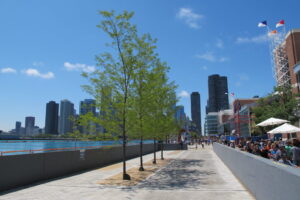
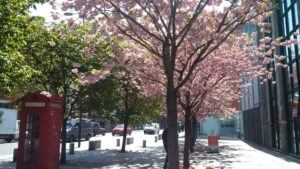
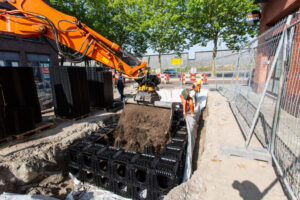
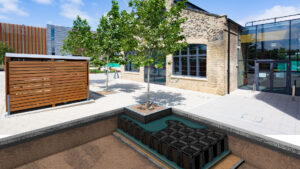
Access to green space and integrated green and blue infrastructure holds the key to mitigating a number of less desirable by-products of living in developed, urban areas. Ambitious tree planting and attractive sustainable urban drainage schemes can not only provide essential pollutant removal providing cleaner air and cooler environment in the summertime, they make attractive areas for walking, cycling and opportunities for social interaction. Indeed, the benefits of public and private green space in developments are well attested.
It is so easy to consider the tree planting and SUDS aspects of new masterplans to be “nice to haves” added extras for developers that are so often neglected and value engineered out to increase profit margins on each housing unit sold.
However, it is worth arguing that not only do citizens have a right to beauty in the sense that architecture can affect physical and mental well-being, they have a right to nature, to natural, green and blue beauty that they can access on a daily basis, cost free.
Our new towns must reflect our political and ideological conception of what it means to live in a Western, liberal democracy. How can we balance the demand for growth and more housing, an inevitable factor of economic advancement, with the health agenda and people’s desire for legible, breathable and permeable spaces?