How to Integrate Tree Pits into Complex Urban Environments

For Specifiers, the use of a complete tree pit package saves time and reduces the complexities of ensuring that below and above ground solutions for the tree are integrated.  This provides the long-term irrigation, aeration, support and protection for all urban trees that specifiers work into their projects. This is why GreenBlue Urban’s ArborSystem has been designed to do just that.
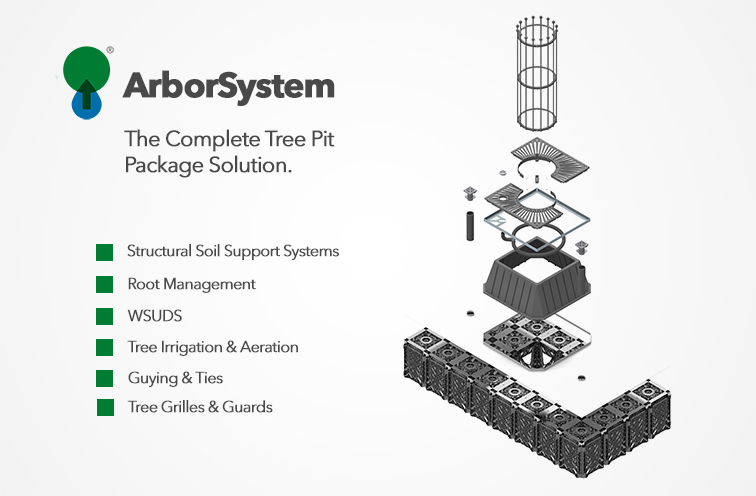
GBU ArborSystem – The Complete Tree Pit Package Solution

Since 1992, GreenBlue Urban has been committed to enhancing and developing this holistic tree pit approach. Our Design Guide and Online Configurator Tool are available for specifiers to explore the possibilities of our market-leading urban tree pit technologies.

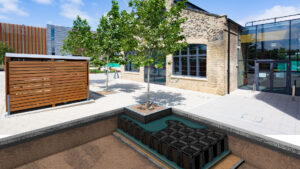
Through a unique combination of root management, irrigation and aeration components, and the provision of uncompacted soil volume, specifiers can be confident that their urban trees can be used in proximity to buildings and highways, while ensuring that belowground infrastructure poses no problem. Our RootSpace side panels provide added stability and integrity to the tree pit.
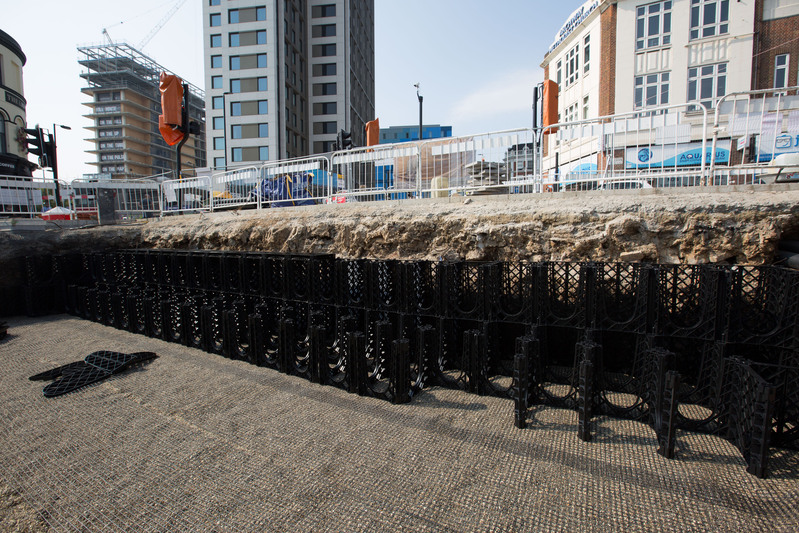
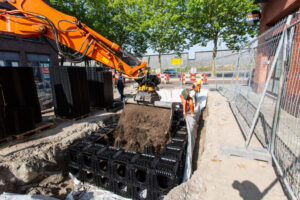
Archway Gyratory Infrastructure redesign by TfL

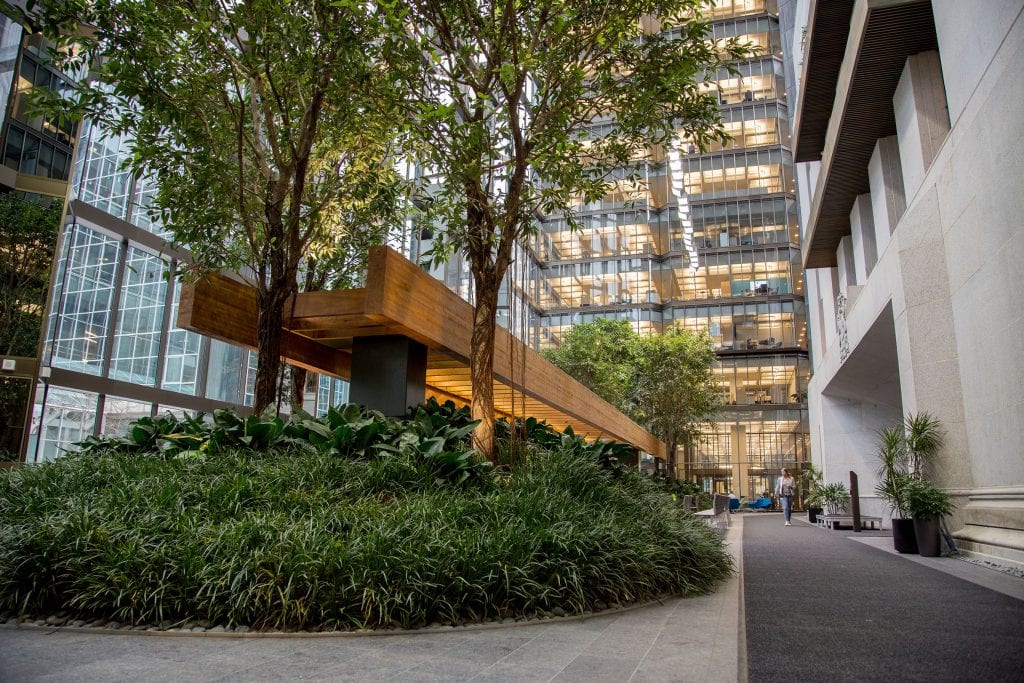
Even indoors, it’s possible to use the holistic package to provide long term support – like the trees at the Canary Wharf in London and the Bank of Canada in Ottawa.
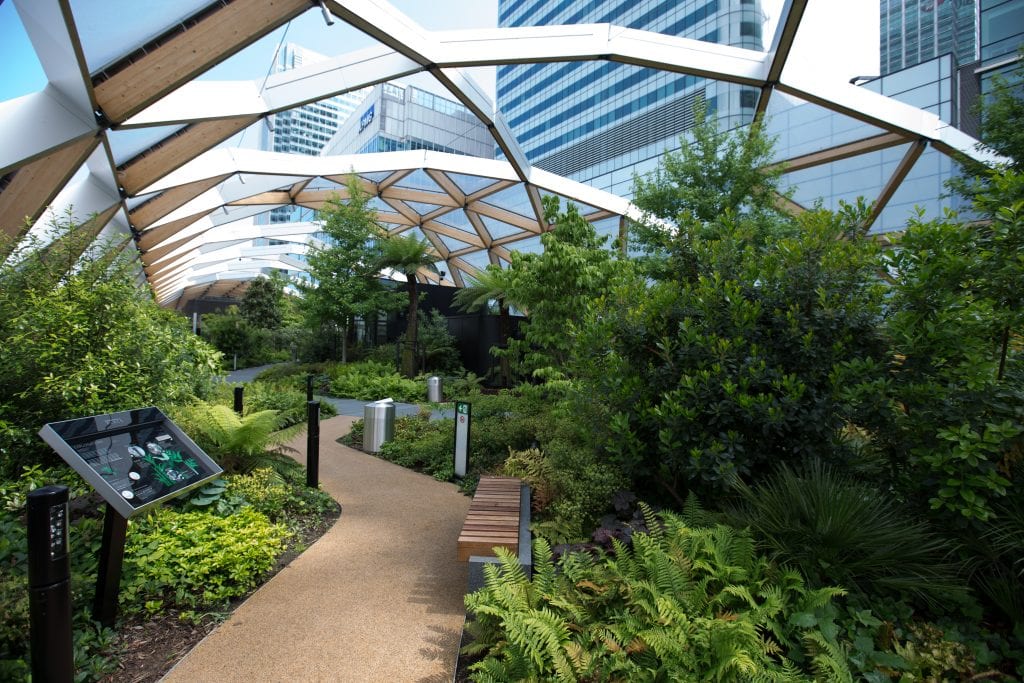
Award-winning design at the Cross Rail Canary Wharf in London, UK
Bank of Canda – Ottawa

The award-winning Canary Wharf and Bank of Canada projects are typical examples of how our suspended pavement systems are implemented in dense, heavily trafficked urban environments. They can be installed at various depths to ensure that there is a solution to suit every context.


Transport hubs constitute another key locus where interventions using urban trees provide both amenity and air quality benefits, such as the Aylesbury Transport Hub and Union Station in Toronto.
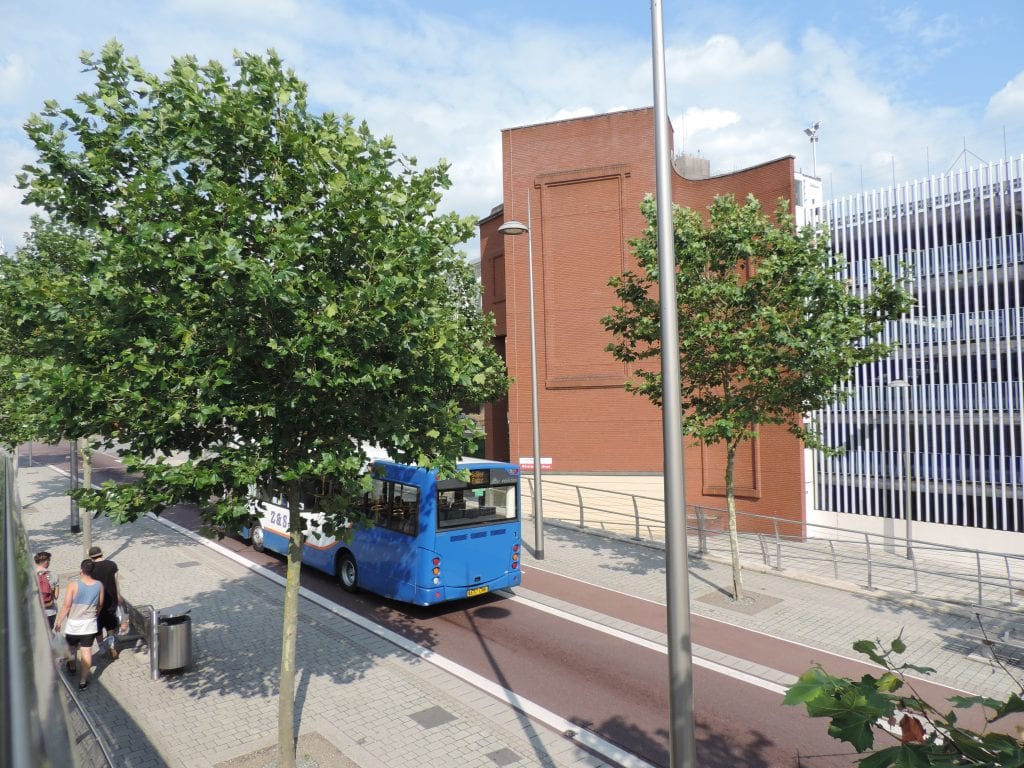
 

Aylesbury Transport combatting air pollution

Working proactively with local authorities and municipalities, clients and sub-contractors on a global scale, we are able to ensure that whatever the degree of complexity and challenge we can provide on-site solutions and technical support to translate design into high quality implementation.
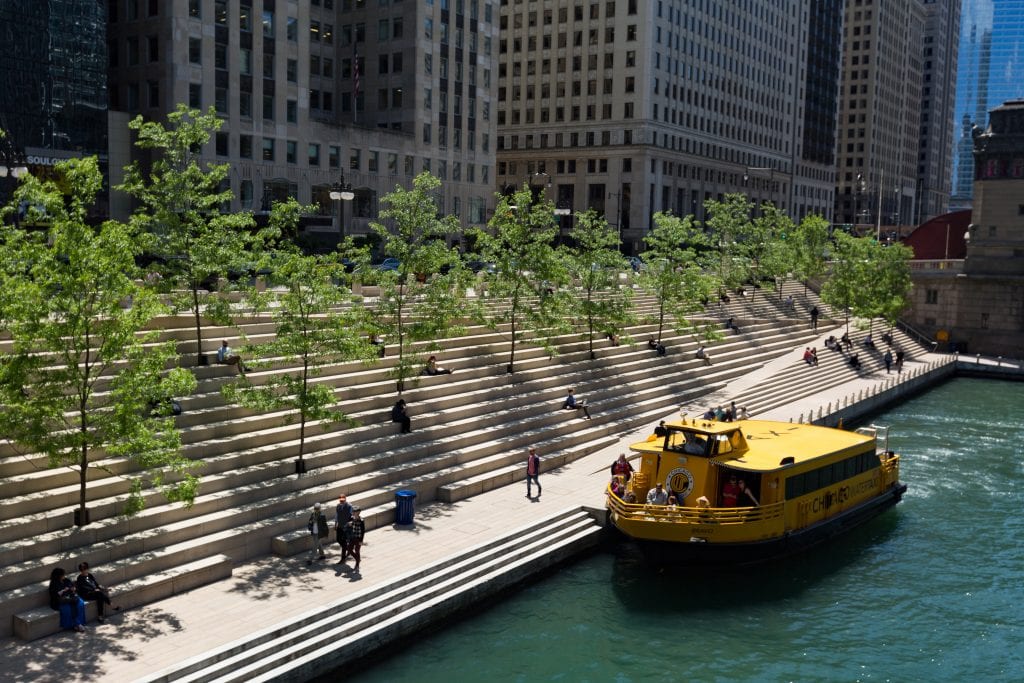
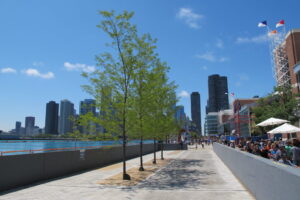
Stepped Tree Pits at Chicago Riverwalk

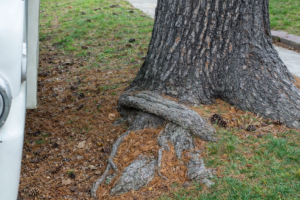
Trottoirs soulevés, chaussées fissurées, surfaces piétonnes inégales : lorsque ces problèmes apparaissent autour d'arbres matures, les racines sont généralement pointées du doigt.

Les populations d'arbres urbains dans les villes du monde entier subissent de fortes pressions. Malgré les avantages manifestes qu'offrent les arbres, notamment le rafraîchissement des rues,

Lorsque l'expression « strangulation racinaire » est mentionnée lors d'une réunion de devis ou d'une discussion de planification, elle a tendance à figer net la conversation.

L'un des défis les plus importants auxquels l'industrie du verdissement urbain fait face aujourd'hui réside dans notre capacité à répondre efficacement à l'accélération du climat

Planter un arbre est souvent perçu comme un acte d'optimisme, un geste tourné vers un avenir plus vert et prometteur. Toutefois,

Concevoir des aménagements urbains qui soutiennent à la fois la saine croissance des arbres et les exigences structurelles des chaussées, des sentiers et des zones carrossables

En milieu urbain, le sol réunit rarement les conditions nécessaires à la croissance et à l'épanouissement des arbres. L'espace racinaire restreint, la compaction et les conflits d'usage

Nos systèmes de drainage urbain existants sont sollicités bien au-delà de leur capacité initiale de conception. La densification du développement,

Chaque hiver, les villes prennent un air plus festif. Les rues s'illuminent, les marchés s'installent et, sur de nombreuses places publiques,

Les milieux urbains sont des espaces complexes et très sollicités où chaque centimètre carré de terrain remplit une fonction. Pourtant, même dans les zones à forte densité bâtie,