Twenty-five years after our inception, GreenBlue Urban have developed solutions we are proud of but we don’t stop and stagnate! It is through our work with Arboriculturalists that we are truly able to understand the complexities of our most precious assets – trees.
Our focus is on providing the most robust, structural soil support systems for the integration of trees into the hard landscape cannot be accomplished without deep collaboration between us and the community of arboriculturalists working across the public and private sectors.

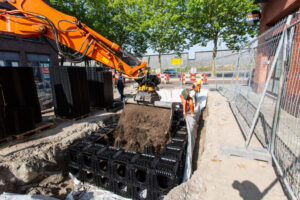
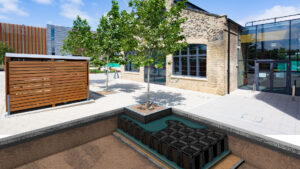
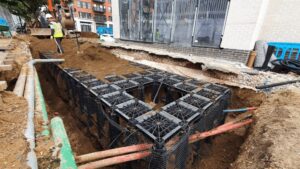
On some of our earliest schemes delivered in the capital we were able to utilise TreeRadar© technology developed through a partnership with Sharon Hosegood Associates which allowed us to measure the success of our engineered tree pit systems. The use of this cutting edge technology measures urban trees roots and how they establish below the paved surface. Understanding the growth patterns of tree rooting systems in this way enables us to develop more sophisticated structural soil modules to accommodates the needs of the tree and those of human development.
From the earliest inception of GBU, we recognised the need for consistent feedback from the arboricultural community, we are committed to working with tree officers and arb consultancies. We have developed a unique technical and customer service facility so that enables the most important custodians of our urban trees to source the resources and expertise they require easily.
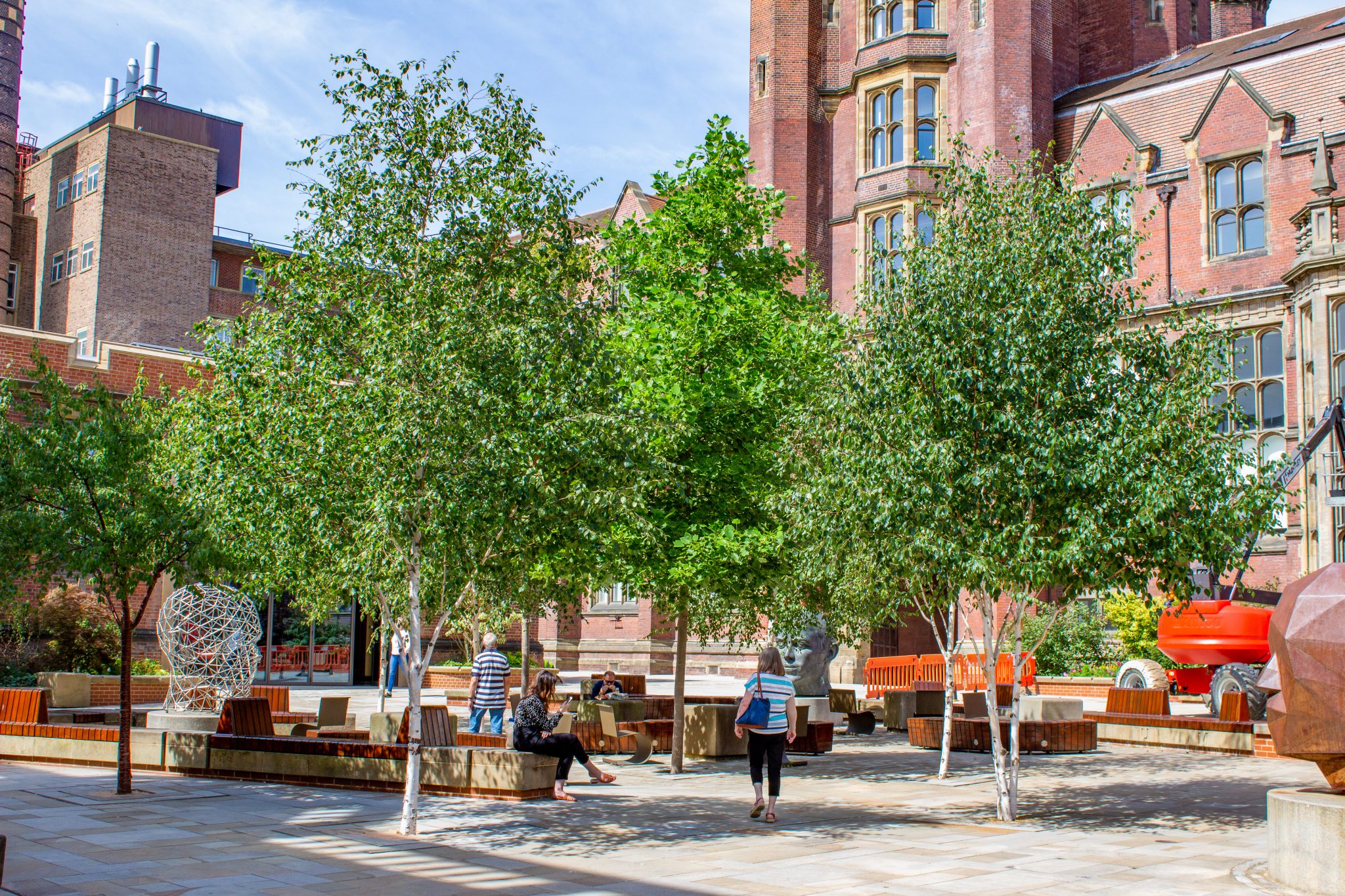
We share a common vision with arboricultural experts to promote both creative and pragmatic methods of integrating urban trees into our towns and cities that will reach maturity and deliver the full benefits of ecosystems services we know they can deliver.
- Investment in product development and the needs of increased density of development – Supporting both MTOA & LTOA ensure that local authorities and private sector clients have the technical tools at their disposal to ensure that retrofit and new build schemes can accommodate quality tree pits that will allow for increased canopy cover
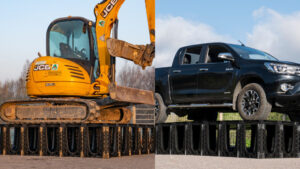
- Load bearing and highways compliant systems. This guarantees that tree officers and consultants can make the case for increased planting across transport schemes and highways retrofit
- Multifunctionality – the emergence of the SUDs compatible tree pit systems has provided a unique opportunity for multidisciplinary collaboration for the integration of tree pits on schemes that can deliver more for less
Human capital is also integral to the GBU mission and our unique team of technical and urban planning experts can assist arbs to work proactively to ensure that schemes of all scales have the most ambitious and progressive tree pit designs possible. Discover more on the Arb Association their works and upcoming Conference Soils & Trees taking place on 9-12th September 2018.