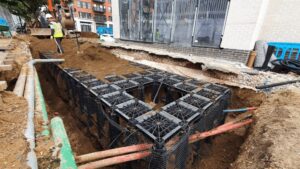
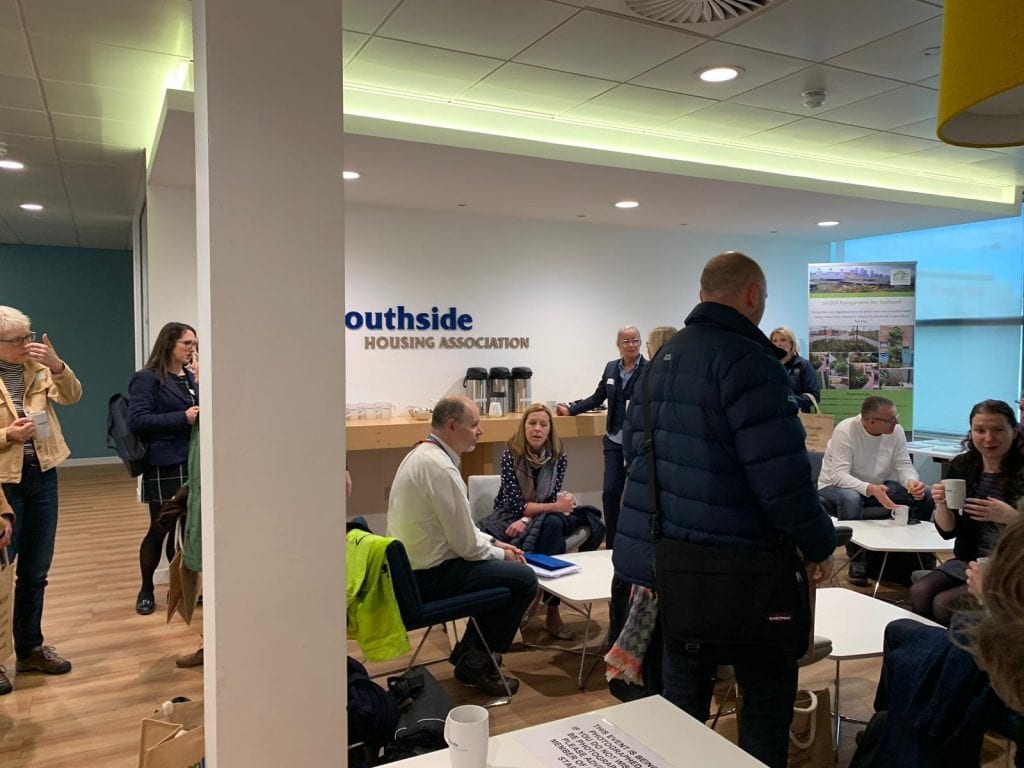
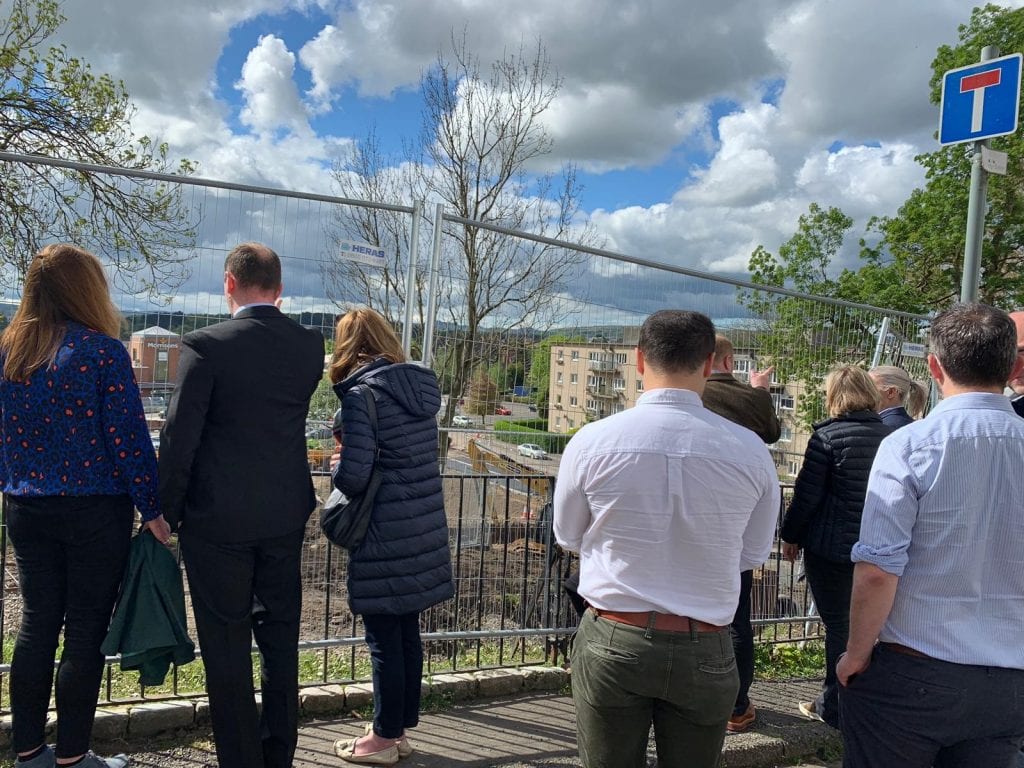
Last week saw the first of a series of collaborative roadshow events, which took place at Southside Housing Association, Glasgow. The event co-hosted by CSGN, GreenBlue Urban and Southside HA provided a platform for stakeholders across the public and private sector divide to present innovative SUDs projects and discuss barriers and opportunities for the implementation of SUDs in the Glasgow area. The presentations were also supplemented by a site visit to the ambitious Moss Heights Halfway Community Park Scheme.
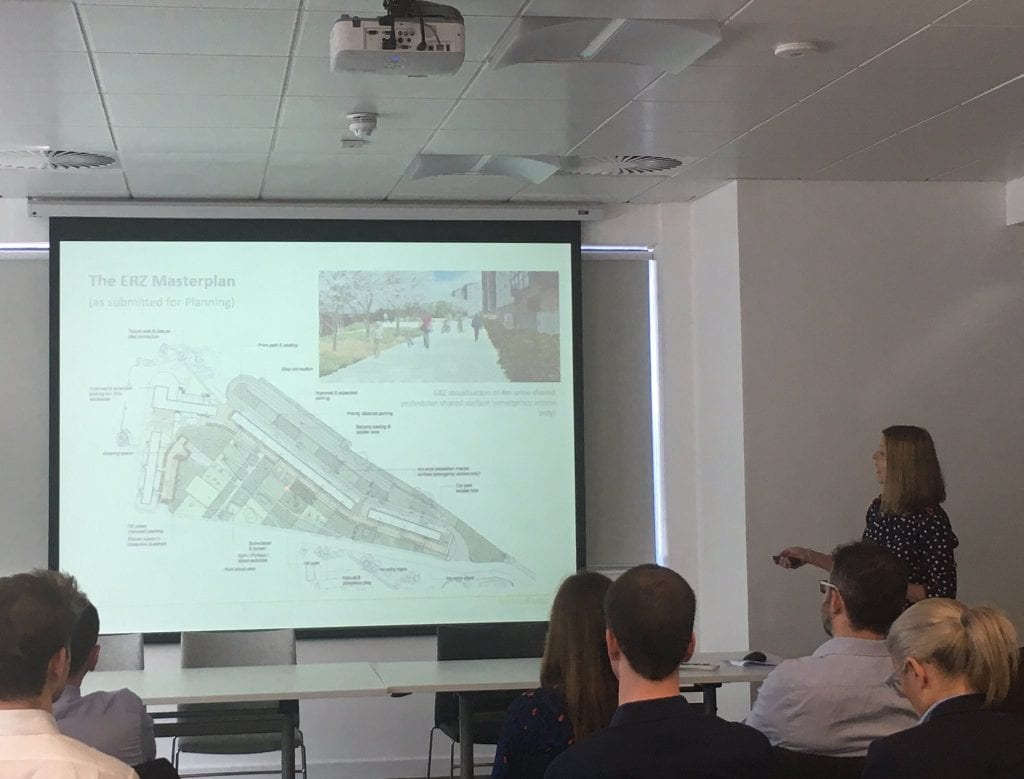
It was clear from the site visit and the presentations by GreenBlue, AECOM, Ironside Farrar, Glasgow CC and Southside that key elements for success include:-
- An early stage design collaboration between local authority and landscape architects
- Community engagement and long term maintenance strategies
- Working proactively to understand the engineering requirements of each site and the most suitable SUDs components
- Identify opportunities for community value and uplift.
- What training opportunities and long term social and economic value can SUDs projects deliver particularly on social housing developments and land owned by housing associations?
Opportunity mapping is critical for success and what we understood clearly from the schemes discussed today was that clear planning of SUDs interventions in relation to long term highways and regeneration projects will result in fewer losses of the golden possibilities to realise connected SUDs networks whether on housing schemes or public realm.
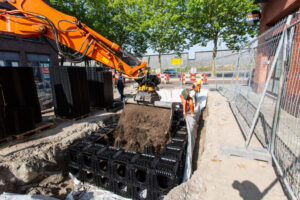
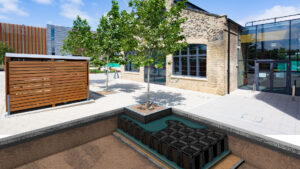
Whilst we want to use the natural environment to full effect to attenuate water what we learned from GBU, AECOM and Ironside was that engineered systems can be adapted to suit and enhance SUDs schemes and present opportunities to deliver higher volumes of attenuation leaving more space to bring nature to citizens.
Our next Roadshow takes place on 14th May, with Cambridge City Council, LDA & Sharon Hosegood Associates, with further events in Leeds and Manchester. For further details click on the link below.