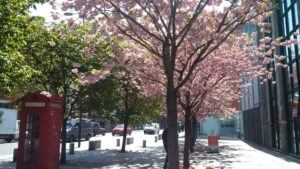
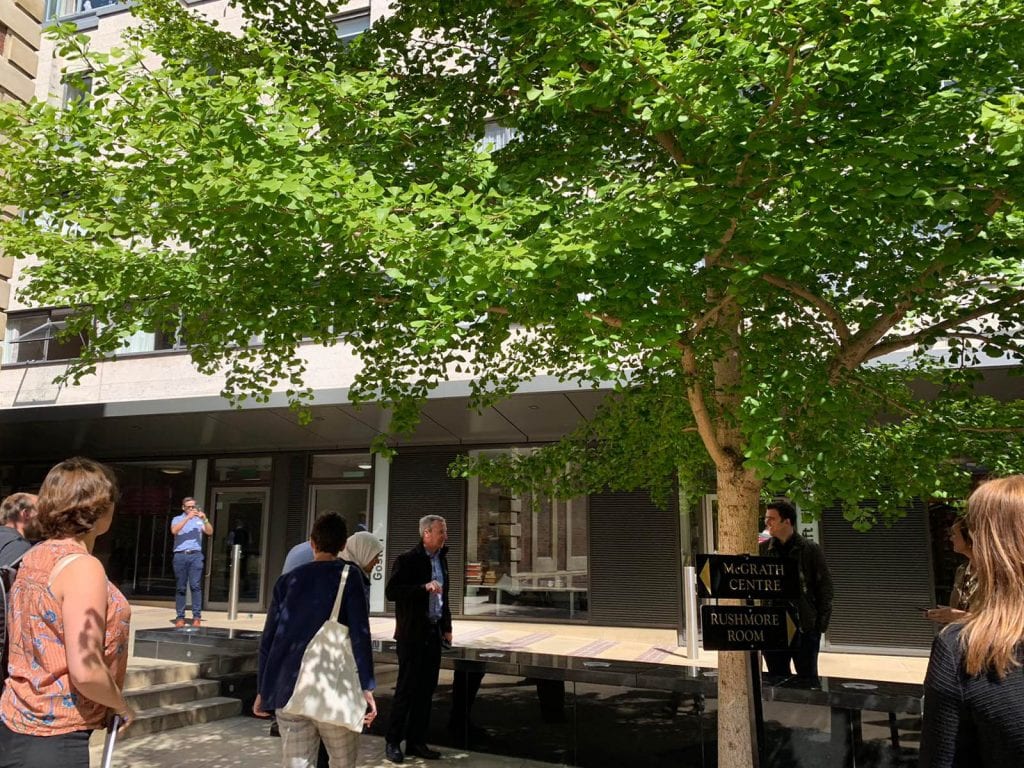
May 14 saw the second of the GreenBlue Urban roadshows arrive in East Anglia. The beautiful environs of St Catharine’s College, Cambridge, where GreenBlue have delivered the ArborSystem, provided the perfect context to welcome landscape architects, utilities companies and developers to a focused series of talks on Trees and SUDs in the urban environment.
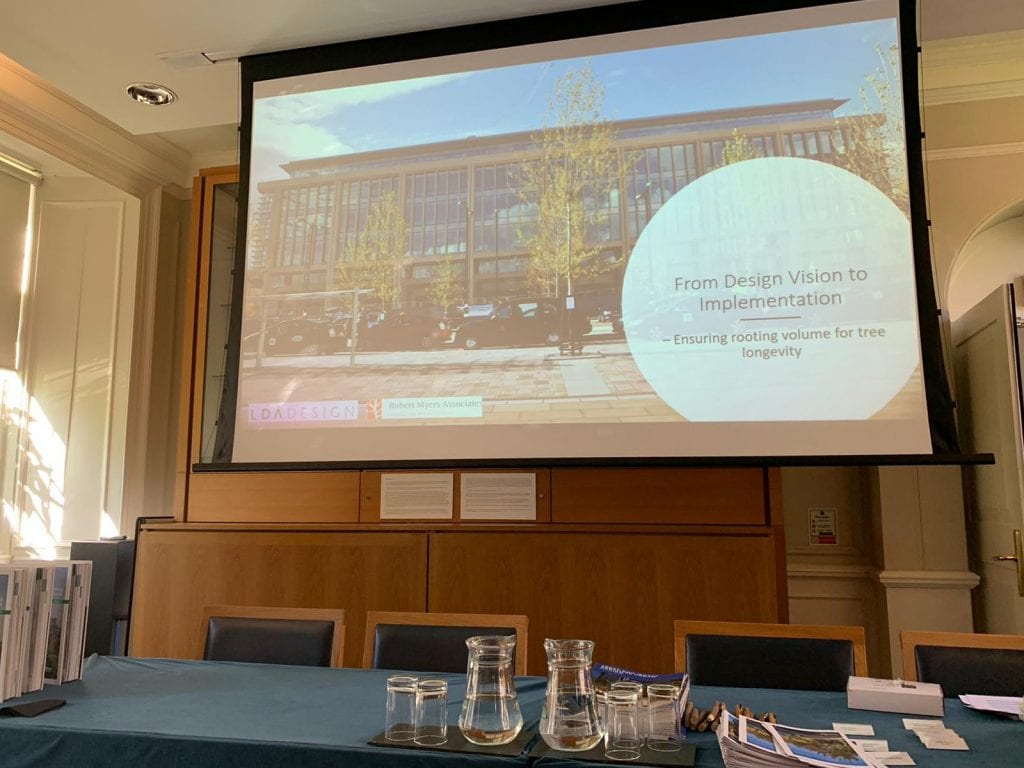
Speakers from Cambridge City Council, LDA Design, Sharon Hosegood Associates and GreenBlue Urban highlighted the challenges and solutions for delivery from policy through to valuation techniques and underground soil cell systems.
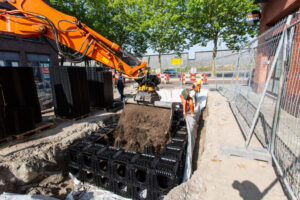
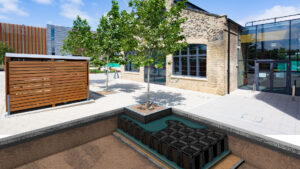
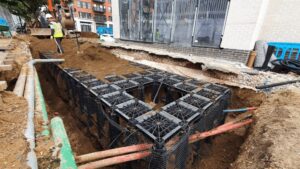
The Cambridge City Council officers made the explicit connection between the tree strategy they utilise to protect and enhance canopy cover with the important function trees play as bioretention systems within sustainable urban drainage schemes. Sharon Hosegood provided worked examples of the CAVAT valuation model that she uses when working with local authorities and developers to ensure that canopy cover is not compromised through the removal of highly valued urban trees. Dawn Purves of LDA Design (formerly Robert Myers Associates) gave a fascinating insight into the rationale behind her specification of the RootSpace soil cell system in the constrained hard landscape around Cambridge city rail station.
GreenBlue Urban’s very own CEO Dean Bowie focused on the urban tree as a missed opportunity in sustainable urban drainage schemes and gave a technical overview of the innovative nature of the GBU Arborflow SUDs tree pit.
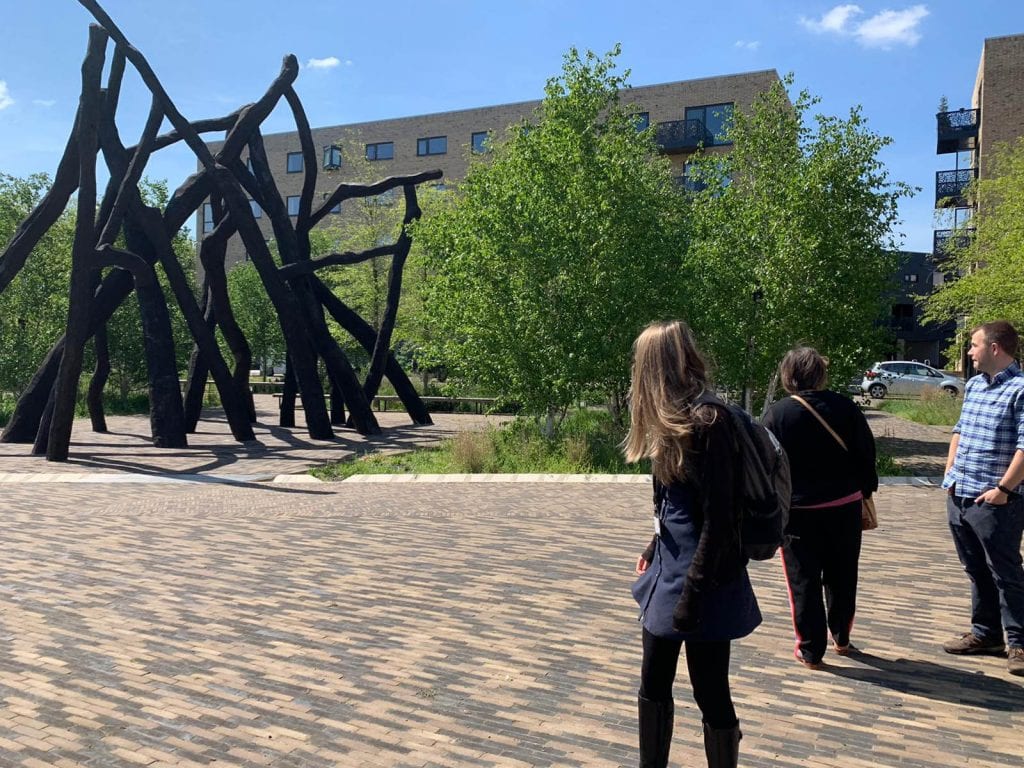
 Talks concluded, participants were able to go on a guided tour around the Clay Farm development on the outskirts of the city. Sadly, we discovered that there remain challenges getting highways engineers to fully embrace engineered geocellular systems for integrating tree pits into rain gardens. However, the difficulties of using structural soil are becoming more and more apparent across the UK. More creative approaches that will deliver the canopy cover which provides much more effective interception are increasingly in evidence.
If you are interested in attending one of our specialist roadshows delivered in collaboration with regional experts in engineering, landscape architecture and local policy, then please look at our upcoming events in:
| Date | Event | Location | Link |
|---|---|---|---|
| 12th June 2019 | Green Streets & Making Space for Trees | Leeds | Waitlist |
| 3rd July 2019 | SuDS in the City | Manchester | Book Today |
| 25th Sept 2019 | TBC | London | To Follow |