9 Trees, as a concept, was formed in 2018 by Michael Cunningham, an experienced habitat and business manager. He was joined by Michelle Kent, in 2019, an experienced countryside and habitat manager. They are now joined by an amazing team of volunteers!
The vision of 9 Trees is to tackle climate change by creating new woodland habitats, promoting biodiversity, creating jobs within the countryside sector and connecting more people to nature. They are a Community Interest Company, ploughing any profits back into good schemes, training and education.
9 trees is the number required to ‘balance’ the average UK citizen’s carbon consumption each year. They offer individuals the opportunity to subscribe to 9Trees and who will plant 9 trees for each subscriber each year. They work with businesses too, coming up with ideas together to allow those businesses to fulfil the commitments in their Environment & Social Governance commitments in their Business Plans. However, they do more than that; they can create ideas for businesses to invest in woodland creation and then use that woodland as outdoor teaching space for their employees to learn about nature and about the evolution of an ecosystem as the woodland grows & thrives. They can install trial cameras and link them back to your offices so that staff & visitors can watch the woodland grow. They also carry out ecological surveys so that your business can be proud of the habitats you have created for local wildlife. This is more than simple carbon offsetting; you can balance the impact of your carbon emissions on the environment at the same time as creating beautiful, wild places.
9 Trees nurture the woodlands for at least 50 years and ensuring that the trees develop and mature as they should.
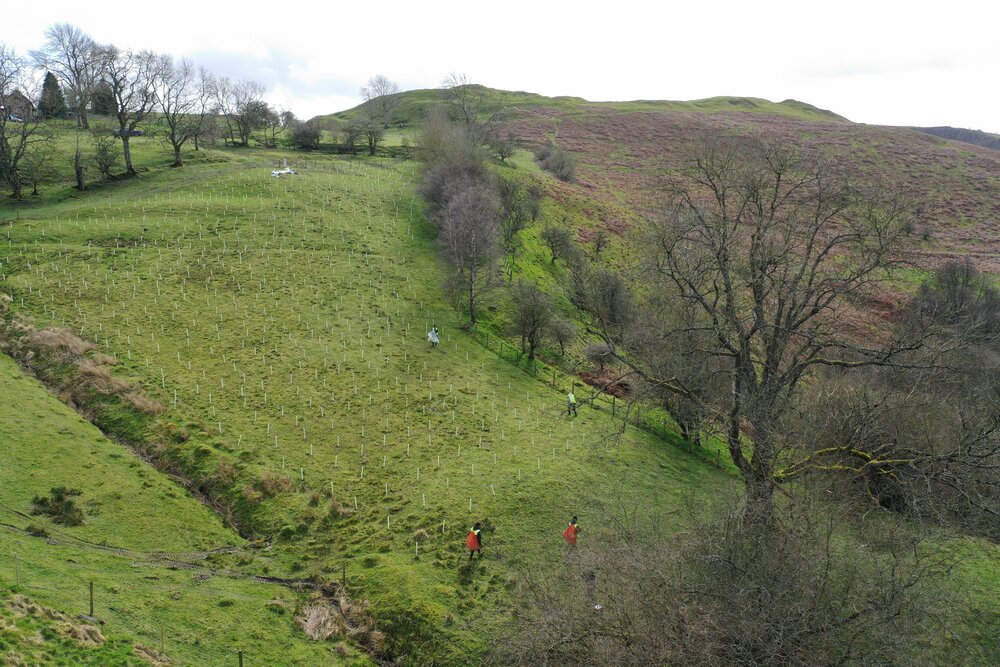
The picture shows Tawny Wood which we planted in March 2020 with a landowner in mid-Wales. This woodland is located near the beautiful Elan Valley where there are many species that need safe places to live and to feed. Some of the birds & animals that live in the valley are Pine Martens, Polecats, Hares, Pied Flycatchers, Snipe, Small Heath butterflies and, of course, Tawny Owls.

By creating new habitats for them, that is linked to existing habitat, 9 Trees can help to secure their recovery, to make sure that they survive for many decades to come.
Their latest video highlights their amazing work for the long term as detailed by Geoff Heald a landowner from mid-wales who enabled tree planting in Franklin Wood in 2020.
If you can participate, then do so; it’s for our children and for subsequent generations
Please do get involved we can only resonate the passion of the team of this wonderful cause – visit their website to discover more and join GreenBlue by donating where you can!