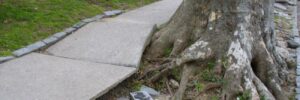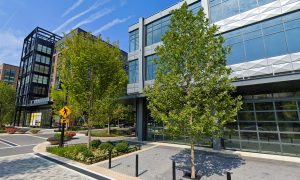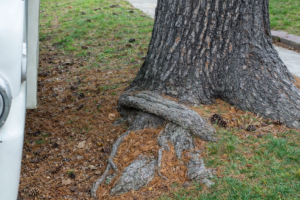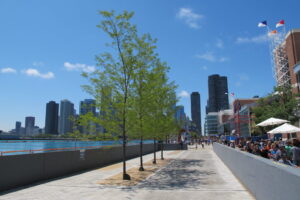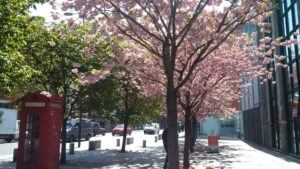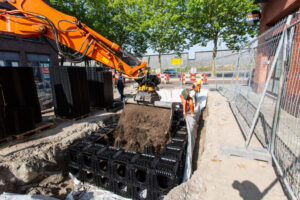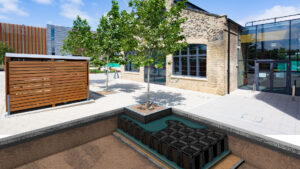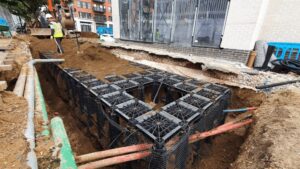
Having recently visited Leicester and the Integration of Green and Blue and with our history of delivering projects in and around the city, most notably our work on Jubilee Square, it seemed timely to reflect on the green and blue infrastructure of the city. Leicester currently has a Local Plan for consultation and this will provide the city’s inhabitants with a unique opportunity to engage with the planning system and shape the future of the city. However, one of the most important questions to pose is; how often are green and blue infrastructure considerations at the forefront of people’s minds when councils do consult, and how effective is this consultation process? It was clear from my time spent with specialists from a variety of disciplines within the council that there is a real passion to green the major road networks in and around Leicester and an understanding that green and blue infrastructure is an essential component of quality placemaking. It is refreshing to read that the mayor of Leicester, Peter Soulsby, in his foreword to the draft plan, describes how “Planning for future homes, jobs, schools, green space and transport infrastructure should not be constrained by the arbitrary administrative boundaries of our local councils.” Biodiversity, soil quality, mitigating the effects of climate change and improving air quality are key considerations in this draft local plan and it is clear that increased canopy cover; planting more urban trees, better retrofit and regeneration using innovative SuDs schemes, can surely help the city realise its ambitious vision.
The council have also been pragmatic in detailing where they foresee potential objectives within their plan to be in conflict. This will hopefully enable key stakeholders and the community to collaborate in order to identify opportunities for increased and enhanced green and blue infrastructure provision whilst also recognising the need to provide housing, employment and growth in target areas.