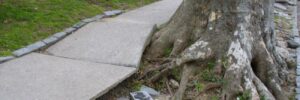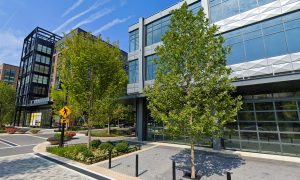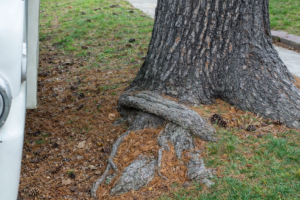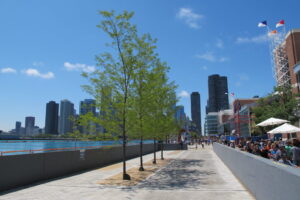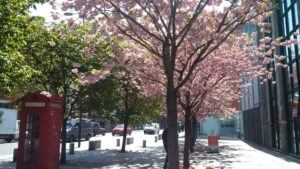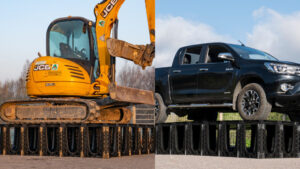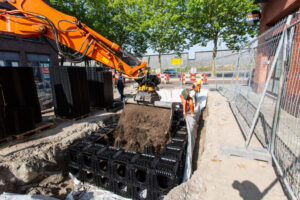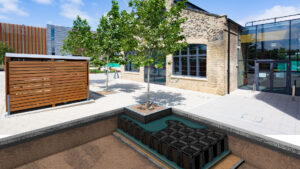
Within the beautiful landscape trends in urban areas lies one significant problem: root systems are destroying our cities’ infrastructures and utilities! Tree roots grow under sidewalks and asphalt causing millions of dollars each year in pavement repair and damage control.
There is no question that trees bring countless benefits to the urban lifestyle. Shade on the hot summer streets is just the beginning. Trees help to reduce energy usage, filter stormwater, remove air pollutants, and restrict carbon in our environment. If the root systems within those trees are impeded by concrete or asphalt, they suffer from irreparable stress, thus damaging the health of the trees and the concrete itself.
Creating green and blue space within the urban landscape is far more encompassing than planting trees and watering them regularly. The key to preventing long-term root system and infrastructure problems is using the proper planting techniques. When applying meticulous care in this step of the process, trees flourish, and urban areas receive all their enduring benefits.
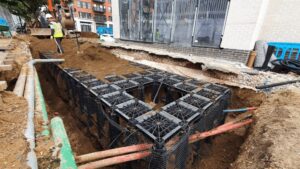
Due to the magnitude of root system problems, GreenBlue Urban has applied painstaking research to help developers take all the guesswork out of the planting process. Applying scientific solutions to manage root systems can save cities endless headaches and repairs. And you now have access to this research free of charge! Simply download it here: https://greenblue.com/na/resource-centre/managing-the-root-of-the-problem/
The ultimate purpose of creating green and blue space in an urban setting is to perpetuate the earth and bring into our environments the health and beauty that a natural setting affords. Allow those trees to leave the indelible mark on our cities that we all deserve. Download your free copy of GreenBlue Urban’s research and start planting wisely today!