With the recent announcement that Saudi Arabia will host the 2034 FIFA World Cup for the first time, investing in green infrastructure around developments will do more than create a wow factor. New stadiums in the Middle East will be under immense pressure to impress, and green spaces will be essential given the intense heat – providing shade and cooling through evapotranspiration.
GreenBlue Urban have a proven track record of meeting these challenges in the Middle East, with the establishment of healthy trees lowering the air temperature by between 2°C and 8°C, as well as reducing air pollution and providing a green legacy.
Here are some examples of GreenBlue projects in the Middle East, with industry-leading products manufactured in the KSA.
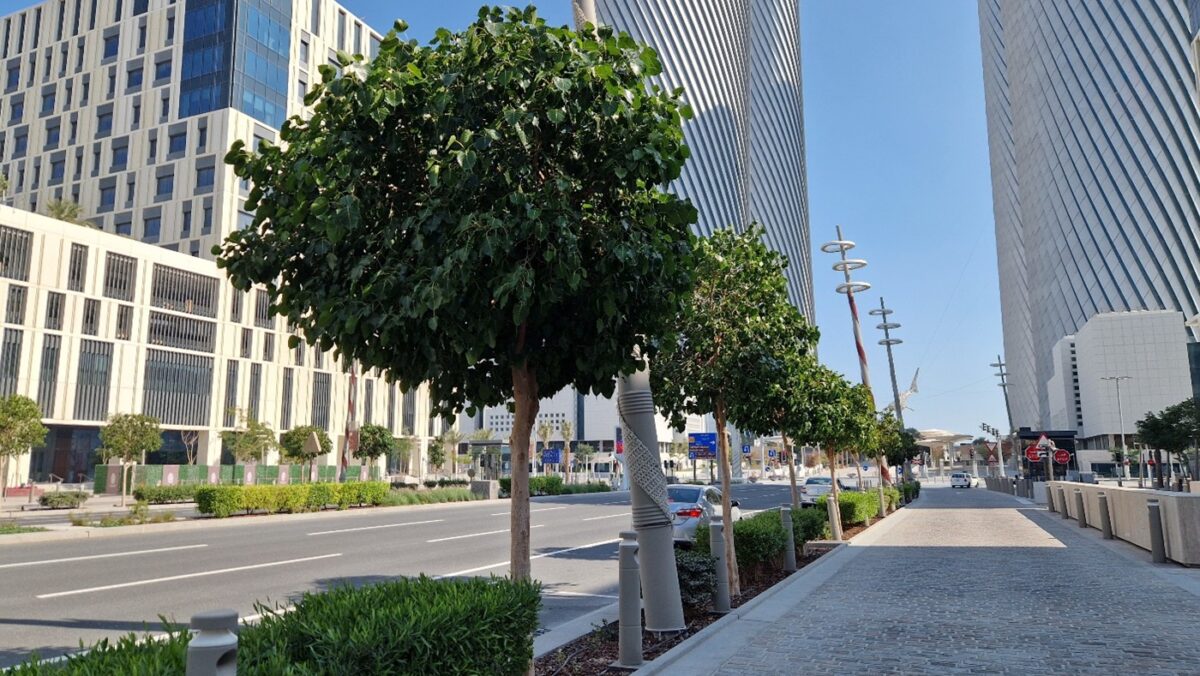
A GreenBlue Urban project in Lusail, Qatar
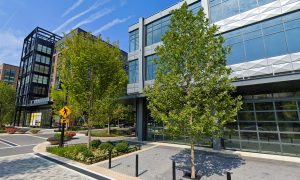
Commercial Boulevard, Lusail
As one of the official fan zones for the 2022 World Cup, Lusail Commercial Boulevard was a key destination in Qatar’s hosting of this major sporting event.
As part of the extensive landscaping plan, the boulevard is lined with trees and planting to provide green amenity spaces. Now established and thriving, the planting plays an important role in absorbing carbon and providing shade during extreme summer temperatures.
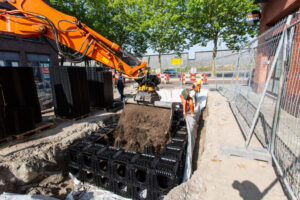
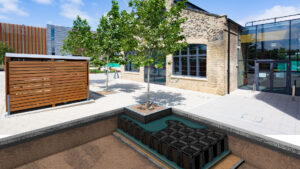
Working alongside Foster + Partners and HOK in both London and Dubai, GreenBlue Urban oversaw the installation of soil cells on the site. The team was involved from the early conceptual stages, advising on the best system to provide optimal growth.
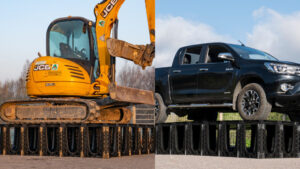
Made from recycled materials, GreenBlue’s RootSpace® was chosen for its maximum soil and rooting volume and industry-leading strength. The soil cells provide healthy, aerated, uncompacted soil – a best practice method backed by years of research.
The result was a stunning, green, tree-lined boulevard that became the walkway for thousands of fans who attended the game.
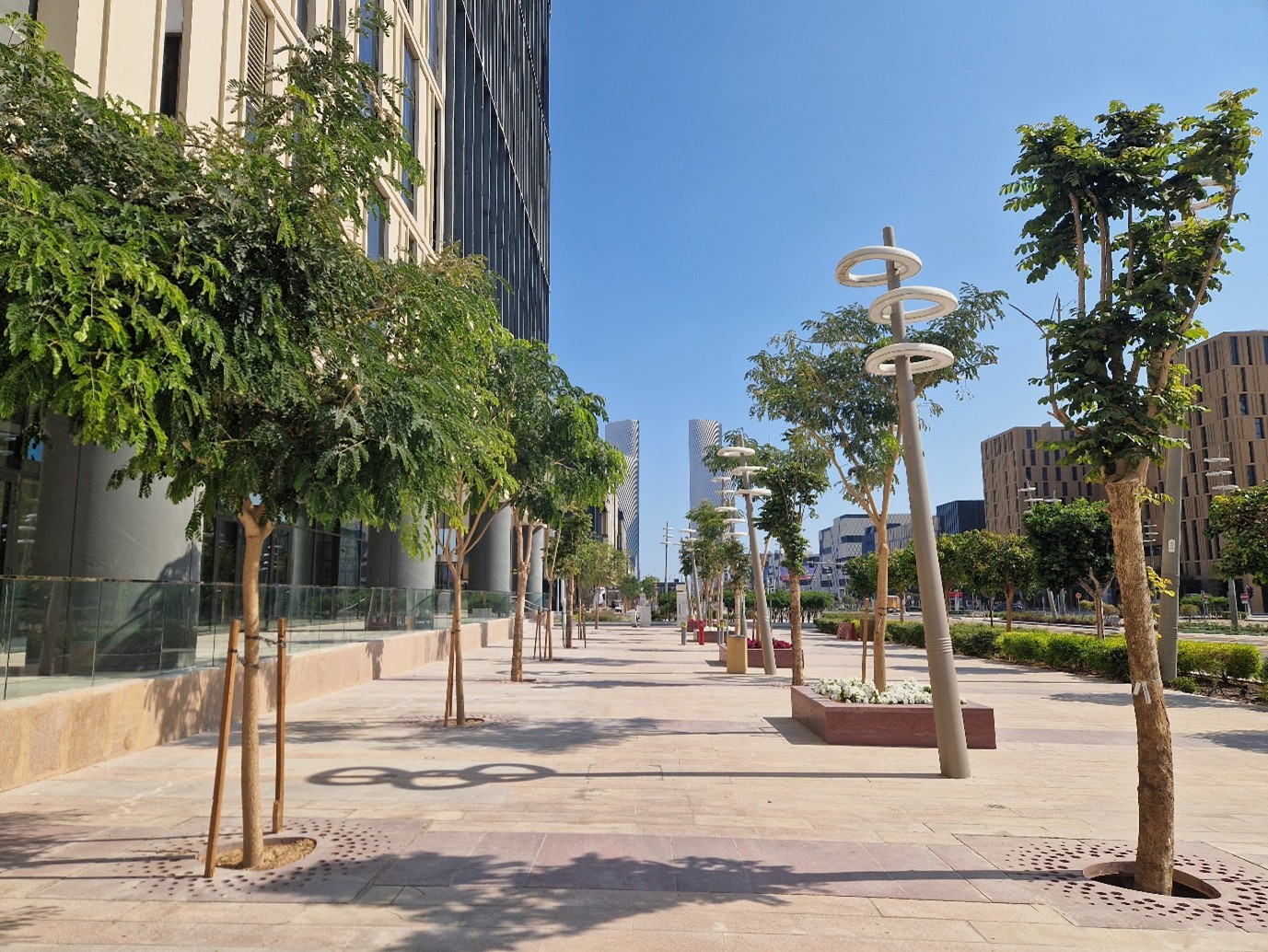
Commercial Boulevard, Lusail
The Sports Boulevard, Riyadh
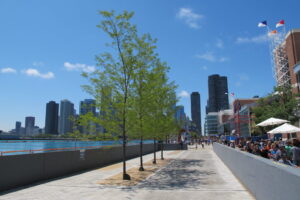
At 135km long, with over 170,000 trees, the Sports Boulevard in Riyadh is the largest linear park in the world . Aligned with Saudi Vision 2030, the project aims to make Riyadh one of the most liveable cities globally. It seeks to inspire residents to adopt a healthier lifestyle by providing open, green spaces for exercise and urban shading to cool the local area, improving the overall quality of life.
GreenBlue Urban was proud to be involved in the project from the early concept and planning stages. Later, the team worked with Riyadh-based landscape architecture firm Coen+Partners and together they delivered a stunning green scheme. The initiative also provided economic benefits to the local area, with products made from recycled material and verified by third-party load-bearing testing – manufactured in Saudi Arabia.
Dubai Expo 2020
Dubai Expo 2020 welcomed 24.1 million visitors to its human-centric smart city. As a global fitness stage, it provided exciting opportunities for visitors and staff to participate in a diverse programme of fitness activities. The Expo featured state-of-the-art sports facilities, interactive fitness zones and wellness workshops.
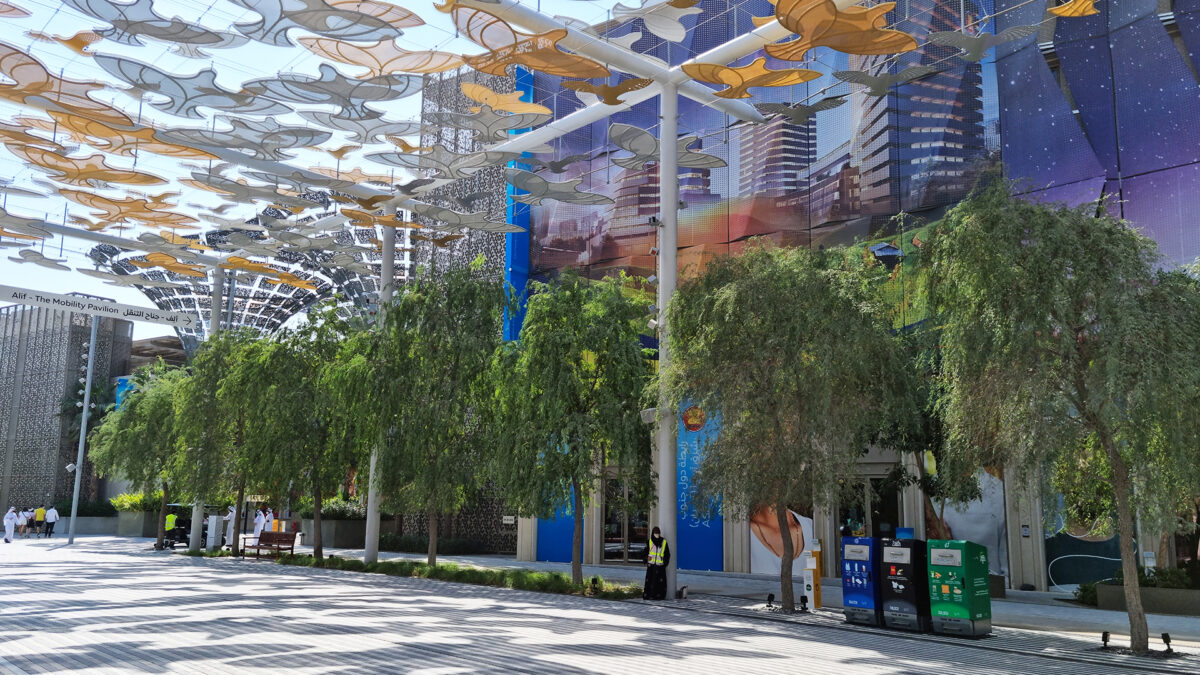
Dubai Expo 2022
Tottenham Hotspur Stadium, London
During the construction of the new state-of-the-art Tottenham Hotspur Stadium, the landscaping outside the venue was integral to the building’s function, creating an inviting and calming entrance for spectators.
Working alongside landscape architects Populous and contractors Willerby Landscapes, GreenBlue Urban played a pivotal role in the installation of trees using RootSpace®, the strongest soil cell system on the market.
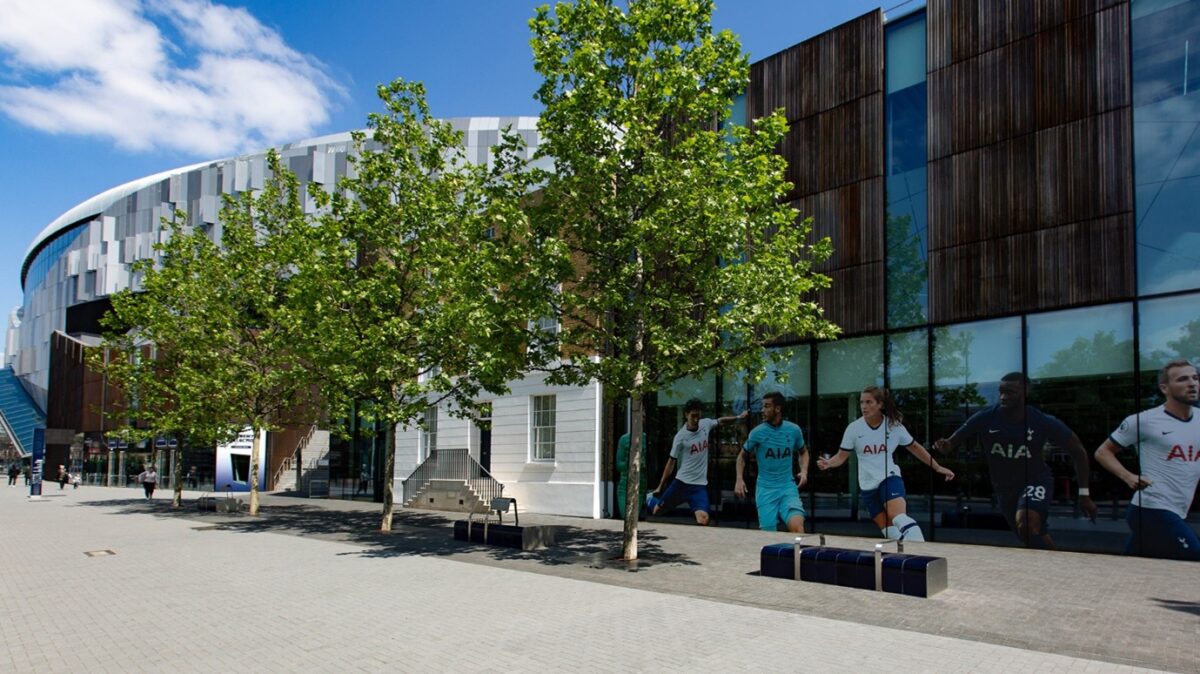
GreenBlue Urban’s thriving trees at Tottenham Hotspur Stadium
Olympic Park, London
The Olympic Park in London spans 560 acres, with 6.5 km of waterways, 15 acres of woodland and hedgerow habitat, and over 6,000 new trees.
GreenBlue Urban worked with the design team to install over 10,000 irrigation, aeration and guying products to ensure the longevity and stability of the carefully selected trees.
Integrating Green Infrastructure in Global Events Stadia
The integration of green infrastructure in sports stadiums and urban spaces is not only a testament to innovative design, but also a commitment to sustainability and community well-being. Projects like the Sports Boulevard in Riyadh, Lusail Commercial Boulevard, and Tottenham Hotspur Stadium showcase the profound impact of thoughtful planning and environmental stewardship.
By prioritising long-term benefits such as lowering ground temperatures, improving air quality, enhancing green areas and attracting tourism to boost the local economy, these developments are setting a new standard for future urban projects. Contact us today to discover how we can support your Vision 2030 initiatives, creating a more inclusive, sustainable, and prosperous future together.