National Tree Week is finally here, time to get the wellies on and venture outside to plant a tree that will thrive in 2023, join us for our annual #letsgetplanting campaign!
Trees and hedgerows are some of the most powerful resources in mitigating climate change. The critical factor of this method is that we can all plant a tree for FREE to make a huge difference! The Tree Council has published a Tree Planting Guide Map helping you connect with your local community and tree warden network to attend a local planting event near you! When planting ensure the following are adhered to:-
Right tree, Right place for the Right Reasons.
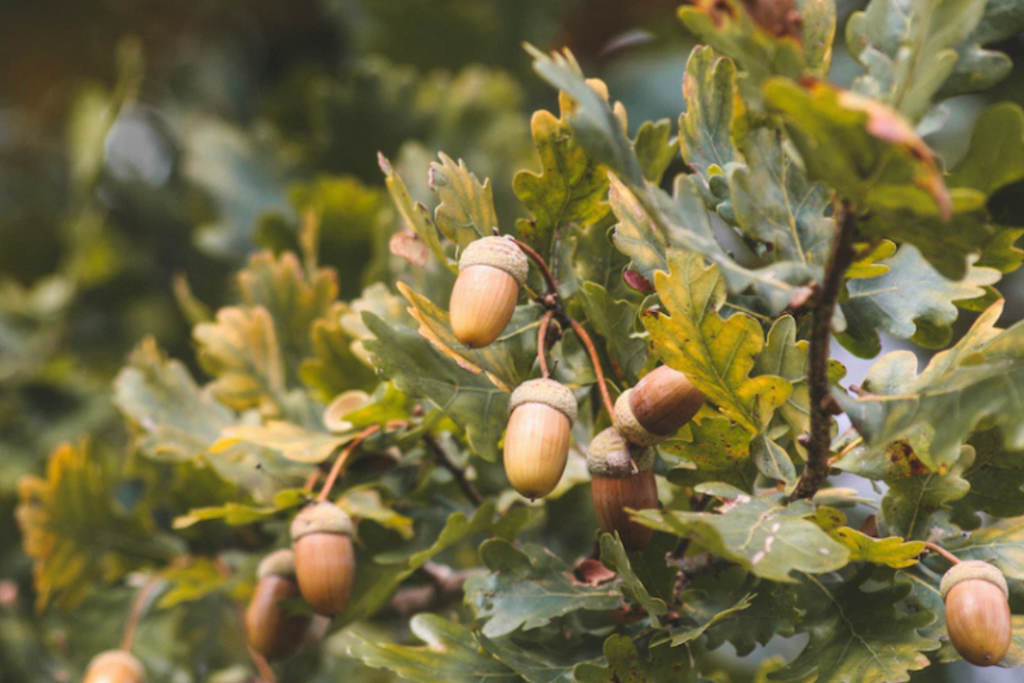
Jon Stokes, Director of Science and Research at The Tree Council highlights a particular national favourite “Our oak trees are an iconic feature of our countryside, but they are in fact two species: sessile oak (Quercus petraea) and pedunculate oak (Quercus robur). Despite being the most widely planted broadleaf tree in the UK, the supply of British acorns to tree nurseries is still limited. To successfully plan to collect more acorns at the right time, we need to understand the biology of masting better.”
What is a mast year?
Oak trees experience their mast year every 2-5 years, meaning a bumper crop with the growth of much larger acorns during this period with smaller acorn crops in the years between. Masting often occurs due to the tree species suffering from drought stress, which is more apparent due to the current change of climate and extreme weather. In 2022 oak trees produced a higher quantity of acorns to genetically cope with the conditions in desperation to reproduce.
‘Fun Fact: One huge oak can drop up to 10,000 acorns in a mast year!’
Keep your eyes peeled! Oak processionary moth was found in London back in 2006 and has been spreading ever since. Not only does the moth strip oak trees of their leaves it can also be a health risk to humans. Discover how The Woodland Trust are fighting back against such pests and diseases to protect the UK’s tree species.
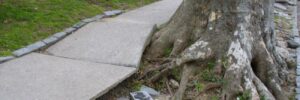
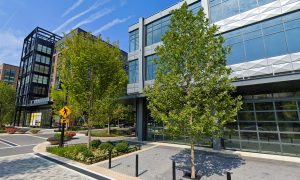
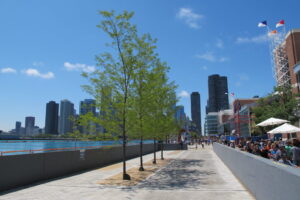
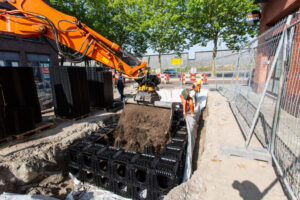
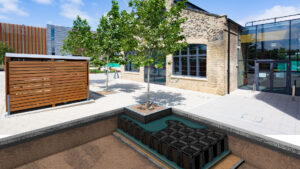
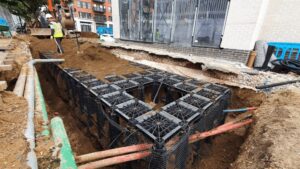
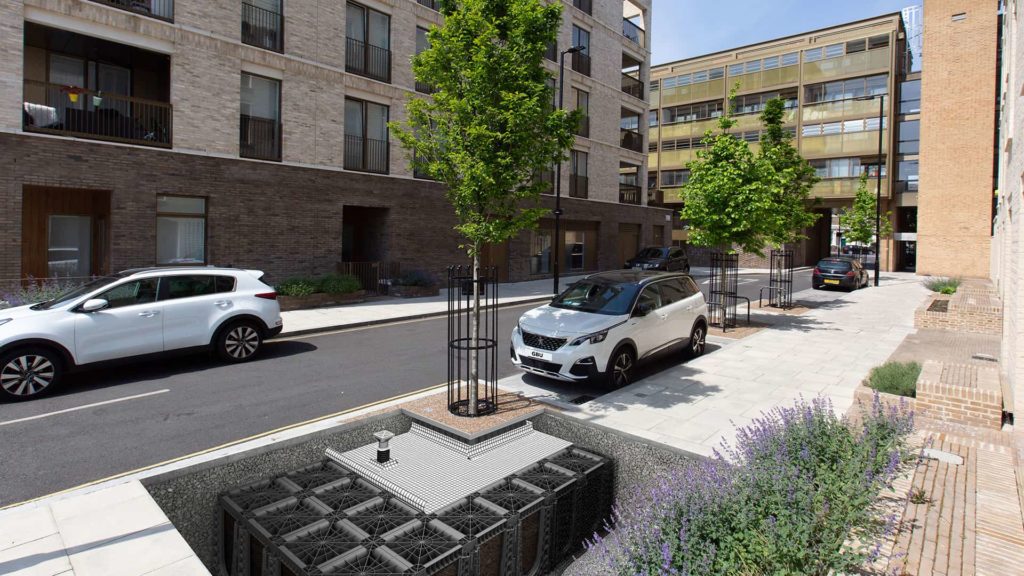
This year The Tree Council is focusing on the hidden connections beneath the ground that support the health of our trees, the core key focus for GBU! The promotion of best practice methodology when planting in urban areas. Planning correctly for both soft and hard planting by ensuring the use of correct soil volumes and products in each differing environment. Our expertise in dealing with below-ground constraints avoids last-minute decisions to cut tree planting.
Find out more by booking a CPD session with one of our technical advisors, detailing The ArborSystem package that can be designed for any size tree pit depending on your species’ needs.
Have you discovered GreenBlue Gardens a subsidiary of GreenBlue Urban, an e-commerce site focusing on everyday landscaping products including a range of irrigation, tree staking, underground guying, soil and more!
The importance of Soil
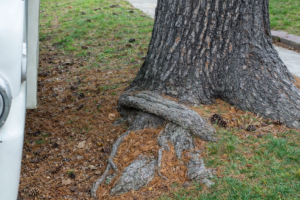
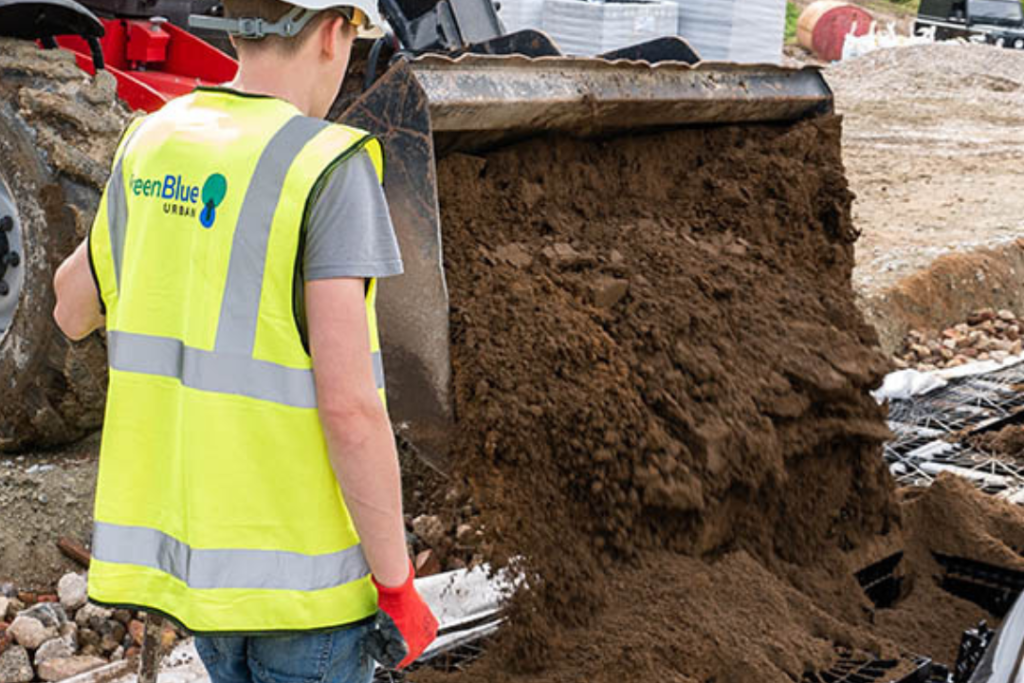
In both soft and hard planting areas, the roots and soil remain the key component to successful planting if you remember one thing it is “healthy aerated uncompacted soil rich in nutrients mimics the forest floor” with various mycorrhiza living within the rooting areas Rootstart Mycorrizha is a key ingredient in the recipe of established healthy planting, ensuring the best chance of survival along with our varying soil mixes specifically for schemes in hard and dealing with stormwater.
We invite you to step outside, get some well-deserved fresh air on a woodland walk and collect as many acorns as you can, replant each and become an active influencer in mitigating climate change.
Share your images in our tree-planting campaign by tagging us and using the #letsgetplanting on all social media platforms which of course we will re-share!