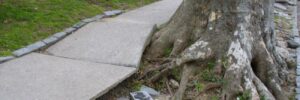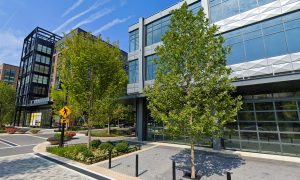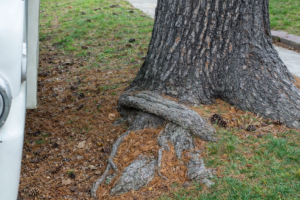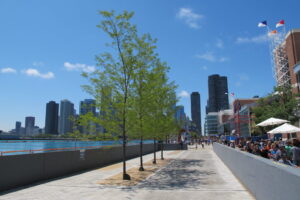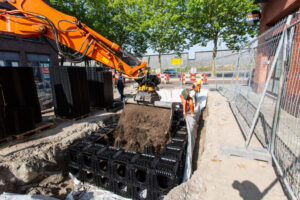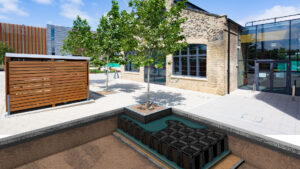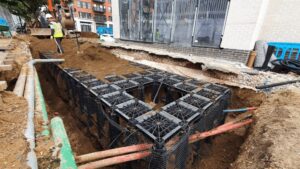
GreenBlue Urban has been developing the next generation of load bearing soil panel systems- RootSpace® . It has been an exciting time here at the new GBU HQ producing a system with a more open structure that will ensure much easier installation and reduce the potential of soil compaction long term. Having created this new system, our Product Development team were delighted to welcome the eminent soil specialist Tim O’Hare on site. Tim O’Hare Associates and GreenBlue Urban share the common objectives of ensuring that the right soil is introduced into the tree pit to provide for the very special demands of our urban trees. To this effect, GreenBlue Urban have commissioned Tim and his team to produce a soil specification to compliment the new RootSpace® system. Indeed, what is the point of installing the most cutting edge underground panel system if you don’t get the critical ingredients right?
The panel system GreenBlue Urban have developed will provide the best support for the physical structure of the soil through the reduction of compaction that hinders long – term root growth. By maintaining good pore structure on both the macro and micro levels, achieving ‘breathable’ soil conditions in and around the tree pit. This is critical in ensuring the survival of our urban trees.
The expertise of Tim and his team is invaluable because whilst our system can create the optimum conditions the quality and composition of the soil we utilize at the critical installation stages is fundamental to success. The soil will, after all, be looking after the trees. Tim’s extensive experience in this area provides a key piece of the jigsaw that when properly fitted together, will enable us to reach our common goal of increasing the number of canopy volume trees for the generations of citizens across the globe whose lives will be incrementally improved if we are successful in our endeavours.