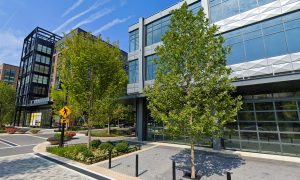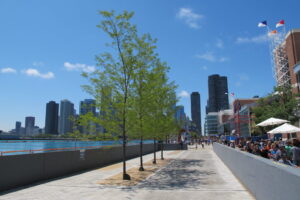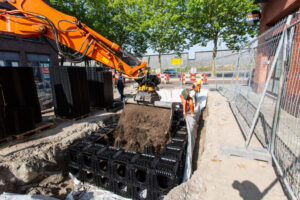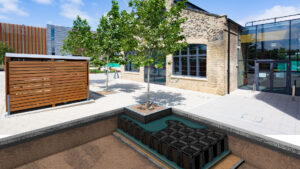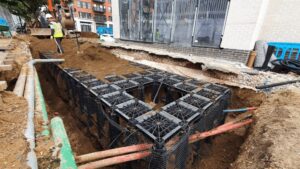
As a world-leading example of municipal authorities helping to encourage green infrastructure in their cities, boroughs within the City of London were invited to submit innovative local project proposals that deliver street trees combined with sustainable urban drainage systems (or SuDS). This project was part of the wider “Mayor’s Street Tree Initiative”.
Background
During his first term the Mayor fulfilled a commitment to plant 10,000 street trees in the city. Following the success of this initiative, the Mayor recommitted to plant an additional 10,000 trees by March of 2015. We have recently launched the third phase of the Mayor’s Street Tree Initiative working in partnership with the Forestry Commission and Groundwork London.
The GLA has also secured additional funding to support innovative projects that deliver street trees combined with sustainable urban drainage.
Why Trees + SuDS?
Surface water flooding is a problem in many urban areas around the world. It occurs when rainwater cannot soak into the ground and overwhelms the drainage system, forming puddles, pools or temporary flows. Some storms completely overwhelm available drainage systems and flooding occurs as a result that can affect properties and livelihoods. That’s why London, like many other cities, is promoting sustainable drainage, including the use of green infrastructure, to help reduce surface water flooding. Urban trees are recognized as an important and cost effective asset to help reduce flood risk resulting from intense rainfall.
Inner city boroughs in London have Lead Local Flood Authorities (LLFAs) that are responsible for managing flood risk. Each London borough has a Surface Water Management Plan produced through Drain London, as required in the Flood and Water Management Act (2010). These boroughs will adopt and maintain approved sustainable urban drainage plans that serve more than one property, as well as highways.