Urban tree populations in cities around the world are on the decline. For over 23 years, GreenBlue has performed research into why urban trees fail and what can be implemented to change this degeneration. Arming urban landscape professionals of all trades with proven urban tree planting methods and best practice techniques is the best way to ensure the successful establishment of our urban tree canopy cover – and this is exactly what GreenBlue has put together here.

Having already made a decision on planting location and tree species, landscape architects and specifiers should consider the following process when designing the exact profile of the tree pit and ancillaries:
Available Rooting Area
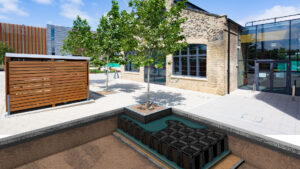
Soil volume requirements for trees in urban areas can be estimated using several methods. The occasionally practiced method of providing an area the size of the pavement opening is clearly insufficient and commits the tree to an untimely death or a lifetime of costly repairs. We suggest the simplest way of estimating a minimum required soil volume is taking the projected canopy area of the mature tree and multiply it by a depth of 2ft (0.6m). The shape of this area can be laterally configured to suit the particular planting site.
Engineered Requirements
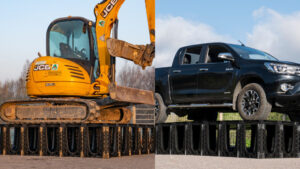
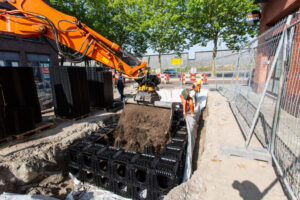
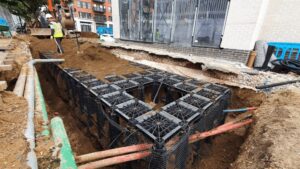
With many urban tree plantings being positioned immediately adjacent to highways and other engineered structures, it is vital that root volume underneath and around such infrastructure is considered. Engineering requirements for paved surfaces are directly opposed to the horticultural needs of trees. Structural soil cells or similar support modules must be considered early enough in the project process to be incorporated during the engineering specification or groundwork stage.
Gestion racinaire
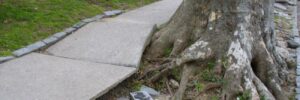
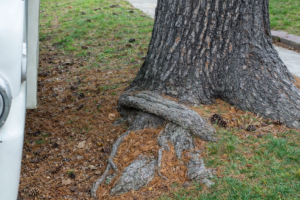
Any tree planting near utilities or paved areas should have appropriate root management specified. Depending on what needs to be protected and where it is in relation to the tree, different root management solutions are available. Continuous paved surfaces for example, require roots to be managed downwards at least 12″ (300mm) to reduce the risk of pavement heave and other surface root damage. See specifications on root management for more details.
Irrigation
Lack of water and nutrients are the single largest cause of death in newly planted trees. It is essential to incorporate the means to efficiently irrigate a tree pit – especially in the critical first three years.
Drainage
Water logged tree pits can become anaerobic, which will often kill trees. It is essential to ensure that potential drainage issues are addressed early on in your planting scheme.
Aeration
Less commonly recognized than irrigation, but equally as important, is aeration. Soil and roots need oxygen to live. If the root plate of the tree is covered by impervious paving, like most street trees are, vital gaseous exchange in the root zone cannot take place. Appropriate tree pit design should include a means of facilitating air supply below the surface.
Root Ball Support
How will you ensure that the tree is securely located and supported? Underground guying is widely favored for urban environments because it is unobtrusive. Staking and tying are alternatives, but these require ongoing maintenance and when not properly cared for becomes a detriment to the tree.
Above Ground
Depending on the sort of environment the tree will be planted in, above ground protection from carelessness and/or gratuitous vandalism can become critical to tree survival. A decision will need to be made whether there is a need for tree grates, vertical guards, and other protective measures.
The above factors account for over 90% of the reasons that urban trees fail. Considering and providing for the above measures ensures that tree planting programs are well on their way to successful and efficient establishment.