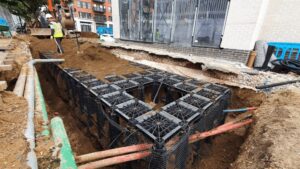
Tree Pits – What are the options and why Soil Support Cells provide the best long-term solution.
Hard landscapes present unique challenges to the installer but this need not detract from the project of integrating good quality mature trees into the built environment with speed and ease.
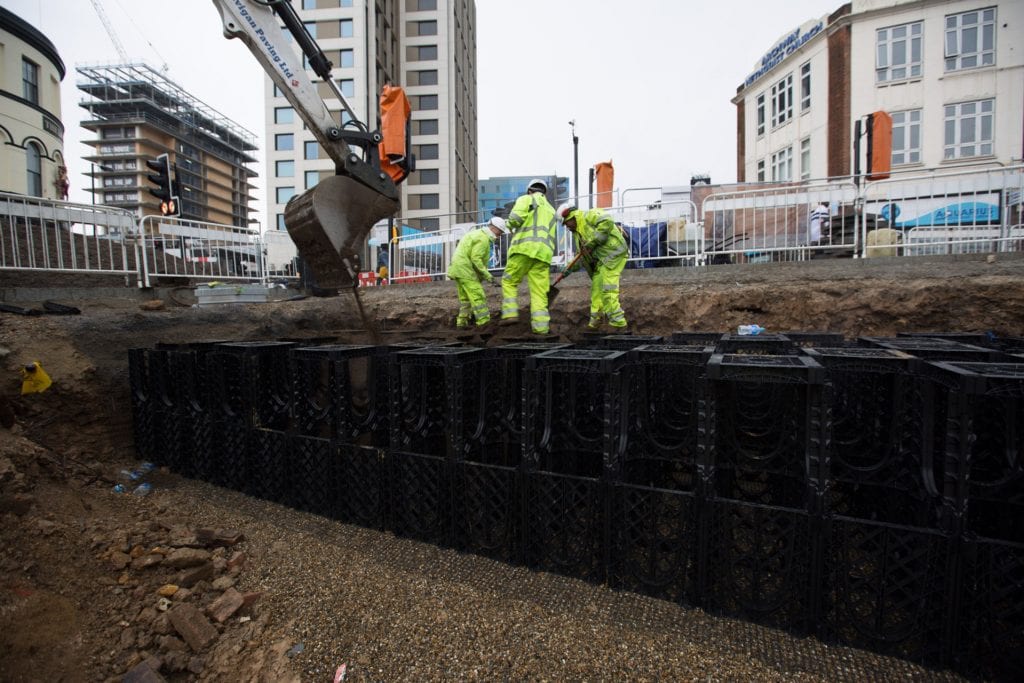
Planning policy around the world provides increasingly stringent guidelines to the implementation of green infrastructure projects and associated tree planting in retrofit and new build contexts. Remember Trees are forestry plants. As soon as we forget this simple fact we are likely to make mistakes when planting them in town and city environments.
The approaches below are often what we see around the world:
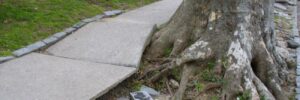
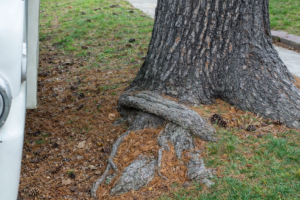
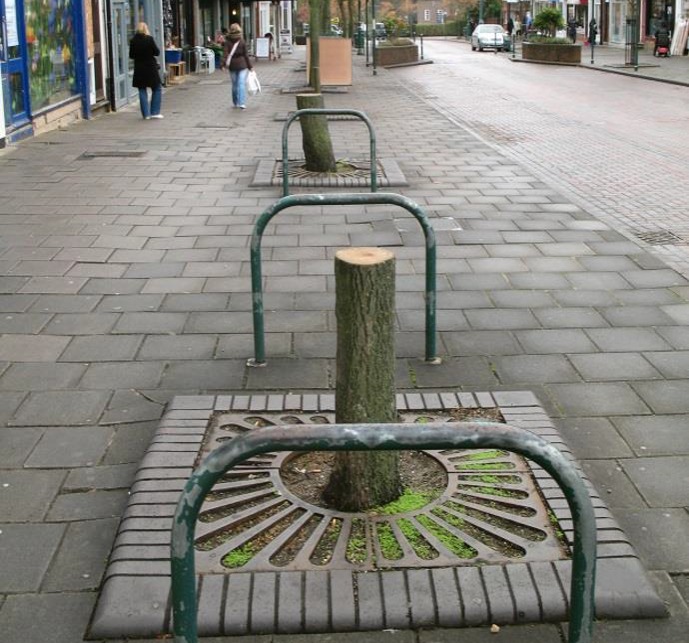
- Dig a hole and hope for the best
- Lack of aeration/irrigation
- Structural Soils
- Low volume tree pits
Make a Difference!
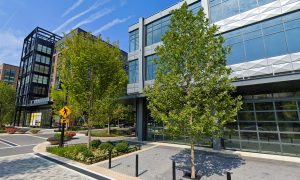
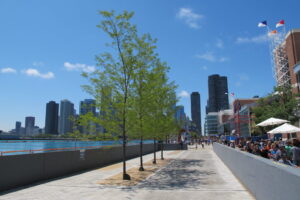
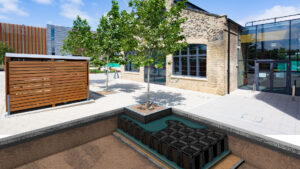
High volume tree pits with enough space and soil will deliver the best results!
How:
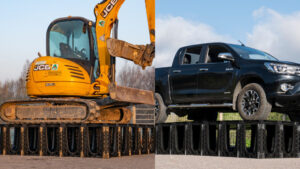
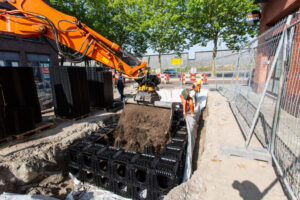
- Using a soil support system with an associated group of root management, aeration and irrigation products
- Ensuring that soil cells are filled with uncompacted, good quality soil
- Soil Volume, critical that there is enough quality soil for the tree roots.
- Root management keeps tree roots in intended rooting zones and away from utilities, paved surfaces, and other infrastructure
- Correct installation
- Space, allowing for projected tree growth – design for the long term!
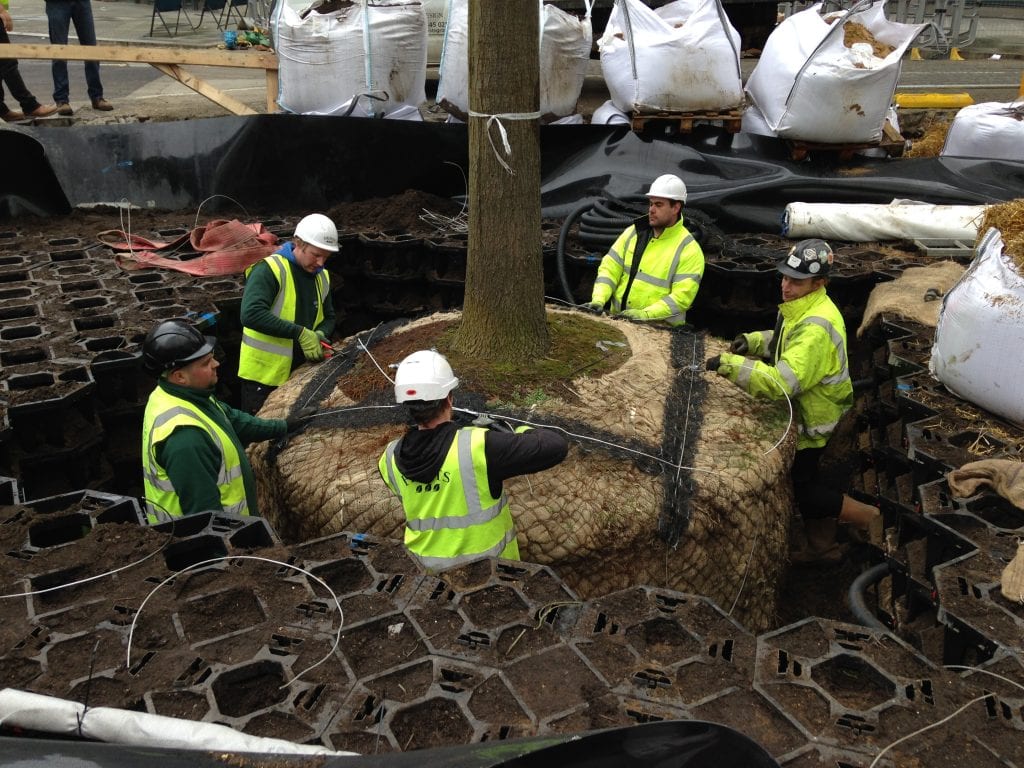
The Basic Ingredients for success:
Not only are the above crucial solutions for successful tree pit planting, accurate design from the start is a key!
We work with specifiers and planning officers to incorporate high quality tree pit design into their urban landscape projects, by offering a range of professionally drawn CAD tree pits scenarios.
Whether a regular or a SUDs tree pit – our unique service is a combined solution from design to installation, a service that you can trust!
Discover more on the successful tree planting at Sun Street or watch an installation video here!