What single thing can you incorporate into a city which increases in value every year it exists?
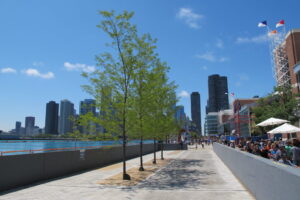
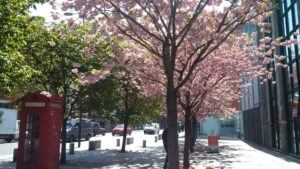
What item will remind you of seasons, enhance property value, provide shade, urban cooling and stormwater attenuation whilst simultaneously boosting retail sales, improve social cohesion and reduce crime? Well as it happens, this same entity – (it can only be a living and healthy urban tree) is also proving its worth in countless street locations as the first line of defence against air pollution.
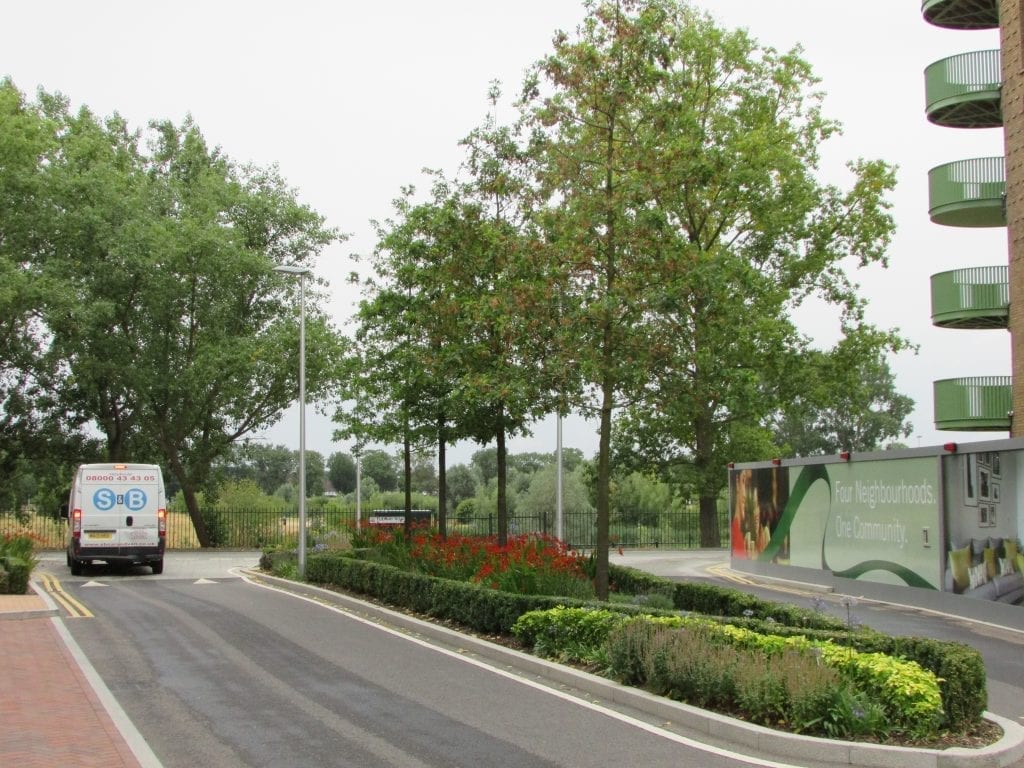
Trees are well able to clean the air and absorb harmful airborne particles and gaseous pollutants. This includes toxins such as nitrogen oxides, ammonia and sulphur dioxide which are absorbed through their leaves, bark and roots. This improves the air quality in the microclimate around the trees and contributes to a healthier and cleaner environment for everyone. Trees also soak up the harmful carbon dioxide in our atmosphere.
In one year, an acre of mature trees absorbs the same volume of carbon monoxide as produced from a 226,000 mile car journey!
Aside from cleaning the air for us, trees supply us with fresh oxygen to breathe.
Evidence also demonstrates that trees around a building are able to reduce air conditioning costs in hot weather – a feat they perform via their inherent ability to cool the surrounding air through shade and evapotranspiration. Thus, potential pollution at the energy source is reduced.

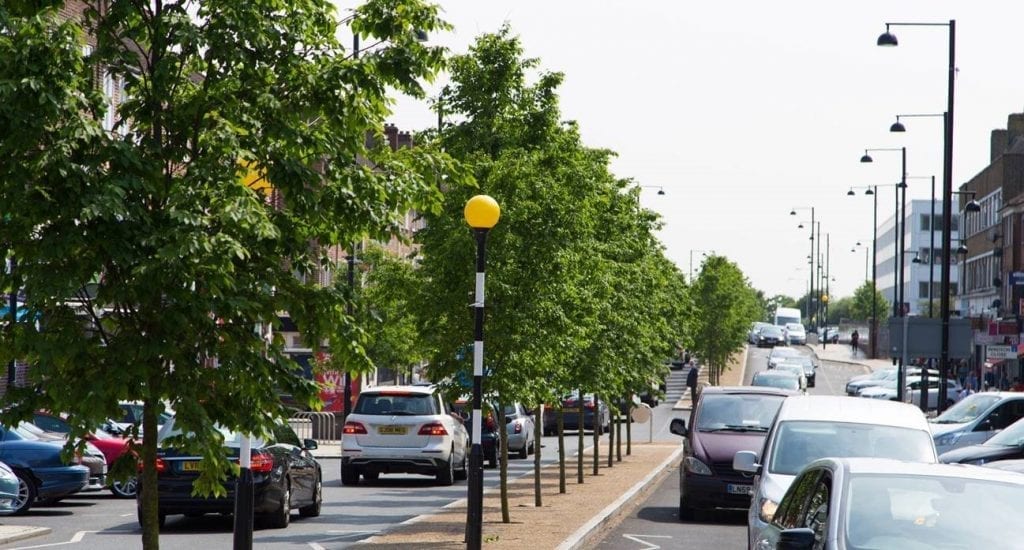
In addition, the small particulates which are a major cause for concern can be filtered out of the air, becoming trapped on the leaves and branches – truly a living filter. Siting of these trees is, of course, important, as a continuous dense canopy above a busy road could prevent adequate air circulation to disperse airborne pollutants, but this can be simply overcome by intelligent siting of trees when planting, giving due consideration to species form and growth potential.
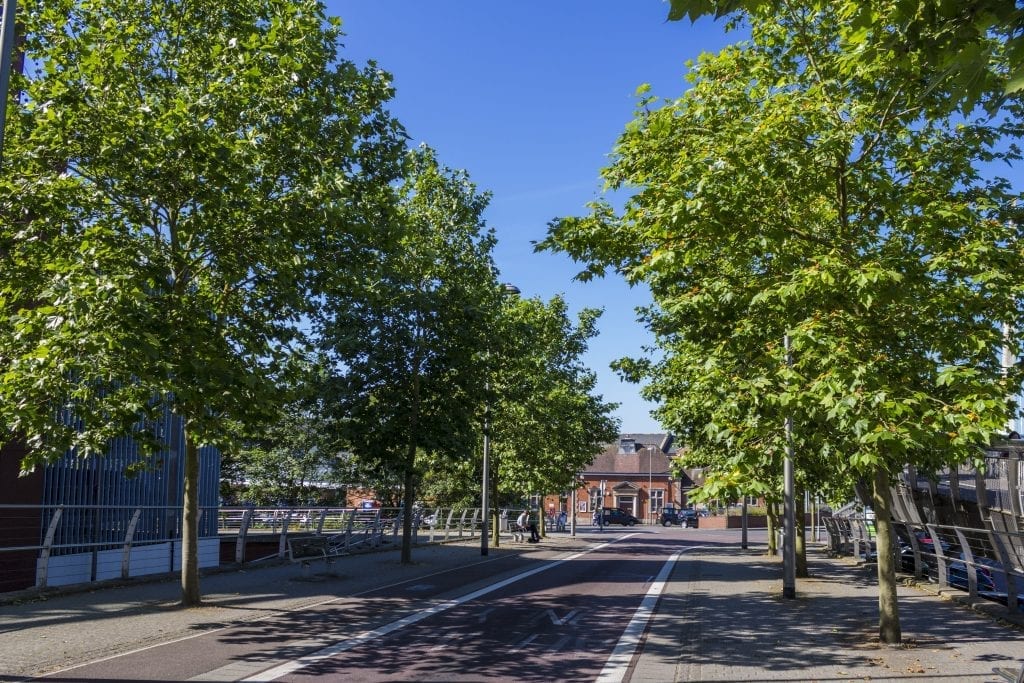
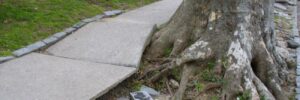
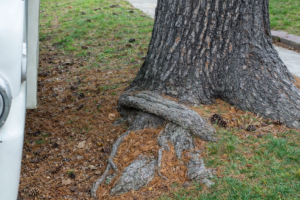
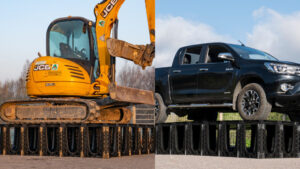
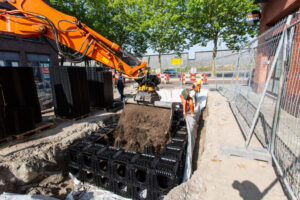
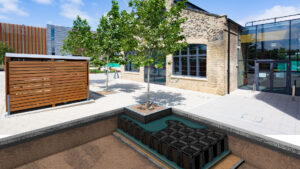
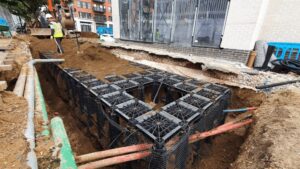
The catch, of course, is that our modern city tends to be engineered around demands of the built infrastructure and intensive transport with multiple utilities below ground – which makes finding enough uncompacted healthy soil for trees to grow a challenge.
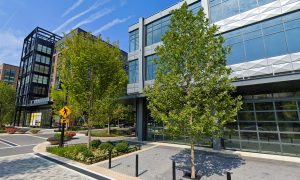
This is our responsibility – to invest in appropriately engineered, large volume tree planting pits to ensure long term healthy trees in towns and cities – a near silent safeguard for the benefit of future generations.