
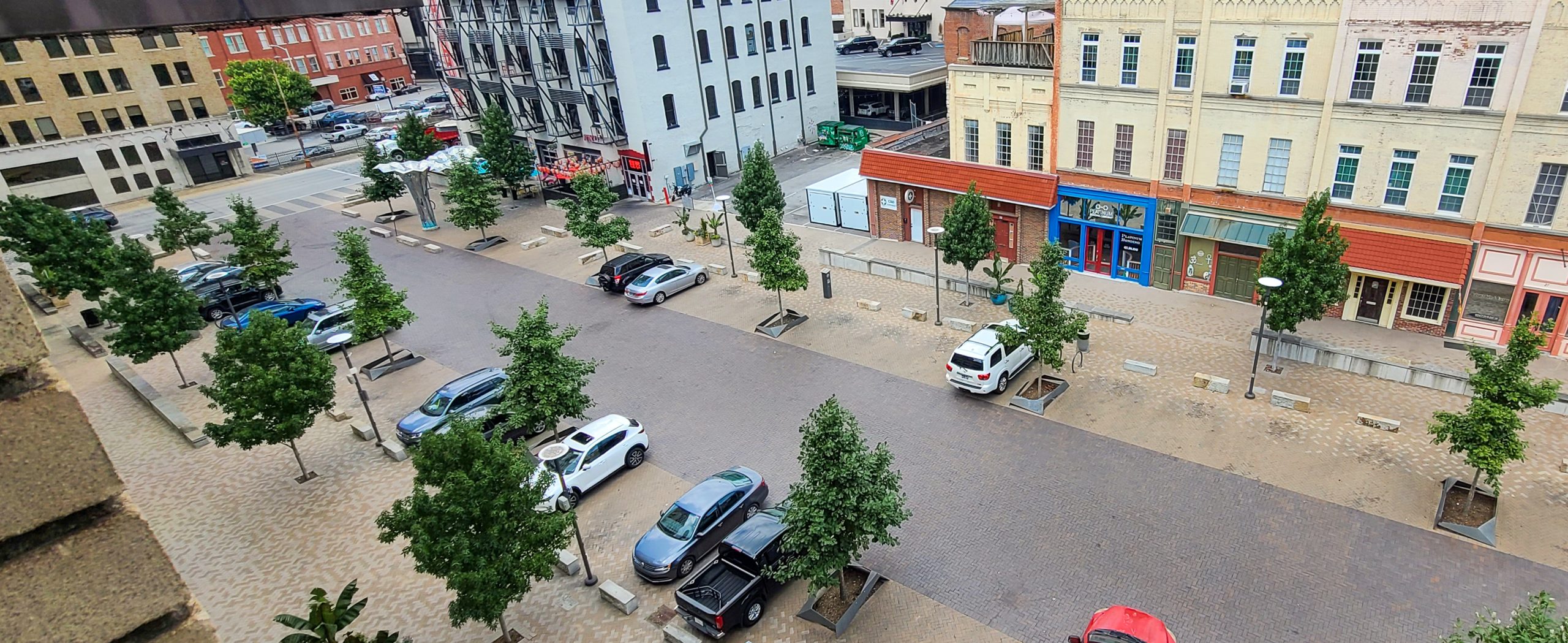
How do you transform an aging downtown corridor into a vibrant public space while creating the conditions for an urban forest to thrive for generations? As the area’s infrastructure began to show its age, the City of Chattanooga saw an opportunity to rethink the space.
Working with WMWA and Asa Engineering & Consulting, Inc., the city set out to transform the aging corridor into a welcoming, pedestrian-focused plaza — giving it both a new identity and a new name: Patten Square.
The redevelopment included wider sidewalks, reduced vehicle traffic, new residential development and space for retail. Stone benches, metal sculptures and rough stone bollards were incorporated to help manage vehicle movement without relying on conventional traffic-control features.
But trees were also central to the vision.
The landscape design pays tribute to Patten Square’s history. Fifteen large oak trees were planted in a grid inspired by the columns of the market buildings that once occupied the site. As the trees mature, the goal is for their canopies to grow together, creating a cathedral-like ceiling of foliage over the public space.
Alongside the oaks, 24 sweetgum and tulip trees bring the total to 39 new trees. The ambition was much greater than simply adding greenery to the renovated streetscape. The design team wanted to establish a genuine urban forest.
Achieving that meant considering what each tree would need not just at planting, but decades into the future.
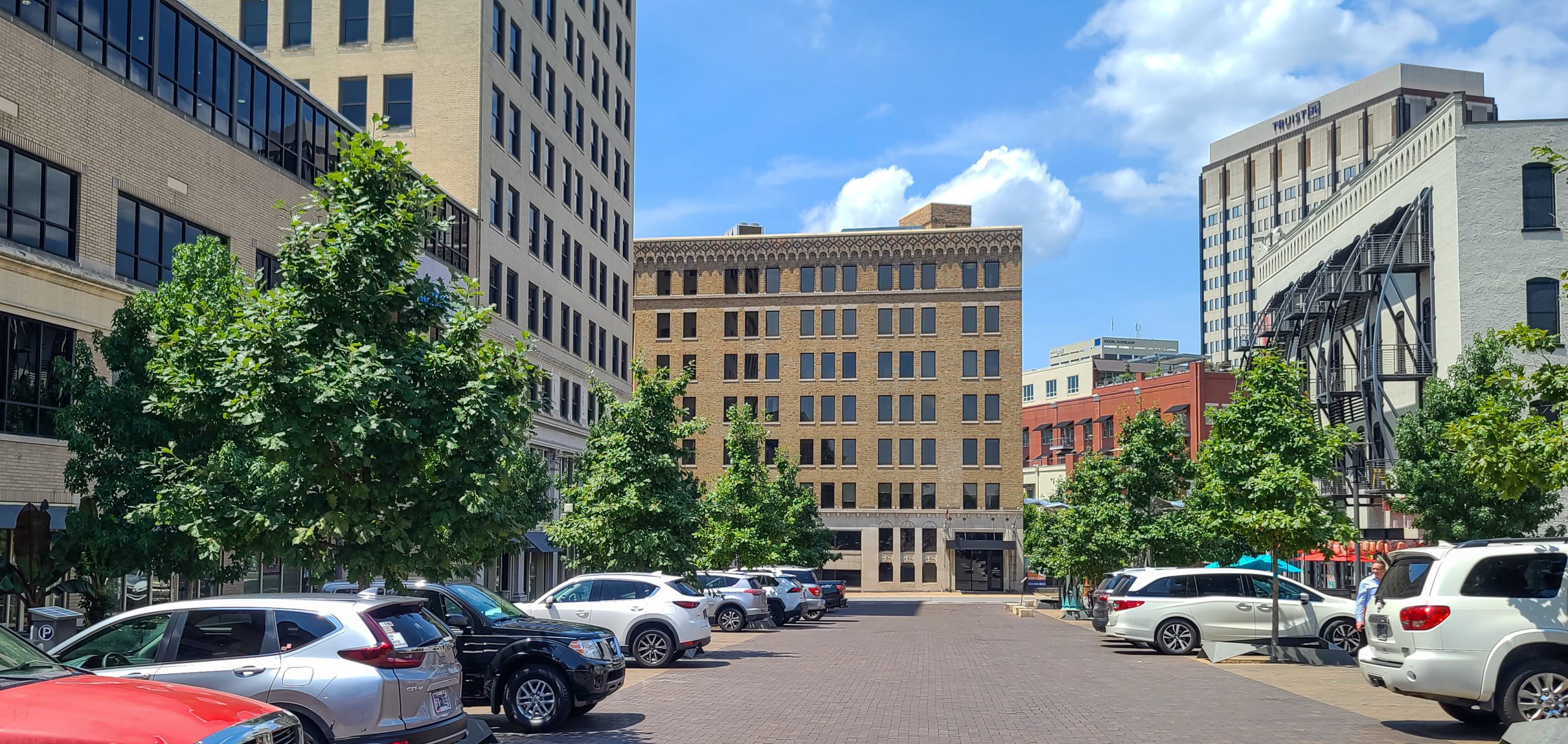
One of the project’s key challenges was providing adequate soil volume within a heavily developed downtown environment.
Trees need access to sufficient uncompacted soil, water, nutrients and oxygen to establish healthy root systems and reach their mature potential. In hardscape environments, however, those needs have to be balanced with the structural requirements of sidewalks and other paved surfaces.
GreenBlue Urban worked with the project team to develop a below-ground solution that would provide the trees with the rooting environment needed for long-term growth while supporting the streetscape above.
RootSpace® Soil Cell Systems were installed to create large volumes of uncompacted soil beneath the hardscape, giving roots room to expand as the trees mature. Root management was incorporated to guide root development and reduce potential conflicts between growing trees and surrounding infrastructure.
Successful tree planting in a busy public space also requires careful consideration of what happens where the tree meets the sidewalk.
Pavingstone Tree Grates were incorporated into the streetscape to create a considered transition between the trees and surrounding pedestrian areas.
The grates help protect the tree openings while allowing water and air to reach the rooting environment below, integrating the trees into the hardscape without compromising the overall appearance of the plaza.
Together, the above- and below-ground elements create a coordinated approach to tree planting — from the rooting environment beneath the sidewalk to the finished surface pedestrians experience every day.
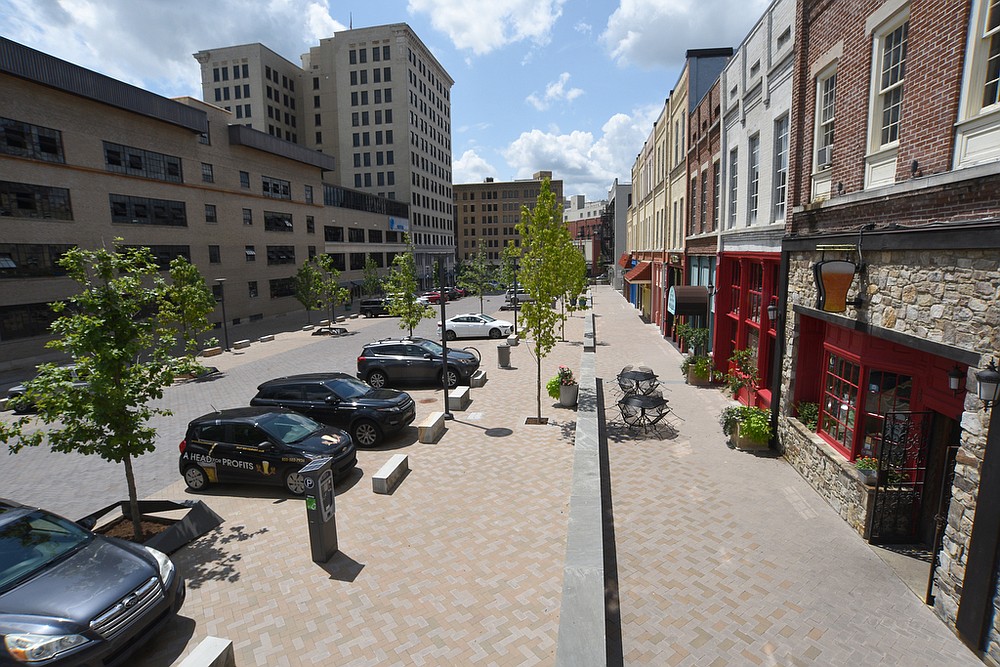
Patten Square demonstrates why successful urban tree planting begins long before a tree reaches maturity.
By considering soil volume, root management, surrounding infrastructure and surface design together, the project gives its 39 trees the opportunity to establish, grow and ultimately create the connected canopy envisioned by the design team.
As that canopy develops, the trees won’t simply decorate Patten Square. They’ll become part of its next chapter — creating shade, character and a greener public space in the heart of downtown Chattanooga.