GreenBlue Urban was thrilled to have sponsored the Collaborative Conversations East Midlands 2024 event in partnership with RIBA, CIOB, ICE, RICS, RTPI, and the Landscape Institute. This engaging conference, “Sustainable Water Management in New Developments,” was an unparalleled success, fostering insightful dialogue on innovative practices and sustainable solutions for the built environment.
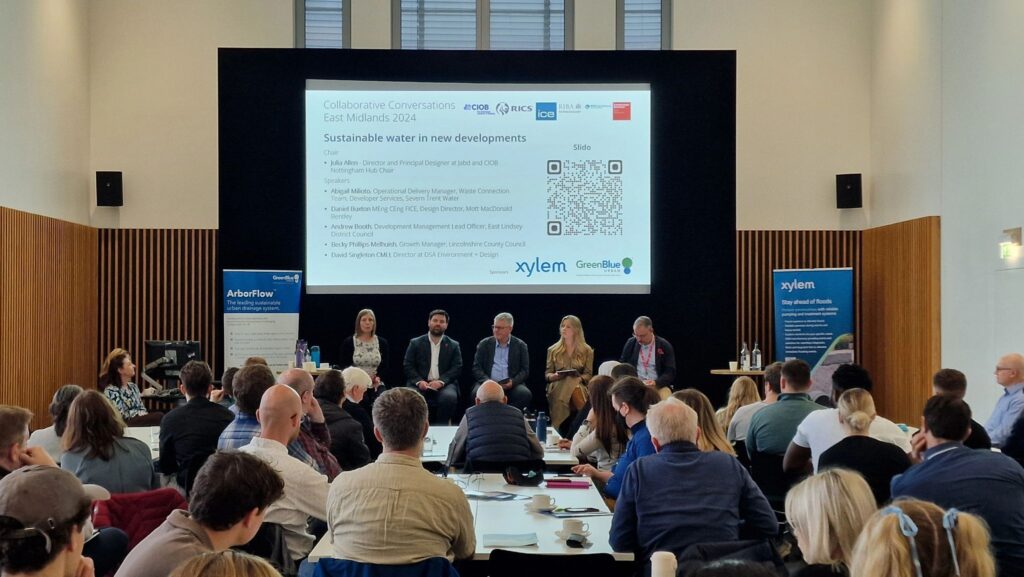
A Day of Collaborative Expertise
The event started with an inspiring keynote from Katrina Woodward, Strategic Partnership Manager (Construction & Sustainability) at Nottingham Trent University. Julia Allen MCIOB expertly chaired the session, precisely steering the discussions and ensuring a seamless flow throughout the day.
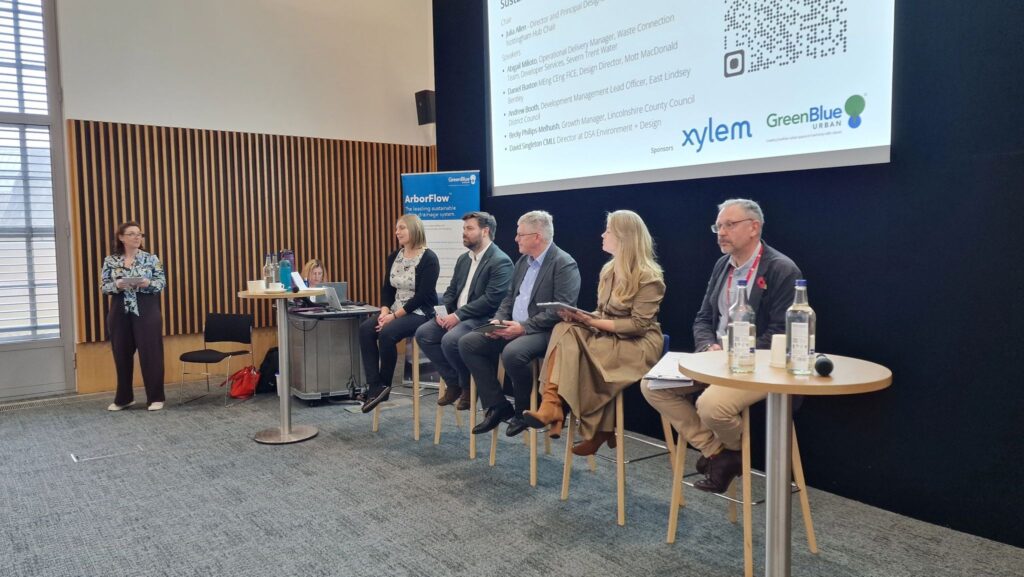
The distinguished panel featured thought leaders and industry experts:
Abigail Milioto from Severn Trent
Daniel Buxton from Mott MacDonald Bentley
Andy Booth from East Lindsey District Council
Becky Phillips-Melhuish from Lincolnshire County Council
David Singleton from DSA Environment + Design Ltd
Each speaker shared invaluable insights on sustainable water management, showcasing a range of practical solutions and emphasising the need for a cohesive approach to SuDS (Sustainable Drainage Systems).
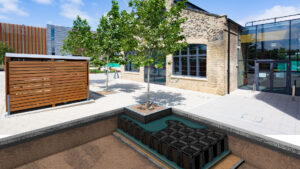
GreenBlue Urban, represented by Louise Page, was enthused by the significance of collaboration among all stakeholders. Displaying the innovative SuDSPod SuDS Planter—a retrofit solution designed to manage roof runoff and mitigate pressure on combined sewers—highlighted the importance of integrating effective SuDS solutions into modern development projects.
Key Takeaways from the Event:
Cross-Collaboration is Essential: Building trust and understanding the benefits of SuDS requires multi-stakeholder engagement from the early stages, such as pre-application meetings.
Public Recognition of SuDS: Meaningful SuDS should align with the four key pillars of effective water management and be valued as community assets.
Policy and Legislation Compliance: SuDS should adhere to policies supporting Biodiversity Net Gain (BNG) and the National Planning Policy Framework (NPPF) to be considered early.
Value Engineering (VE) and Cost-Effectiveness: SuDS solutions can be economical and highly effective, proving that water management deserves equal prioritisation with energy and carbon.
CAPE: A Framework for Success
David Singleton highlighted a noteworthy concept—CAPE—Clear, Accessible, Playful, and Engaging—as a guiding framework for driving impactful, sustainable practices within the built environment.
GreenBlue Urban’s commitment to championing sustainable water management solutions continues. Let’s continue advocating for practical, policy-driven, and community-focused water management practices.
We are working together as we strive to be SuDS Superheroes!