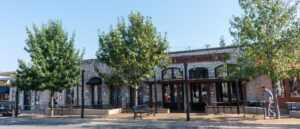
Lifted sidewalks, cracked pavement, uneven walking surfaces: when these problems appear around mature trees, the roots usually get the blame. It’s an understandable conclusion. We can see the roots beneath the damaged pavement, so the tree appears to be the obvious cause.
But the real issue often starts much earlier.
When trees are planted in urban environments without enough suitable soil and rooting space, their roots have little choice but to grow wherever conditions allow. Too often, that means directly beneath sidewalks and other paved surfaces.
So rather than asking, “How do we stop tree roots from damaging sidewalks?” perhaps the better question is: “How can we design the space below the sidewalk so trees and infrastructure can successfully coexist?”
Why Does Root Heave Happen?
Tree roots need the same basic resources as the rest of the tree: water, oxygen, nutrients and space. The challenge is that urban environments are typically designed around infrastructure first.
Soils beneath sidewalks, plazas, streets and parking areas are often heavily compacted to provide the structural support required for the pavement above. While that’s good for pavement stability, heavily compacted soil can create a difficult environment for roots.
When adequate growing space isn’t available, roots tend to follow areas where conditions are more favorable.
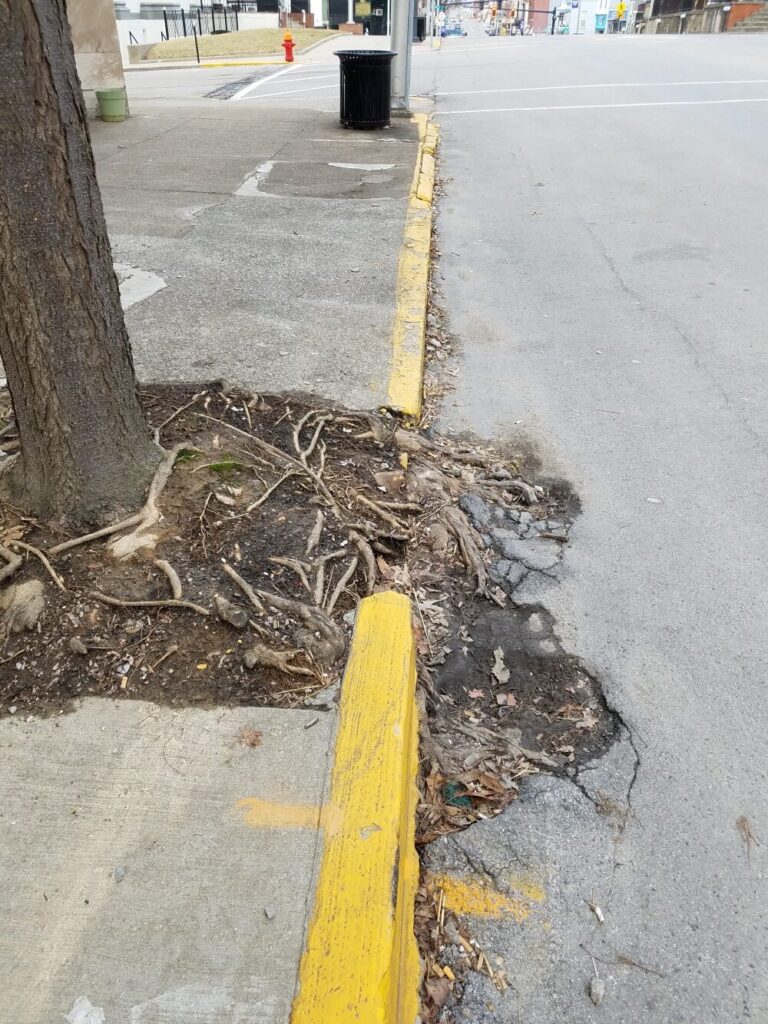
In some situations, that brings them close to the surface and directly beneath pavement. As those roots increase in diameter over time, they can contribute to lifting and displacement of the surface above, commonly known as root heave.
The resulting problem isn’t just aesthetic. Uneven sidewalks can create trip hazards, accessibility concerns and ongoing maintenance requirements for municipalities, campuses, developers and property owners.
The tree isn’t necessarily the problem. The conflict between the tree’s biological needs and the surrounding infrastructure is the problem.
Start With Soil Volume
One of the most important ways to reduce future conflicts is to give trees adequate uncompacted soil from the beginning. A tree planted in a small opening surrounded by highly compacted soil has very limited options as it matures. By contrast, creating a larger, connected rooting environment gives roots somewhere suitable to establish.
In hardscape applications, structural soil cell systems can help accomplish this by supporting the pavement above while protecting uncompacted soil below.
GreenBlue Urban’s RootSpace® pavement support system, for example, provides high-volume rooting space beneath load-bearing surfaces. This allows the needs of the tree and the requirements of the pavement to be considered as part of the same design rather than competing with one another.
The objective isn’t simply to fit a tree into the streetscape. It’s to design enough space for that tree to successfully mature.
Guide Roots Where You Want Them to Grow
Providing good soil is one part of the solution. Root management can also play an important role, particularly where trees are located close to sidewalks, utilities and other infrastructure.
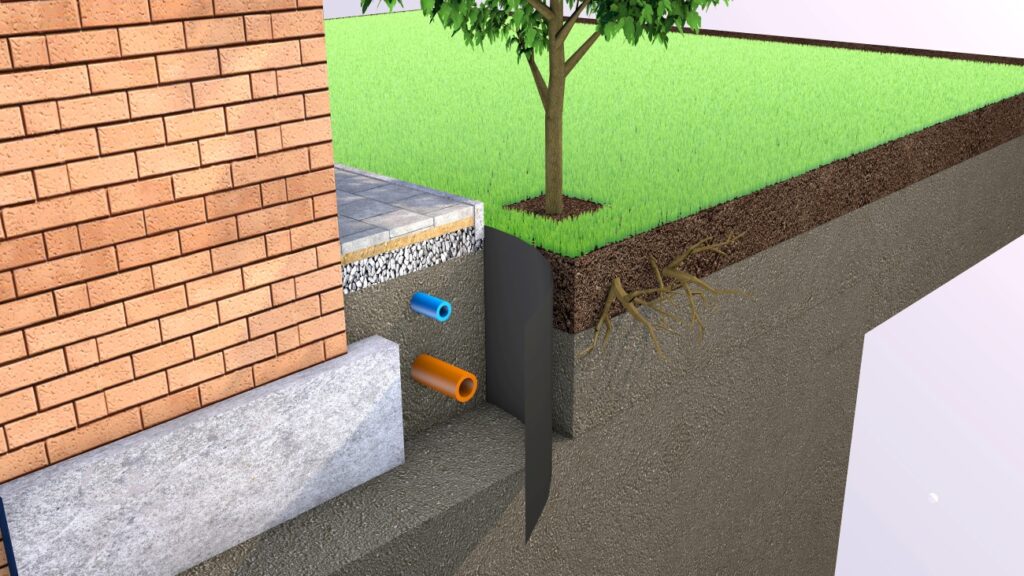
Root barriers and root directors shouldn’t simply confine roots. A well-designed root management strategy helps guide roots away from areas where they may cause conflicts and toward areas where they have room to develop.
For example, GreenBlue Urban’s RootDirector™ is designed to direct root growth downward and outward from the immediate tree opening. This can help reduce surface rooting while avoiding root girdling around the tree.
The distinction is important. The goal isn’t to stop roots from growing; the goal is to create an environment where they can grow in the right place.
What About Utilities and Other Infrastructure?
Sidewalks aren’t the only consideration. Urban trees often need to coexist with stormwater infrastructure, utilities, curbs, roadways, building foundations and other below-ground services.
That’s why root management shouldn’t be considered in isolation. Tree species, expected mature size, available soil volume, soil conditions and nearby infrastructure should all inform the design of the rooting environment.
When these elements are considered early, trees can become part of the infrastructure rather than a future conflict with it.
Think Beyond the Day the Tree Is Planted
A newly planted street tree may occupy only a small amount of space. The tree we’re actually designing for, however, is the tree we hope to see 20, 30 or even 50 years from now.
Its canopy will be larger. Its trunk will be larger. And its root system will be significantly larger. Successful urban tree planting therefore requires us to think beyond installation day.
That means asking:
- Is there enough quality soil for this tree to mature?
- Can roots grow without being forced immediately beneath the sidewalk?
- Are sensitive areas protected through appropriate root management?
- Can water and oxygen reach the rooting zone?
- Does the surface design accommodate the tree as it grows?
- Can the surrounding infrastructure continue to perform throughout the life of the tree?
These decisions made during design can have a significant impact on future sidewalk repairs, maintenance requirements and ultimately the lifespan of the tree itself.
Trees and Sidewalks Don’t Have to Compete
Cities shouldn’t have to choose between healthy trees and functional sidewalks. With adequate soil volume, appropriate root management and thoughtful design above and below ground, the two can coexist.
The key is to stop treating the tree as an object placed into the sidewalk and start considering the entire rooting environment as part of the infrastructure.
Because when a mature tree begins lifting the sidewalk, the question shouldn’t only be “What did the roots do?” We should also ask: “What space did we give them to grow?”