Many thanks to Dr Duncan Slater for a very enjoyable Arbor Day at Myerscough College and for the privilege of being able to provide a presentation on the successful GreenBlue urban planting schemes over the years. Speakers included Paul Nolan of Mersey Forest, Glyn Levis of Trees for Cities, Sharon Durdant-Hollamby of Institute of Chartered Foresters and an excellent presentation by Tiziano Nesi of Matteini Tranquillo Piante. Tiziano owns an Italian tree nursery where he has developed a beautiful cultivar of Cupressus sempervirens which has a rich bright green colour in contrast to the usual dark green.
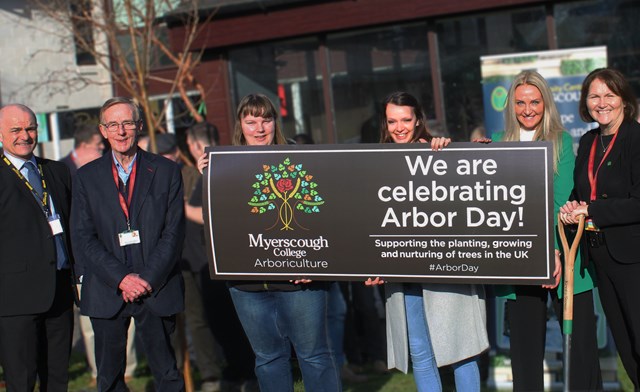
A large number of students were present as well as local dignitaries including the Rt Hon Sir Robert Atkins. There were also a number of trade presentations form various trade bodies such as the Arboricultural Association and companies including Bartlett Tree Experts for whom I used to be a lead climber. Great to meet up with my former manager after 14 years! The day was also complimented with tree climbing activities and was also a student careers day so was able to talk to a good number of Arb students about trees, climbing and careers in Arboriculture and also a tree planting ceremony to commemorate Myerscough College’s first Arbor Day.

Duncan Slater, Senior Lecturer in Arboriculture, said: ‘’Further to a student vote in support of this idea, we wanted to celebrate everything ‘arboriculture’ on this day, and encourage other institutions in the UK to get involved in the years to come.

‘’Trees are very important for the well-being of people living in towns and cities, so we are supporting Mersey Forest this year for the work they do with local communities to achieve greener and healthier neighbourhoods.
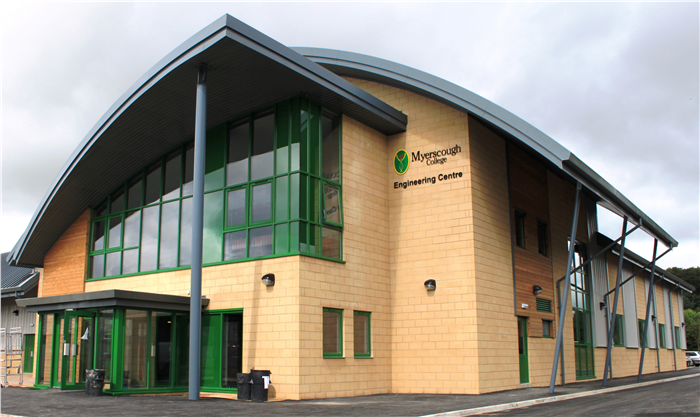
GreenBlue Urban’s collaboration continues with supporting our close friend Andy Hirons from Myerscough and team with their recent project Future Flora
Future Flora is a project to provide a bio secure way to grow, procure and specify plants that can be used by everyone in the horticulture and landscape sectors, from nurseries through to landscape contractors and specifiers.
Future Flora is currently in a public consultation and we are asking that all help by completing a brief Survey.
Whether you are in a consultancy, conservation group or a public sector organisation, your views will make a big difference in shaping the way that Future Flora is created and implemented, so please share the survey with your colleagues, clients and suppliers – a cross-sector change starts here.
To discover more on Urban Tree Planting and our collaboration with Industry professionals visit us at the Urban Infrastructure Hub Stand G143 at FutureBuild 3-5th March 2020 at the Excel London – See you there!