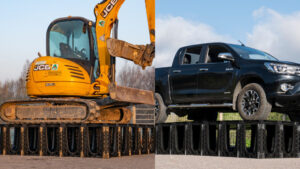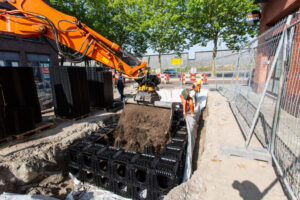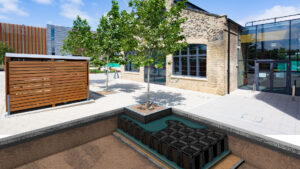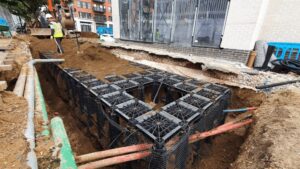
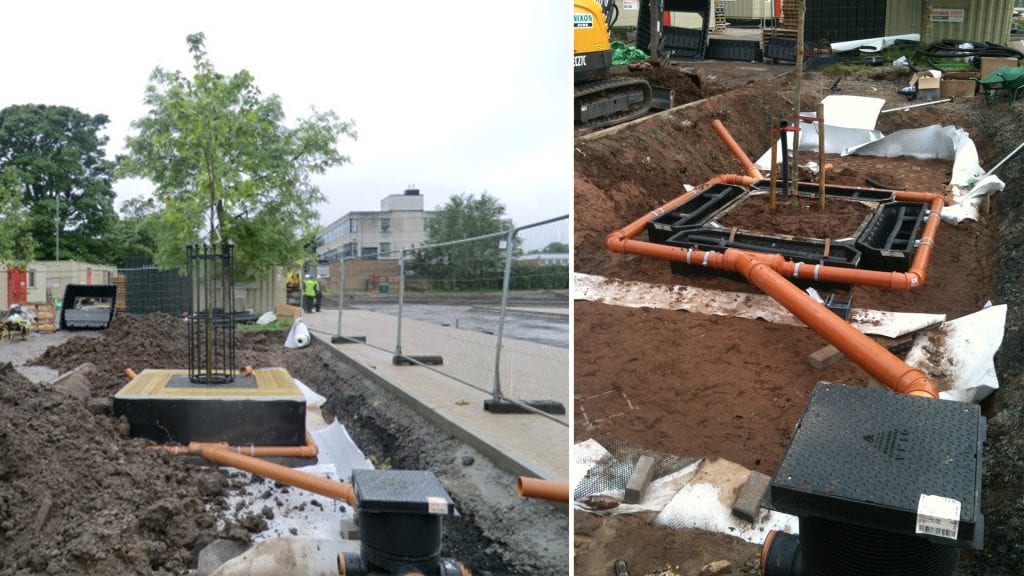
The ArborFlow SuDS Tree Pit system was developed as part of an integrated surface water management system to extend the use of the proven GreenBlue Urban tree pit system to attenuate stormwater run-off from a car park area, and to monitor the ability of the soil cell system to mitigate pollution levels; comparing inflow and outflow measures in storm events.
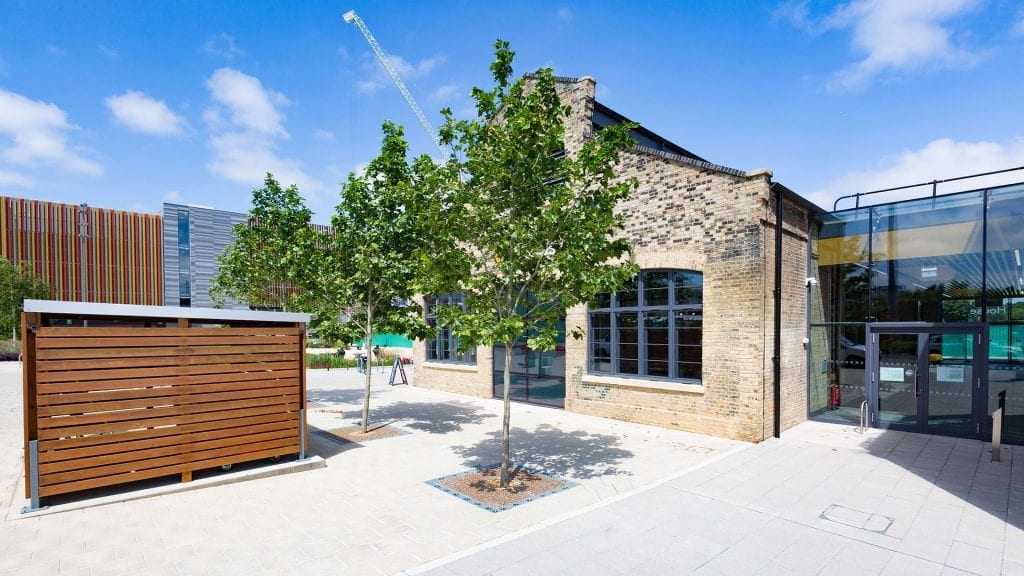
The trial pit at a site in Dundee provided a soil cell structure of 13.25m³, which provided a minimum water attenuation capacity of 3850 litres of stormwater run-off. The water attenuation capacity was designed to provide a 41.45% reduction in outflow for a catchment area of 148.5m² of car park area. The resultant measures demonstrated a reduction in outflow by some 88% with a lag time of 45 minutes between inflow and initial outflow comparison.
A storm event in August 2014 provided an opportunity to accurately measure pollution mitigation through the comparison between inflow and outflow sampling. Analysis included for the following:
- Heavy metals
- TPH (Total petroleum hydrocarbons).
- pH and conductivity.
- TSS (Total suspended solids)
- Chloride, Orthophosphate and Ammoniacal Nitrogen
The data measured provided the following results:
- Total suspended solids were reduced by 50%
- Phosphate, Zinc and Lead were reduced by 70%
- Nitrogen and Copper were reduced by approximately 50%
- Chromium content was reduced by 80%
- pH levels remained consistent at about 7.57.
- Hydrocarbons in this event were negligible.
Although there were no recordable measures of hydrocarbons in the above event, data has shown that Bioretention soils can mitigate up to 80% of hydrocarbon pollution.
Hydrocarbons over time are broken down into less harmful constituent parts by bacterial and fungal activity. Bacteria and fungal hyphae break down the hydrocarbons forming useful sugars. With the presence of hydrocarbons, it is apparent that bacterial activity substantially increases.
During the stormwater run-off it is noticeable that conductivity increases suggesting an increase in ionic (dissolved elements) activity. This would suggest that heavy metals such as copper and zinc as ions could become available as essential micronutrients. Phosphates and Nitrogen are both essential macronutrients and are contributors to tree health.
The development and availability of the ArborFlow Tree Pit System as a Sustainable Urban Drainage System has been a major move forward in the issues relating to stormwater attenuation and pollution management complying significantly to the four principles of SuDS; Control of Water runoff, Management of water quality, creating biodiversity and improving amenity value. With sustainable drainage becoming an increasing requirement for urban planning, the ArborFlow is an essential requirement for contributing to the design of Sustainable Drainage design.