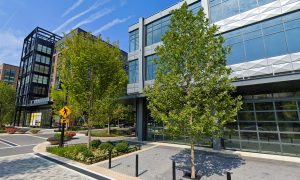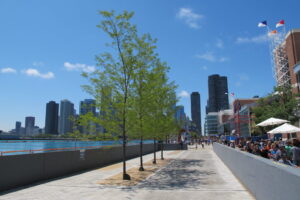
Street tree planting is a much-debated subject, and one about which everyone involved has their own opinion; what tree species, how much soil volume, maintenance requirements, potential pavement breakup, leaf litter, vandalism and many other challenges are regular issues which we at GreenBlue Urban face every day.
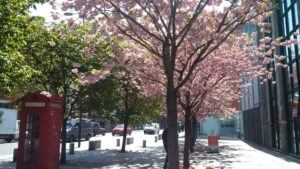
The London Borough of Hackney probably has the widest range of street tree species in London: at the last count over 350 different trees grace the streets of this diverse Inner London Borough. From the City of London in the west to Newham to the East, the borough covers a huge variety of different street scenarios, and the success of the tree planting has been remarkable.
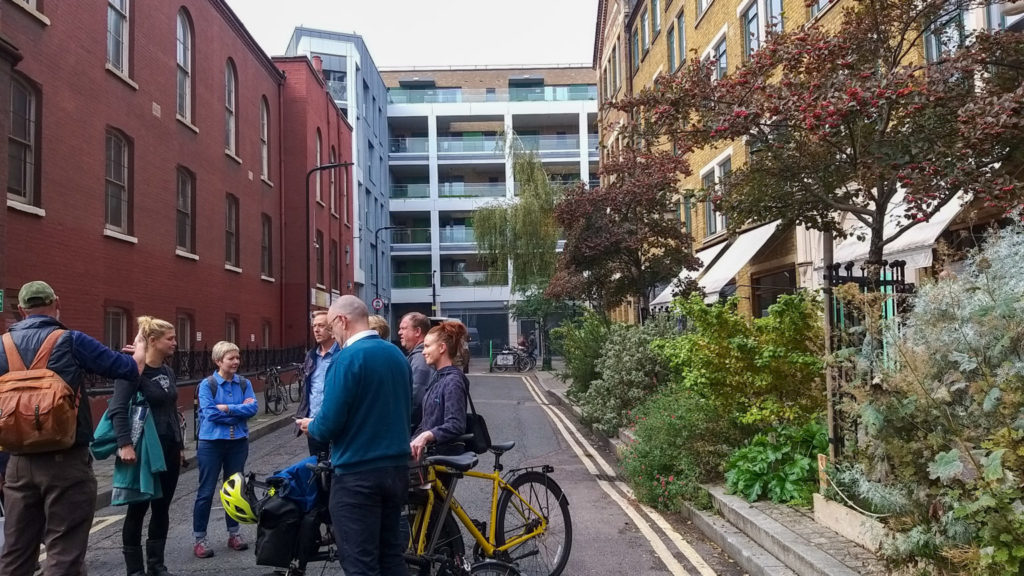
To demonstrate the methodologies that have been used in the Borough, the Senior Arboricultural Officer, Rupert Bentley-Walls took members of the London Tree Officers Association on a “tree-tour.” GreenBlue Urban was invited to join the walk, as having worked closely with Hackney over many years, we were heartened to see the results of our joint research and development; products are proven to work.
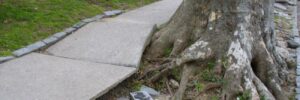
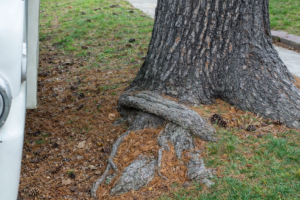
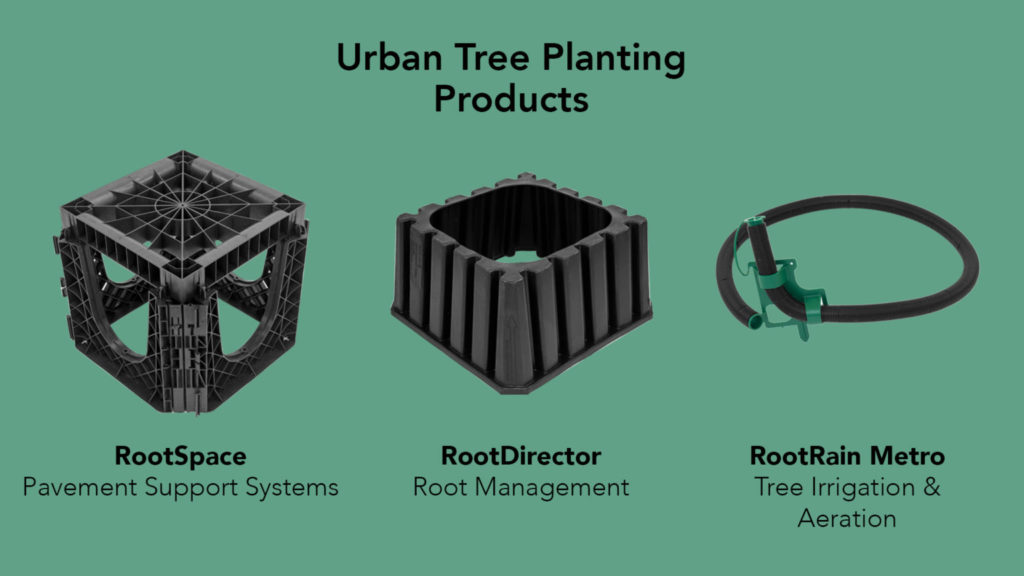
Understanding that potential liability is a huge challenge when considering tree planting in the street, Rupert has long used GreenBlue Urban Root Directors to guide roots to a lower level, preventing long-term damage. This has resulted in not only no paving heave but substantially better trees. A deeper rooting profile means better drought tolerance, and less chance of wind throw, leading to less cost overall.
Another innovation by Rupert was to get residents to help water newly planted trees. Distributing “Hackney” branded watering cans, he encouraged householders to irrigate the tree outside their houses, helping reduce the load on the tree maintenance teams. Using GreenBlue Urban RootRain Metro irrigation solutions, getting water to the tree roots along with the Root Directors means that early emerging roots are watered, and encouraged to go deeper, thus “training” them to establish at a safer depth.
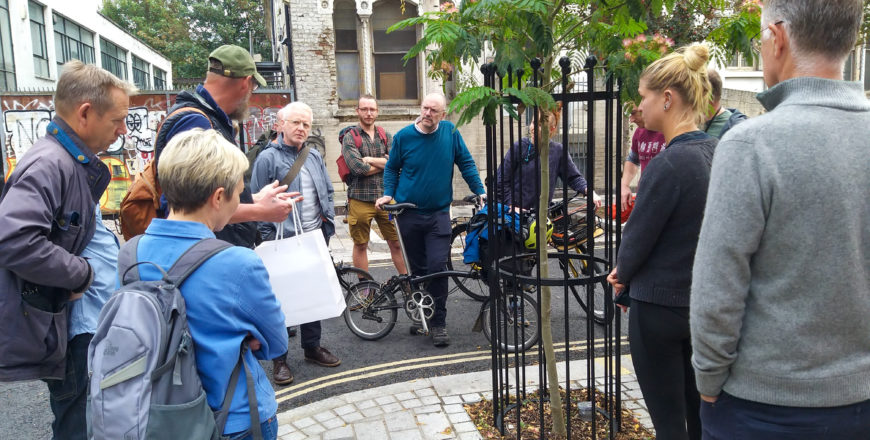
Above-ground protection is also important, with different levels of tree protection required for different risk zones. The Arboricultural Team have divided the tree specification into “A” type, “B” type and “C” type packages, with the A specification having no vertical protection, the B type fitted with the Arbortech heavy-duty wire guard, and the C type with the “Ullswater” high tensile steel guard, able to protect from light vehicle strikes. In high-risk sites, such as Leonard Circus, an HGV vehicle guard has been installed and tested to repel truck strikes.
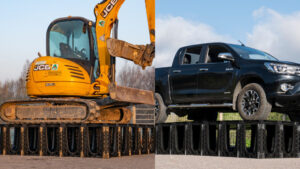
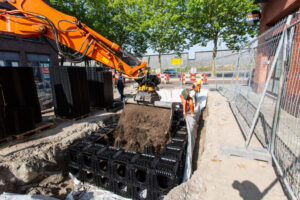
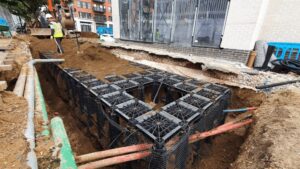
The Borough has been trialling some sustainable drainage system installations, taking water off the highway and using this water to help irrigate the green infrastructure. Rain gardens in Ashwin Street and Wilton Way have shown that simple interventions can lead to huge reductions in stormwater run-off and massively increase bio-diversity and reduce air pollution in these areas. Using GreenBlue Urban soil cells, such as the StrataCell and RootSpace products helps keep the soil in optimum conditions, and allows consistent drainage reductions to be maintained.
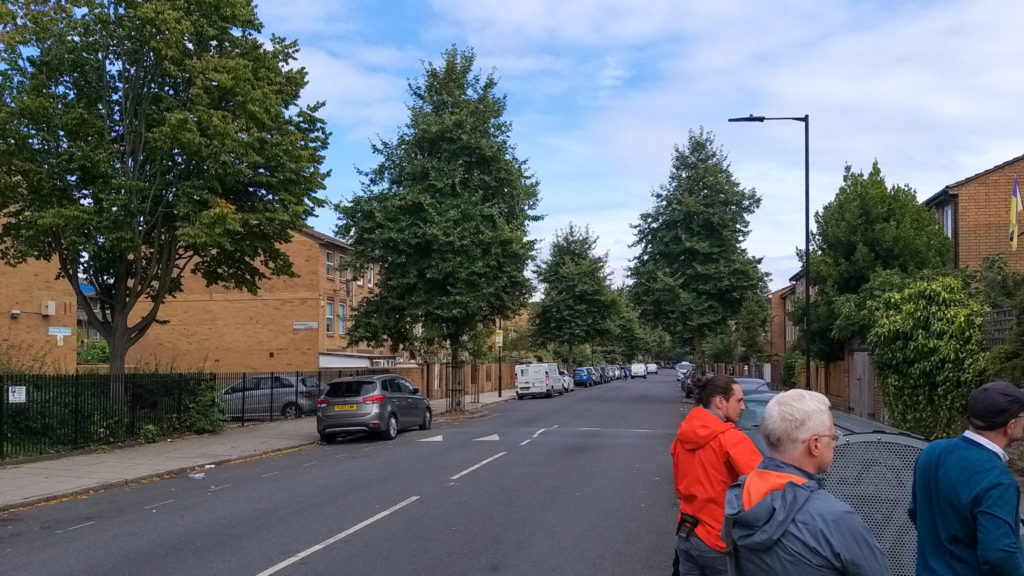
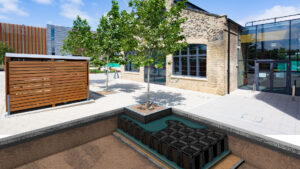
The recently completed installation in the Ridley Street Market Zone shows the commitment to long-term tree planting. Using GreenBlue Urban RootSpace soil cells below ground to support the above-ground tree planters along this busy street market area will make sure that this area is resilient to climate change for years to come. Tree species planted in this installation include some Austrian Black Pines (Pinus Nigra), Sea Buckthorn (Hippophae) and the Fox-Glove tree (Pawlonia Tomentosa), which give great variety and interest all year round.
Many thanks to Rupert and his colleagues for the fascinating tour, and for showing us that anything is possible with enthusiasm and buy-in from the highways department! Here’s to the next 25 years of out-of-the-box planting with GreenBlue Urban solutions, creating healthy places in harmony with nature!