During a previous webinar “Simplifying SuDS for all” we heard from Chryse Tinsley of Leicester City Council who used the term “SuDS is Fun”: something we couldn’t agree with more!
As we prepare to become “climate-ready”, what better way to educate on the importance of stormwater management and the mitigation of flooding than to bring SuDS measures into our school surroundings? Not only will the measures bring a multitude of environmental benefits, beautiful landscaping and biodiversity, but also involving children in “hands-on” learning brings a wealth of further opportunities; widening the pathway for further education that may not have previously been considered.
Health & Safety
There have often been concerns that SuDS is a “no-go” for schools: the thought of ponds and swales is understandably a concern, especially with the much-needed space for play and sport. However, many other smaller interventions should be considered, with many excellent “SuDS for Schools” examples as promoted by organisations such as the Environment Agency, Susdrain, CIWEM and WWT.
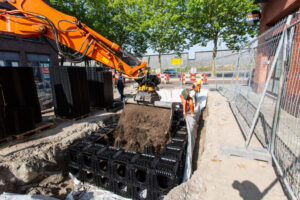
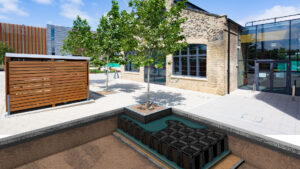
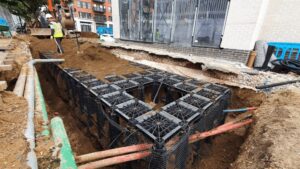
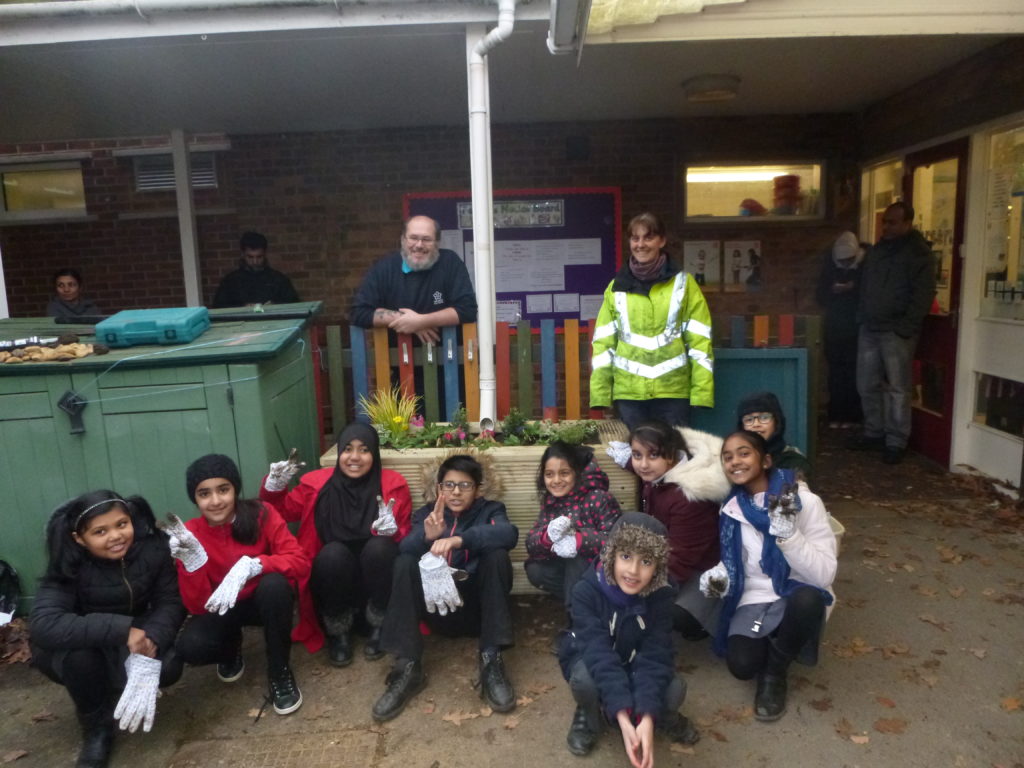
Drawing on our case studies including All Saints Primary School in Newmarket, where MicroSuDS are being used effectively – including the GreenBlue ArborFlow Tree Pit with StormForm attenuation, rain gardens and above-ground planters.
“This case study is a wonderful example of cross-disciplinary collaboration; from the landowner to contractor including the lead local flood authority; it’s great to see such initiatives within the SUDS community”
With community involvement at the forefront, the designers, town council and water company all contributed to the long-term goal that would see pupil and teacher engagement for many years to come.
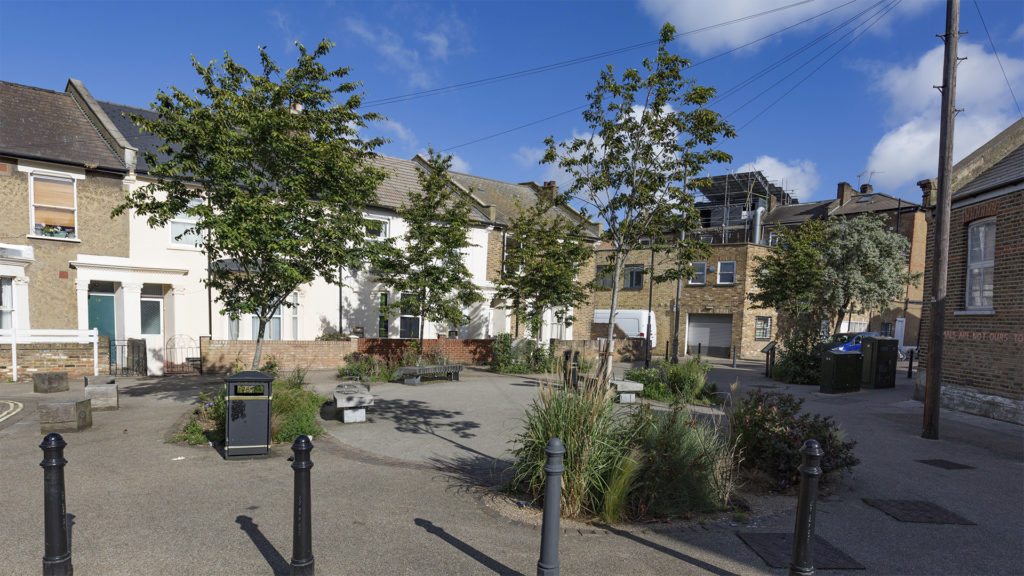
Another perfect example of community and stakeholder alignment is at Kenmont Gardens in Hammersmith, a new pocket park communal area outside the local school has been transformed, much to the joy of all residents. In 2014 the new design included the removal of road gully drains and replacement with rain gardens, using GreenBlue’s StrataCell and ArborSoil Hydro. The health, wellbeing, environmental, social, and educational benefits are enjoyed by all with the simple, yet effective collaborative design.
Educational Resources
Just this morning we heard on the news that a new project by gaming giant Minecraft has been launched that aims to help teach young people about climate change, the environment and flooding. Rivercraft – based on a real-life scheme in Preston, will see players build flood defences and prevention measures – providing a much-needed knowledge base for all.
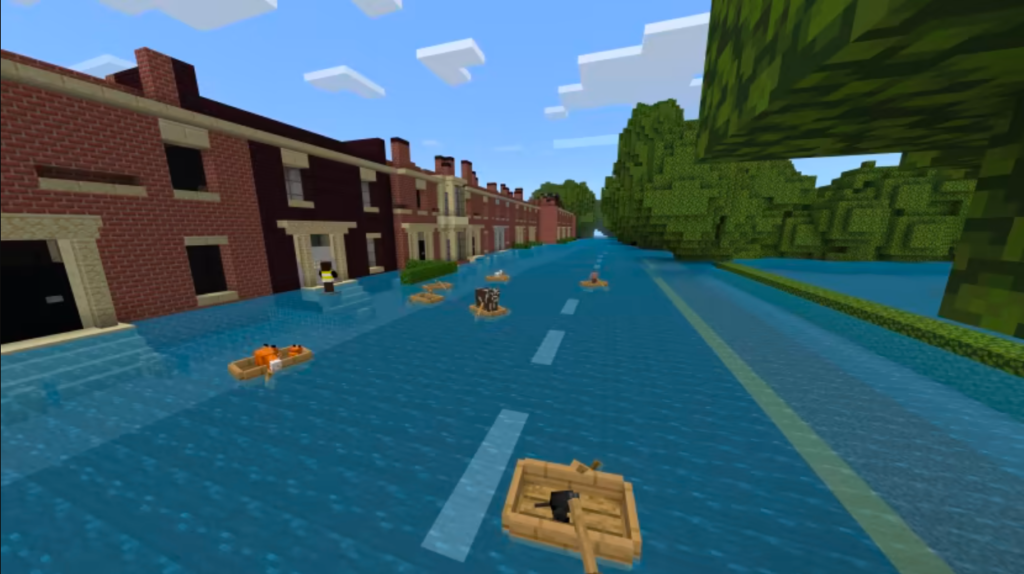
It’s pleasing to see that resources as part of the geography curricula in Key stages 4 and 5 are being enhanced by covering physical and human factors that affect flood risk and management strategies. Organisations such as LEAF are supporting teachers with accredited teacher training, countryside classroom resources and networking opportunities. The ADA (Drainage Association) is hosting an online training event on 28th April – discover more here.