It’s the developer’s nightmare: a small site and the local authority wants Biodiversity net gain, plenty of green space, tree lined streets and now is looking for SuDs. Where are they going to put the buildings?
GreenBlue Urban are used to these difficulties; in fact we look at them as opportunities to showcase best collaborative design solutions where all of these challenges can be integrated without loss of developable land.
In a recent project in Chepstow, Wales, an integrated design led to a new development meeting all of the LPA requirements. An infill development, where space was at a premium and where the properties were designated as affordable, meant that careful use of space was critical.
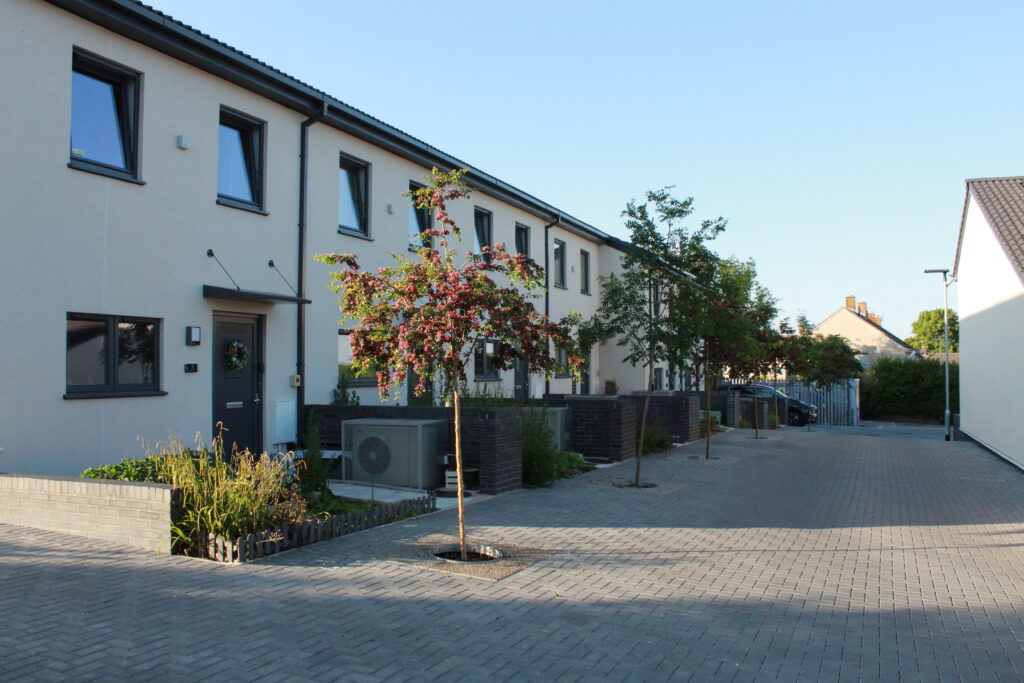
Chepstow, Mounton House Park
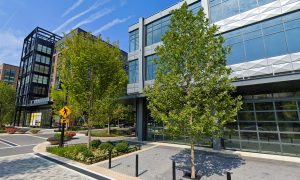
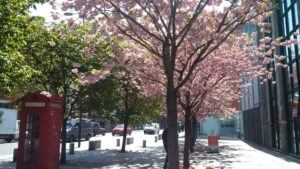
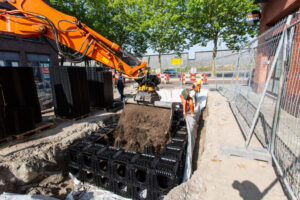
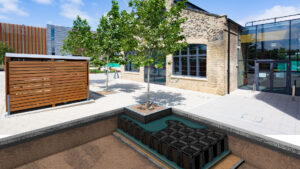
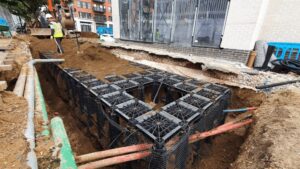
Street trees in Arborflow treepits were used to provide the attenuation required, along with permeable paving and a small attenuation tank with orifice control ticking all of the boxes for the local authority;
- Full SuDS compliance
- Tree lined streets
- Added biodiversity – a net gain over the previous garage block use
This type of development is possible thanks to intelligent consideration of all of the options, and GreenBlue Urban worked closely with the developers Capsel Homes, who are the trading subsidiary of Monmouthshire Housing Association. The result is a pleasing development which is fully sustainable for generations to come.
A larger scheme that GreenBlue Urban were glad to work with was the development in Walton, Felixstowe in Suffolk. This highly regarded development was originally designed with large attenuation ponds to deal with the flood risk from surface water, but with the intervention of Suffolk County Council and the assistance of GreenBlue Urban, these ponds were replaced with street side HydroPlanter Rain Gardens giving an equivalent storage volume but without the sacrifice of space. The GreenBlue Urban ethos of ‘Micro-Suds’ really helped the developer to achieve better housing densities without the loss of SuDS provision.
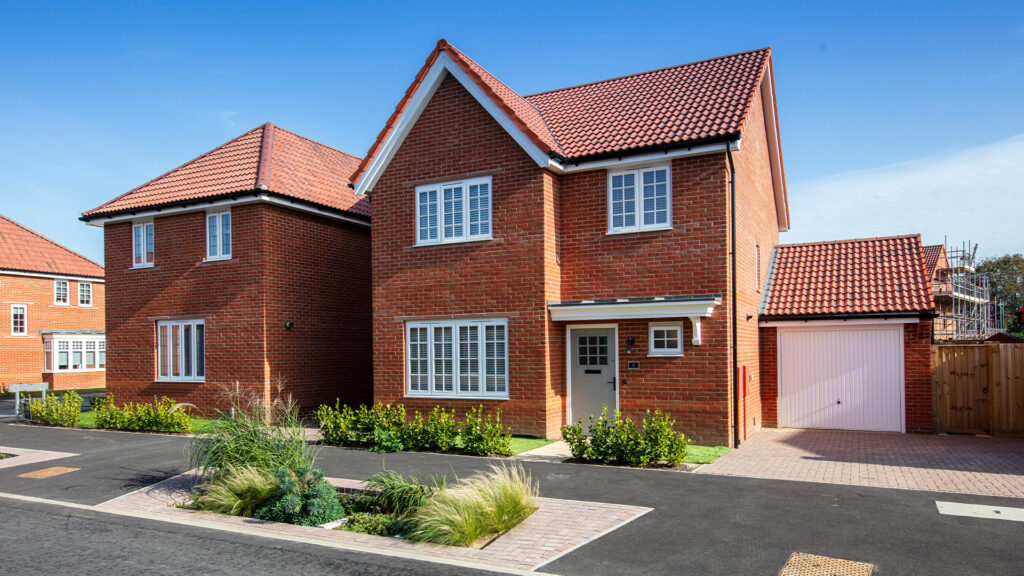
Walton, Felixstowe
The integration of green and blue infrastructure is simple but needs to be carefully considered. Sustainable drainage systems are just the mimicking of how nature deals with rainfall events transposed to work with site conditions. GreenBlue Urban has unrivalled experience in working with stakeholders to achieve maximum site efficiency as well as meeting legal and regulatory requirements. Call us today for a site appraisal – saving space and creating healthy spaces in harmony with nature.